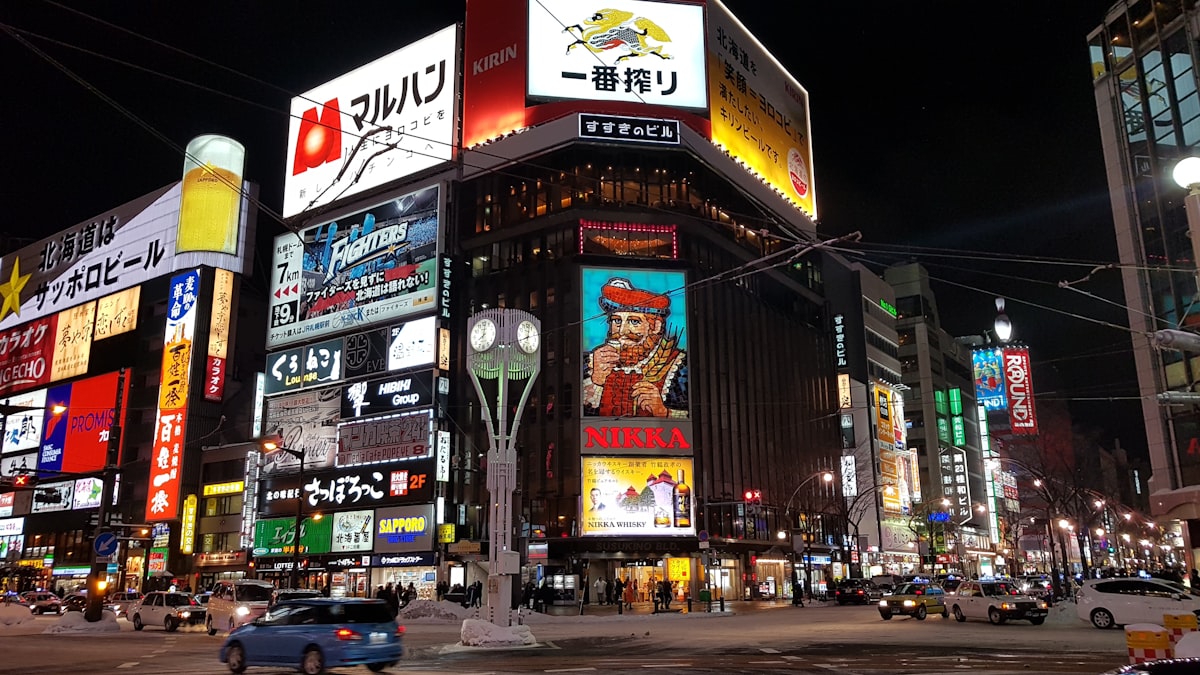
Your first real snow, your first real sub-zero — Sapporo is a trip you prepare for differently from any other part of Japan. It drops to -7°C, snow falls almost daily, and the icy ground is slipperier than you'd think. We walk you through the weather month by month, how to layer, how to walk on snow without falling, and a checklist of what warm-climate travellers always forget.
Honestly, if you're coming from a tropical city where winter is still 25–32°C and you fly into Sapporo between December and March, you're about to meet a roughly 30-degree temperature drop. Sapporo's winter sits around -7 to 0°C, water freezes, and snow falls almost every day — it's one of the snowiest cities on earth, with around 5 metres of snow over the season. This is not "a bit chilly, one jacket will do," like Tokyo in early winter. It's cold you genuinely prepare for.
The good news is that Sapporo isn't scary if you pack right — in fact winter is when the city is at its most beautiful, with a world-famous snow festival, skiing minutes from town, open-air hot springs in the snow, and the best crab and Hokkaido seafood of the year. On this page we cover everything: the weather month by month · how to layer · footwear and walking on ice · what to pack · and where to buy winter gear, plus the winter activities you shouldn't miss.
The figures here are based on Sapporo's climate averages. Temperatures and snowfall vary year to year. In 2026 the Sapporo Snow Festival runs 4–11 February. Before you travel, re-check the forecast and snow conditions close to your flight, and build in buffer for heavy-snow days when trains and flights can be delayed.
Each card sums up what to expect, what to prepare, and where people slip up most.
Temperatures hover around -7 to 0°C. January is the coldest on average (about -5°C); February has the deepest snowpack (65–75 cm on the ground). On windy days it feels colder than the numbers — nearly 30 degrees below a tropical winter.
A thermal base (Heattech) holds warmth, a mid layer (fleece/sweater) traps air, and a wind- and snow-proof outer shell (down/coat) blocks the cold. Add gloves, an ear-covering hat, and a scarf — and dress so you can strip off indoors.
Sapporo's winter ground is packed snow over ice, and flat sneakers are dangerously slippery. Use waterproof boots with deep rubber treads, or slip grip covers over your shoes — and walk in short steps.
The Snow Festival in early February (4–11 in 2026) is the star, joined by skiing near the city, sledding, open-air onsen in the snow, and winter crab and hot miso ramen.
Temperatures are Sapporo averages (daytime–nighttime). "Snow" describes the typical ground condition — use it to judge how grippy your boots and how heavy your layers need to be.
| Month | Weather (Sapporo) | Snow / Ground | What to wear / Highlights |
|---|---|---|---|
| November | Turning cold ~3 to -1°C | First snow late month | Layers + coat · first snow arrives late Season starts |
| December | Cold ~-1 to -7°C | Frequent snow, ground whitens | Full layers + grippy boots · White Illumination lights Getting pretty |
| January | Coldest on average ~-1 to -7°C | Deep snow, very slippery | Heavier layers, heat packs · ski slopes in full swing Coldest |
| February | Still freezing ~0 to -8°C | Deepest snowpack 65–75 cm | Full layers + windproof · ⛄ Snow Festival 4–11 Feb Peak · busy |
| March | Easing ~4 to -3°C | Snow starts melting, slushy | Layers + waterproof shoes · still skiable, fewer crowds Cheaper |
| April | Late winter ~11 to 1°C | Snow lingers on the mountains | Light winter jacket + layers · spring begins Quiet |
The "Snow / Ground" column tells you how slippery it is — Dec–Feb the city is packed snow and ice, so grippy boots are a must. March's melting snow turns to half-icy slush that's just as slippery and far wetter, so waterproof shoes matter. These are averages; the real feel depends on wind and snowstorms too.
A classic mistake warm-climate travellers make is buying one thick coat and assuming that's enough. Then you step into a shop or train running its heating hot, sweat through everything, and freeze again outside in a damp shirt. The whole trick is layers you can take off.
Severe cold drains phone batteries fast and can shut your phone off entirely. Keep your phone in an inner pocket warmed by your body, carry a power bank, and use touchscreen-compatible gloves so you can take photos without bare hands going numb.
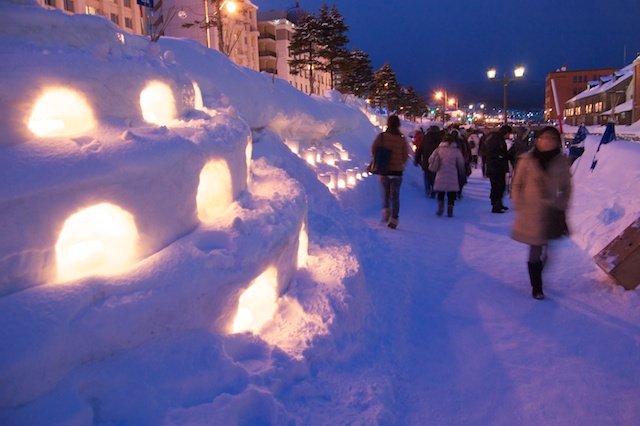
This is where first-timers slip up most — literally. Many arrive in flat sneakers or hard-soled leather shoes and fall the moment they leave the airport. Sapporo's winter ground is packed snow topped with ice, and it's far more slippery than it looks.
Take special care stepping from a dry indoor floor straight onto ice outside, and on stairs — always hold the handrail. Fresh snow is soft and easier to walk on; the most dangerous days are when melted snow refreezes the following cold night.
You can buy winter clothes in Sapporo, but these six are worth bringing from home so you're ready from the moment you leave the airport.
On heavy-snow or snowstorm days, JR trains and flights can be delayed or cancelled. Allow extra time for connections, don't pack your schedule too tight — especially your departure day — and check train and flight status ahead. If you do go out in a storm, cover up well, cut your time outdoors, and switch to indoor spots like malls, museums, or cafés.
Many travellers fly in wearing light clothes and buy Heattech and a down jacket in Sapporo — cheaper and lighter to carry. Here's where to go.
Buy in Sapporo: Heattech, down jackets, sweaters, heat packs, grip covers (cheap and good there) · Bring from home, ready from the moment you land: grippy waterproof shoes, gloves, hat, scarf, and lip balm — because there's snow the second you leave the airport, so you'll want to be warm and steady from the first step.
Once you're prepared, here's what makes braving the snow worth it.
Areas, stays, itineraries, and everything to know before flying to Hokkaido's capital.
Sapporo guide →Dates, the three main sites, the snow and ice sculptures, and how to do the festival right.
Snow Festival →The Clock Tower · Odori Park · Mt. Moiwa · the morning market — the must-sees on one page.
Sapporo attractions →Miso ramen · soup curry · winter crab · Genghis Khan grilled lamb — the city's best dishes.
Sapporo food guide →The nationwide 4-season picture — cherry blossoms, autumn leaves, snow, and which periods to avoid.
Best time to visit →Compare prices for downtown hotels and stays near Sapporo Station for winter.
Search stays →Open the Sapporo travel guide for areas, stays, and sights, or start finding a downtown hotel for the winter dates you have in mind.