King crab, hairy crab and snow crab pulled from cold northern seas — plus uni, ikura and fat scallops piled onto a single rice bowl. Here's what to order, when each crab is in season, and the markets and restaurants where it's actually worth the trip.
Honestly — if you love crab, Hokkaido is the place you've been waiting for. The cold waters of the Sea of Japan, the Sea of Okhotsk and the Pacific wrap the whole island, and that cold is exactly what makes the crab here so good: slow-growing, dense, sweet meat packed with rich crab butter. Sapporo, as the capital, is where boats from every coast send their catch — so you can eat crab from three different seas in one afternoon without leaving the city.
There are three main crabs you'll keep seeing: king crab (Tarabagani), the giant with legs longer than your arm; hairy crab (Kegani), small and unglamorous but with the sweetest meat and the best crab butter of the lot; and snow crab (Zuwaigani), with long delicate legs that are gorgeous as sashimi. There's also the rarer flower crab (Hanasakigani) from the far east of the island, a summer treat worth grabbing if you spot it.
But Hokkaido seafood doesn't stop at crab. The uni (sea urchin) here is sweeter and cleaner than almost anywhere in Japan, the ikura (salmon roe) bursts warm in your mouth, and the scallops are big and meaty. The simplest way to taste all of it at once is a kaisendon — a rice bowl loaded with whatever's fresh that morning at Nijo Market. This guide walks you through every one, plus where to eat it and when each is in season.
From the three signature crabs to the uni, ikura and scallops that make a Hokkaido seafood bowl unforgettable
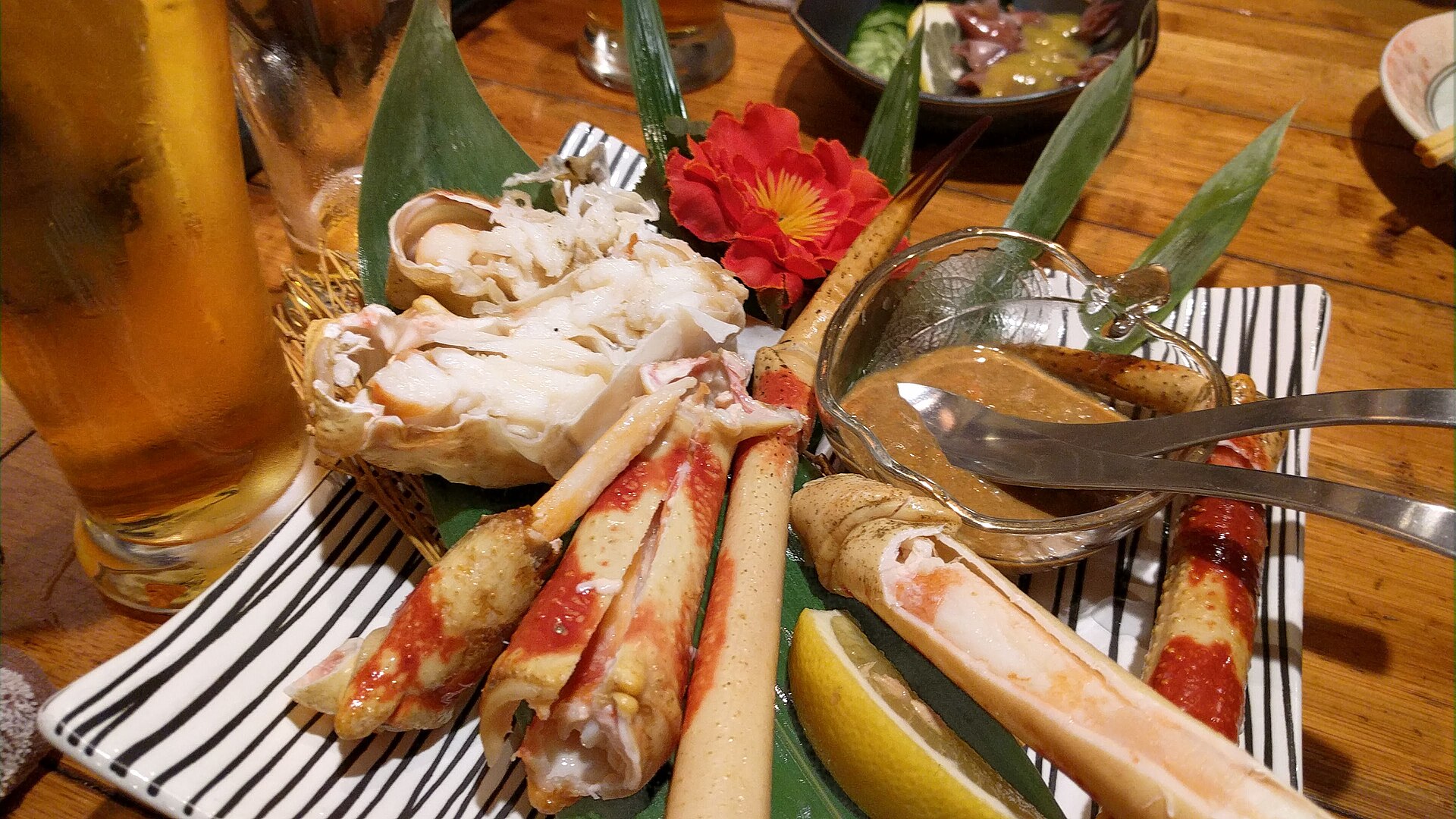
The giant of the bunch — one king crab leg can be as long as your arm, with thick chunks of firm, meaty flesh that pull out in satisfying slabs. It's actually more closely related to hermit crabs than true crabs, so you'll count six visible legs instead of eight, but nobody cares once it hits the grill. King crab is best simply grilled over charcoal or dropped into a hot pot, where the sweet juices soak the broth. Available almost year-round but at its firmest and best in winter.
Small, brown and covered in bristly hairs — it looks the least impressive of the three, and locals will tell you it tastes the best. The legs are short, so there's less leg meat than a king crab, but what you're really here for is the body: dense sweet flesh and a deep scoop of golden crab butter (kani-miso) that crab lovers consider the prize of the whole island. Best eaten boiled and plain so nothing distracts from the sweetness. A whole hairy crab is a proper splurge.
Long, slender, elegant legs filled with delicate sweet meat — snow crab is the one to order raw as sashimi, where the flesh comes out glossy and almost translucent before melting on your tongue. It's smaller and finer than king crab, more about sweetness than bulk. Lightly boiled it's just as good, and the legs are easy to crack and eat. This is a winter crab through and through, fattest and sweetest when the seas are coldest.
The local rarity — caught mainly off the Nemuro Peninsula in far-eastern Hokkaido, so it doesn't always make it to Sapporo. Its spiky shell turns bright red when cooked (hence "flower blooming"), and the meat is rich, fatty and intensely flavoured, quite different from the cleaner sweetness of snow crab. Because the catch is small and the season short, it's pricier and harder to find — if you see fresh hanasakigani on a summer menu, grab it. It also makes a famously rich miso soup called teppo-jiru.
If you want Hokkaido's whole seafood spread in one mouthful, this is the bowl — hot or vinegared rice piled with sashimi sliced that morning. At Nijo Market many shops let you build your own, and the classic Sapporo combination is uni, ikura and crab, often with scallop, salmon and sweet shrimp added on top. Golden uni, popping red ikura, sweet crab and soft scallop in a single bite — it's the easiest, happiest way to eat your way around the island's coastline. Come in the morning when the fish is freshest.
If you think you've had uni but never tasted it fresh from a Hokkaido shell, you haven't really had it. The waters west of Sapporo — especially the Shakotan Peninsula and the Otaru coast — produce uni that's sweet, creamy and clean with none of the bitter sea-tang you sometimes get elsewhere. There are two main types: bafun uni (deep orange, rich and very sweet) and murasaki uni (pale yellow, lighter and cleaner). Order it as a uni-don (a bowl of pure sea urchin over rice) and don't blink. Peak season is summer.
Ikura in Hokkaido is different the moment you bite it — the beads are bigger, the skins thinner, and they burst with a warm rush of umami rather than a sharp salty pop. It's lightly seasoned with soy or salt, never fishy. Hokkaido is one of Japan's top ikura sources because salmon run from the Sea of Okhotsk straight into the island's rivers, so it doesn't travel far. The freshest roe shows up September–October. Order an ikura-don (a bowl topped with pure salmon roe) or pile it onto a kaisendon.
Hokkaido grows some of the biggest, sweetest scallops in Japan — plump, meaty discs that are a meal in themselves. Eat them raw as sashimi to taste the clean ocean sweetness, seared in butter and soy for a richer hit, or grilled in the shell at a market stall where the juices bubble up around the edges. They turn up on nearly every kaisendon too. Cheaper than crab and available all year, scallops are the easy win of a Hokkaido seafood run — don't skip them just because the crab is flashier.
The markets and districts where the freshest crab, uni and kaisendon sit within walking distance
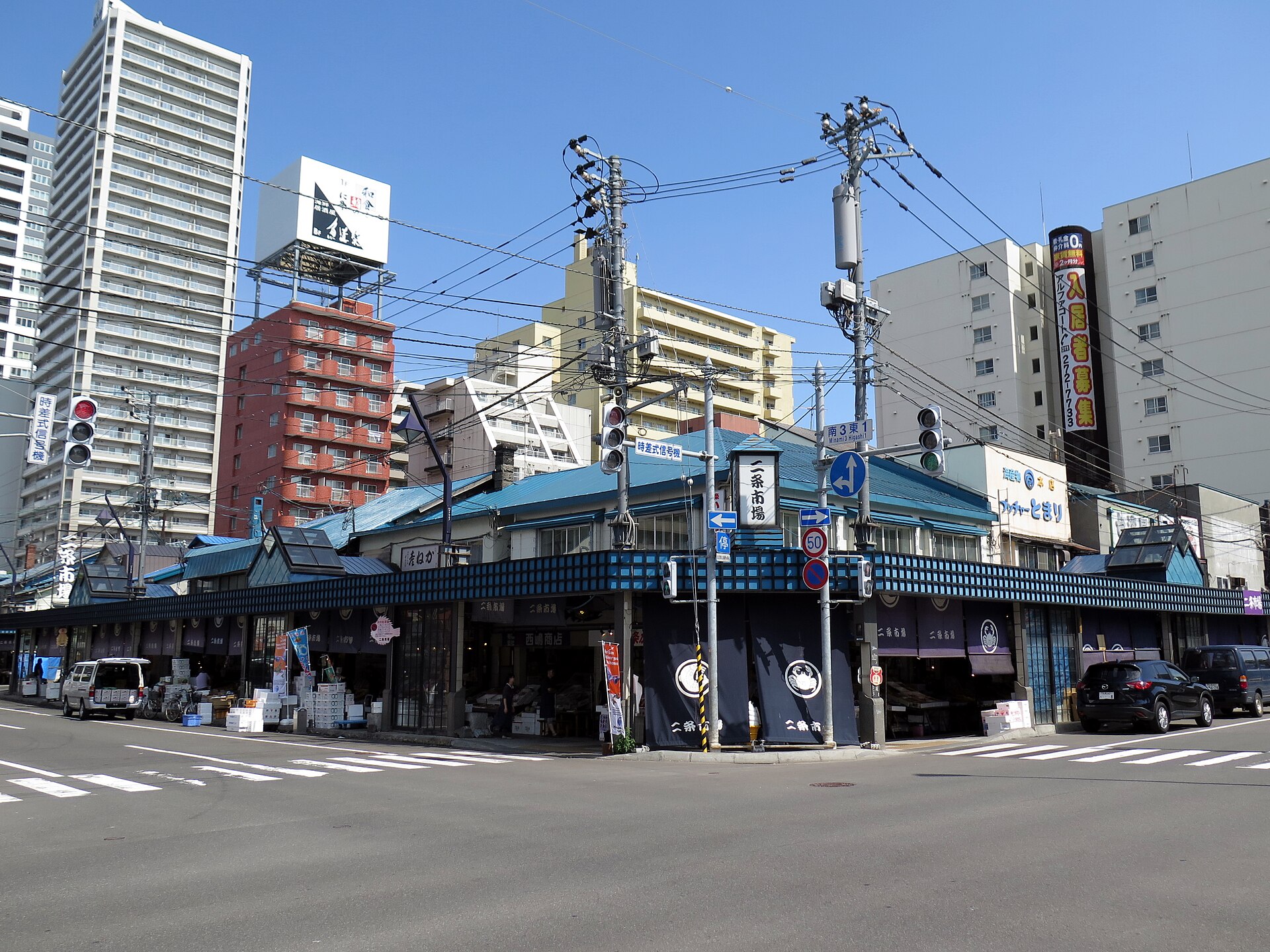
The oldest fresh-food market in Sapporo, going for over 100 years and only a 5-minute walk from Odori Station. Forty or fifty shops line the main street and the little lanes, with live crab tanks, trays of uni and tubs of ikura out front. The Noren Yokocho alley inside has more than 10 kaisendon shops where you can build your own bowl — point at what you want, sit down, and eat it. Come early: the best fish is gone by midday, and on busy days some shops sell out before afternoon.
The larger wholesale market on the western edge of the city, right by Nijuyonken Station — this is where Sapporo's restaurants and locals actually shop. Around 60 shops sell crab by the kilo, boxed uni, dried scallops and seafood to take home, and many have a small dining counter where you can eat a fresh kaisendon or have your crab boiled on the spot. Prices tend to be a touch friendlier than Nijo, and it's far less crowded with tour groups. Great for buying crab to ship home, too.
Susukino is the biggest nightlife district north of Tokyo, and it's also where the famous sit-down crab restaurants cluster. This is the place for a proper crab dinner — multi-course menus that run from crab sashimi and grilled legs to crab hot pot and a final crab-flavoured rice porridge. Look up at night and you'll spot the giant illuminated crab sign with moving legs marking Kani-shogun. It's pricier than the markets, but for a comfortable, sit-down crab feast with someone shelling the hard bits for you, this is it.
A short trip west of Sapporo brings you to Otaru — a pretty canal town with its own seafood market and sushi street — and beyond it the Shakotan Peninsula, the heartland of Hokkaido's summer uni. If you're here in uni season (June–August) it's worth the day trip to eat a fresh uni-don right by the coast where it's landed. Otaru is an easy 30–45 minutes by JR; pair it with the town's sushi and sweets for a full day out.
The two big crab specialists in Susukino, plus the markets where you pick your own — note them down before you go
You'll find it before you read the name — Kani-shogun is the restaurant under the enormous illuminated crab sign in Susukino, legs and all. Inside it's a long-running crab specialist serving set courses built around all three crabs: sashimi, grilled legs, crab hot pot, tempura and a crab rice or porridge to finish. It's a comfortable, sit-down feast where the staff do the fiddly shelling for you. Book ahead on weekends and through the winter crab season.
The other big name in Sapporo crab — Kani-honke runs spacious traditional dining rooms and is built entirely around crab kaiseki courses. Expect king crab and snow crab worked through every preparation in one meal: raw, boiled, grilled, steamed in a savoury custard, and simmered in a hot pot. There's a branch near Sapporo Station that's handy if you're arriving or leaving by train. It's a set-piece dinner, so go hungry and give yourself time.
For crab and seafood without the restaurant prices, the kaisendon alley inside Nijo Market is the move. More than 10 tiny shops assemble fresh bowls to order — load it with uni and crab, or keep it simple with ikura and scallop. Many stalls will also boil or grill a whole crab for you to eat there. You mostly don't even need to know the words: walk around, point at what looks good, and sit down. Open from 7am, freshest in the morning.
The big outer wholesale market on the west side is where to go if you want to buy crab to take away — whole king crab, hairy crab and snow crab sold by weight, plus boxed uni and dried scallops. Around 60 shops, far fewer tourists than Nijo, and many have a counter where you can sit down to a fresh seafood bowl or have crab boiled while you wait. Shops here will also pack and ship crab. Come in the morning for the best pick.