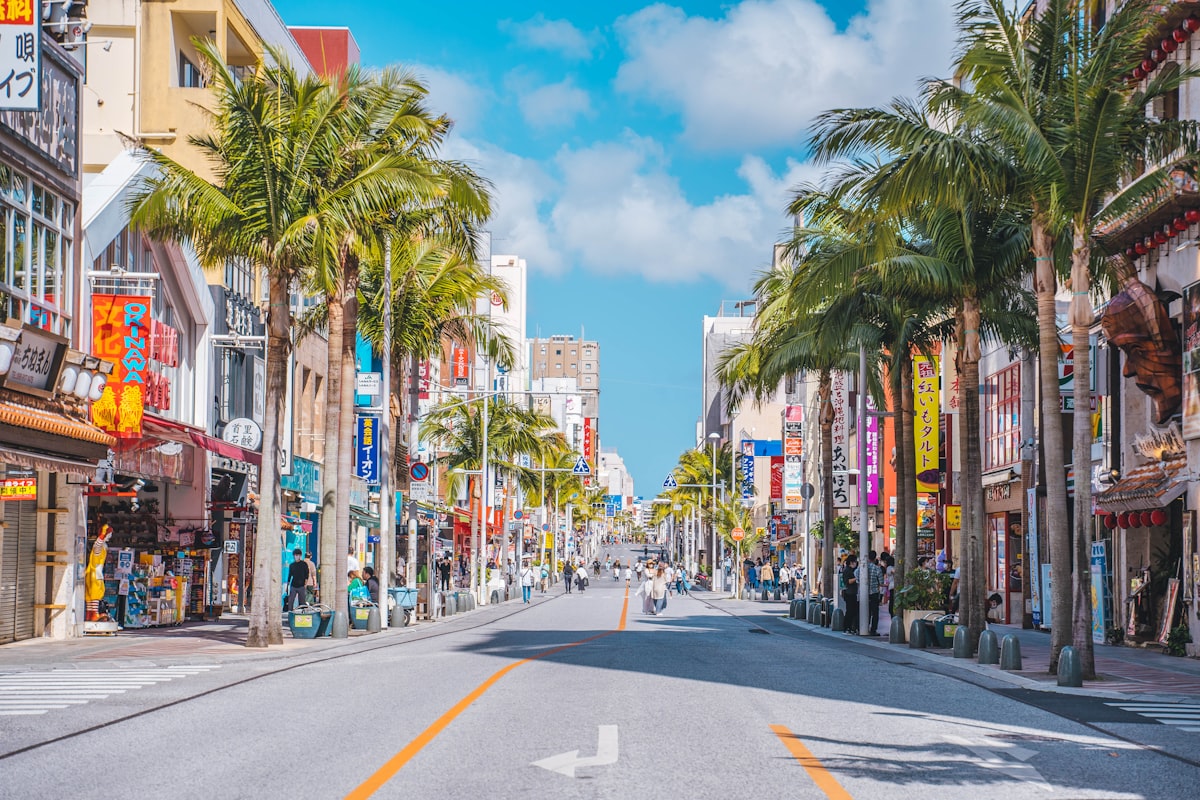
Okinawa isn't the Japan most people picture — it's subtropical, snow-free, and swimmable for half the year, but it also has a plum-rain season and a typhoon season you'll want to plan around. We break down what each month feels like, when you can get in the water, and exactly what to pack before you fly.
Honestly, if you've travelled to Tokyo or Kyoto and pack for Okinawa using that same weather in your head, you'll get it wrong straight away. Okinawa sits at the far south of Japan, closer to Taiwan than to Tokyo, so its climate is subtropical — warm almost year-round, snow-free, and with clear seas you can swim in far longer than anywhere else in the country. Temperatures stay within roughly 16–29°C all year.
But "warm all year" doesn't mean every month is the same. Okinawa has its own rhythm — the plum rains arrive early, from the start of May; typhoon season sweeps through from August to October; and even the mild winter has a sea breeze cool enough that you'll want a windbreaker. On this page we walk through the weather month by month, how to dress in each window, the best-value times to swim, and a packing checklist of the things people forget most.
The figures here are based on Naha's (Okinawa's main city) climate averages and the latest 2025–2026 forecasts. Rainy-season start/end dates and typhoon tracks shift every year — in 2026 Okinawa entered the rainy season on 4 May, about 6 days earlier than average. Before you travel, always re-check the forecast and any typhoon status close to your flight.
Each card sums up what the weather is like, how swimmable the sea is, what to wear, and who that window suits best.
When most people want to come: clear sea, water hitting 28–29°C in August, prime snorkelling over coral. The trade-off is genuine heat and humidity (28–32°C), very strong sun, and typhoon risk late in the season.
Okinawa enters the rainy season weeks before the main islands, roughly early May to late June. Rain is frequent, humidity peaks for the year (nearly 87% in June), and some days see little sun — but accommodation is cheaper and crowds are thinner than peak summer.
Okinawa is on the typhoon track from July to October, peaking August to early October. Not every day brings a storm, but each one can mean heavy rain and wind, closed beaches, and cancelled flights or ferries to the outer islands — so plan flexibly.
While the main islands freeze or get snow, Okinawa stays around 16–20°C with no snow — comfortable for walking, exploring Ryukyu castles and culture without bundling up. The sea breeze, though, makes it feel cooler than the numbers, especially mornings, evenings, and on boats.
Temperatures are Naha averages. "Sea" is the approximate surface water temperature — use it to judge whether you can swim comfortably or need a wetsuit.
| Month | Weather (Naha) | Sea | What to wear / Highlights |
|---|---|---|---|
| January | Japan's mildest ~15–19°C | ~21°C cool | Layers + windbreaker · early kanhi cherry blossoms Cheap, quiet |
| February | Coolest of the year ~16–19°C | ~21°C coldest | Layers + light jacket · kanhi cherry blossoms Cheap, quiet |
| March | Warming up ~17–21°C | ~22°C swimmable starts | Long/short sleeves mix · beach season opens (umi-biraki) Picking up |
| April | Comfortable ~20–24°C | ~23°C easy swimming | Light tops & shorts · best weather before the rains Best value |
| May | Warm & humid ~23–27°C | ~25°C warm | Quick-dry + umbrella · ⚠️ plum rains begin early month Cheaper |
| June | Most humid ~26–29°C | ~27°C warm | Light tops + rain jacket · plum rains end late month Cheap |
| July | Hot, strong sun ~28–32°C | ~28°C very warm | Swimwear, heavy sun care · clearest sea · ⚠️ typhoon risk begins Sea peak |
| August | Hottest ~29–32°C | ~28–29°C warmest | Swimwear, sunscreen, umbrella · ⚠️ typhoon peak Pricey · busy |
| September | Still hot ~28–31°C | ~28°C warm | Swimwear, sunscreen · ⚠️ still typhoon peak Moderate |
| October | Cooling ~25–28°C | ~27°C still swimmable | Light tops & shorts · clear skies after typhoons Best value |
| November | Warm & pleasant ~22–26°C | ~25°C cooling | Light tops + thin windbreaker · good weather, fewer people Good value |
| December | Mild ~18–22°C | ~23°C cool | Layers + windbreaker · lowest humidity of the year Cheap, quiet |
The "Sea" column tells you whether you'll swim comfortably — from about 25°C upward you can swim without a wetsuit (May–Nov), while the 20–22°C range (Dec–Feb) is swimmable but cold for most, so bring a thin wetsuit. These are averages; the real feel on the day also depends on sun, wind, and waves.
Unlike the main islands, where you can only swim during a short summer stretch, Okinawa opens its beach season around March and the water stays warm enough to enjoy into November. Sea temperatures climb from around 22°C in March to 28–29°C in August.
Summer has the prettiest water but is also typhoon season and the busiest time for jellyfish. Many beaches have jellyfish nets and lifeguards — swim within the marked areas and always follow the beach's announcements. If you're heading to the outer islands to dive, build in a buffer for ferry delays during storms.
Okinawa's sun is strong and sudden showers happen even in summer, so the heart of dressing here is light, quick-drying clothes, sun-and-rain protection on you, and one light windbreaker for fierce air-conditioning and the sea breeze.
The trick is dressing so you can add and remove layers, because temperatures can swing several degrees within a single day — sunny and hot at midday, then suddenly cool the moment you board a boat or step into a cold air-conditioned room.
Whatever month you go, these six make the trip run far smoother — especially for the sun and the rain that arrives out of nowhere.
Most typhoons affect only 1–2 days, not your whole trip. On a storm day, skip the sea and outdoor activities — switch to museums, malls, the Churaumi Aquarium, or a café instead. Check flight and ferry status ahead, and keep some water and food at your accommodation in case shops close. Once the storm passes, the skies usually clear quickly.
There's no single best month for everyone. Here's a recommendation by trip style.
Where to stay, itineraries, and everything to know before flying to Japan's southernmost islands.
Okinawa guide →Churaumi Aquarium · Shuri Castle · outer islands · beautiful beaches — the must-sees on one page.
Okinawa attractions →The nationwide 4-season picture — cherry blossoms, autumn leaves, snow, and which periods to avoid.
Best time to visit →Every region and city, visas, budgets, and trip plans for travelling Japan.
Japan guide →Visa · eSIM · IC Card · plugs · etiquette — everything to sort before you fly to Japan.
Travel essentials →Compare prices for hotels and beachfront resorts in Naha and across Okinawa.
Search stays →Open the Okinawa travel guide for areas, stays, and sights, or start finding a beachfront hotel for the season you've picked.