Land at CTS, follow the signs down to the basement, and the JR train runs straight into Sapporo Station in about 37 minutes for ¥1,230 — compared honestly with the bus and taxi, plus luggage delivery, onward trips to Otaru and Niseko, and what to allow for in the snow.
New Chitose Airport (code CTS) is the main gateway to Hokkaido. Direct flights from Bangkok and most connecting flights from Tokyo and Osaka land here. The airport sits in the city of Chitose, about 46 kilometres from central Sapporo. That sounds far, but the good news is that there's a JR railway station directly beneath the terminal building, which makes getting into the city easier than you'd expect.
One thing that makes CTS special: it's widely regarded as the most food-focused airport in Japan. Hokkaido ramen, Royce' chocolate, dairy and butter souvenirs, and a whole floor of shops mean many travellers deliberately leave extra time to eat and shop before flying out. So on the way home, don't rush to check in too early.
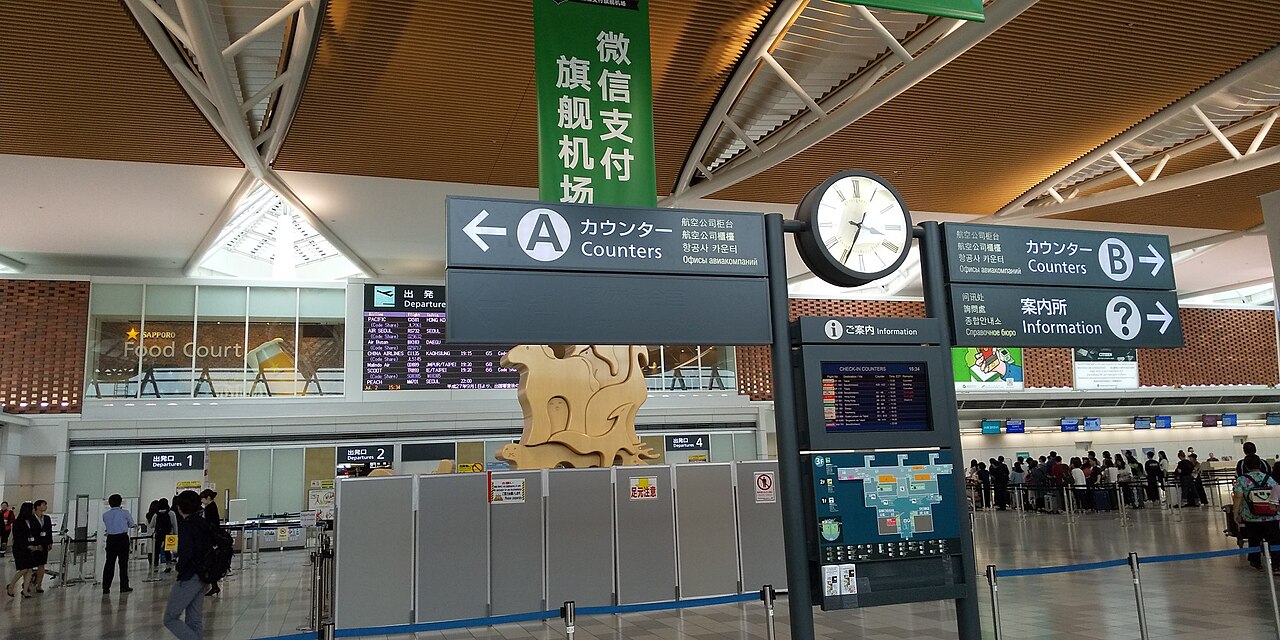
Hokkaido's main airport, with separate Domestic and International terminals connected by a walkway. Flights from Thailand arrive at the International terminal, while domestic flights from Tokyo and Osaka use the Domestic terminal.
The JR railway station is on the basement level (B1) beneath the Domestic terminal. Just follow the green "JR" signs from the arrivals hall. If you land at the International terminal, walk through the connecting passage to the Domestic terminal first — it only takes a few minutes.
If you fly direct from Bangkok you'll most likely land here — pick your option by where you're staying and how much luggage you have.
A trick that makes a Hokkaido trip much lighter, especially if you have several train transfers ahead.
Hokkaido is a place where travellers often pick up heavy bags — dairy, butter and chocolate souvenirs in summer, ski gear in winter. The good news is you don't have to drag it all onto the train. The airport has full luggage delivery and storage services.
Delivery counters such as Yamato Transport (Kuroneko) at the airport will send your bags or ski gear to your hotel, usually arriving the next day. The fee depends on size and weight, and travelling into the city hands-free is far more comfortable.
The terminal has coin lockers in various sizes — handy if you want to browse the airport's food and souvenir shops before heading into the city, or store something temporarily while waiting for a connection. Pay with coins or an IC card.
The airport offers extra services including baggage storage, baggage wrapping and porter help at certain times. Ask at the information counter — signage is in English.
Use an IC card to tap on and off the JR trains and the Sapporo subway without buying single tickets each time. Top up at station machines. If you already have a Suica or Pasmo from Tokyo, it works in Hokkaido too.
Hokkaido is much more than Sapporo. Many travellers fly in and head straight to Otaru, the romantic canal town, or world-famous ski resorts like Niseko and the flower fields of Furano. The good news is that some of these can be reached directly from the airport without going into Sapporo first.
Hokkaido in winter (December to March) is beautiful, but heavy snow slows everything down and delays are easy to run into. Knowing this in advance helps you plan better.
The Rapid Airport train is fairly reliable in normal snow, but in heavy snowfall or a storm it can slow down or pause temporarily. Check the train status with JR Hokkaido before you set off.
The limousine bus is affected by traffic and slippery roads more than the train. On heavy-snow days the journey can stretch out significantly. If you have a flight to catch in winter, the train is usually the safer bet for timing.
CTS has Domestic and International terminals connected by a walkway. If you arrive from Thailand at the International terminal and want the train, walk over to the Domestic terminal first, as the JR station sits beneath it. Allow a few extra minutes to walk across.
Snowstorms can delay or cancel domestic and some international flights. If you have an onward connection, don't book it too tight, and allow more transfer time than in other seasons.