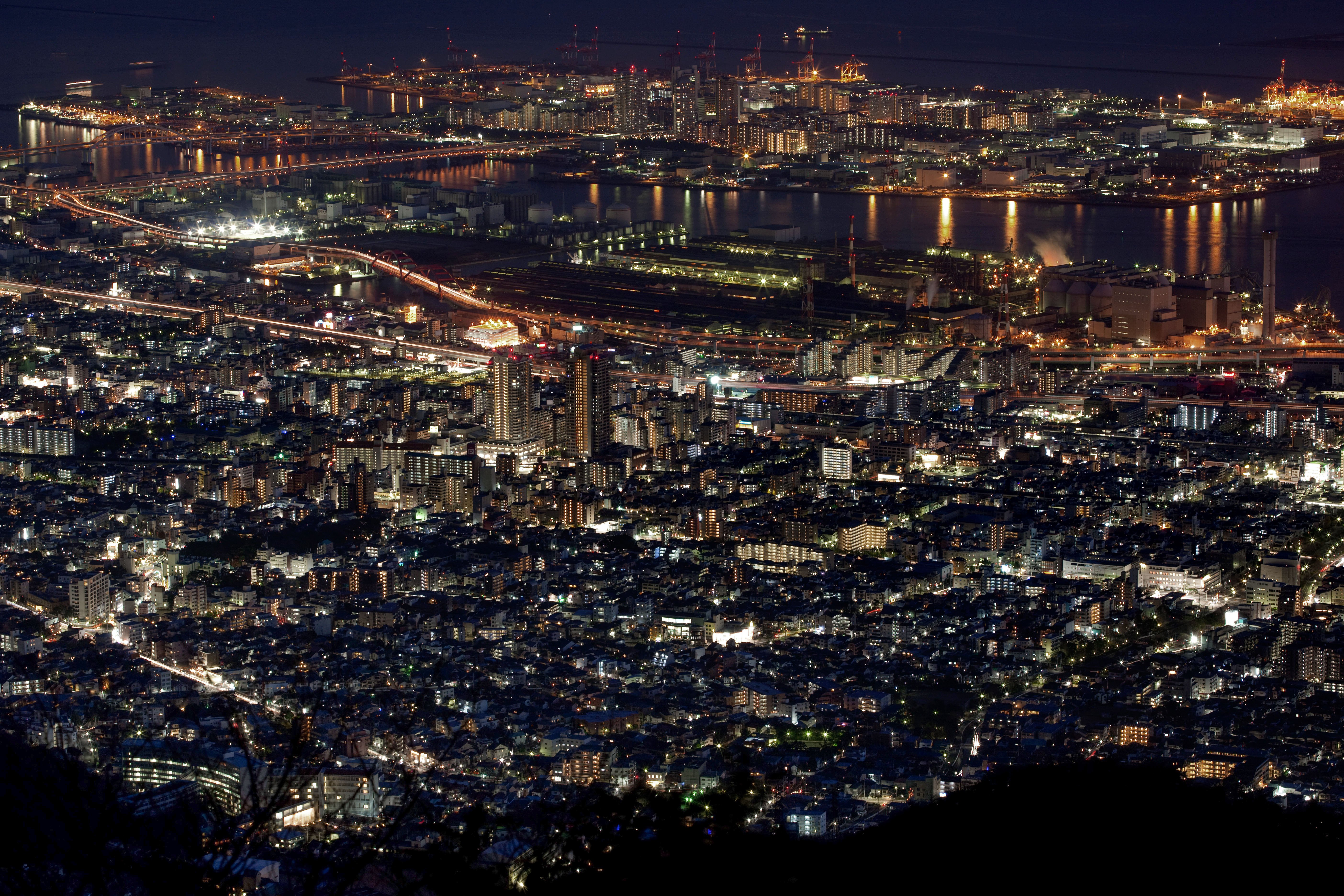
From the European villas of Kitano in the morning light to Arima's millennium-old golden hot springs in the afternoon — here is an honest, hour-by-hour plan built around how the city actually moves, not how a brochure wants it to look.
Kobe rewards patience. Come on a rushed day trip from Osaka, tick off the Port Tower and leave, and you will wonder what the fuss is about. Stay two nights — walk uphill to Kitano when the light is still low, sit in Arima's iron-dark gold bath until your muscles unknot themselves, and eat Kobe beef in a room that seats eight — and you start to understand why residents of the entire Kansai region quietly consider Kobe the most elegant city in Japan.
Kobe has been an open port since 1868. It absorbed European architecture, French bread, Portuguese wine and Chinese dim sum simultaneously, and somehow made them all feel local. The three itinerary plans below cover: 1 day for the harbour and Kitano; 2 days adding the Nunobiki ropeway herb garden and Arima Onsen; 3 days extending to Mt. Rokko and the Akashi Bridge. Pick whatever fits your trip.
For a full overview of the city, see the Kobe city guide.
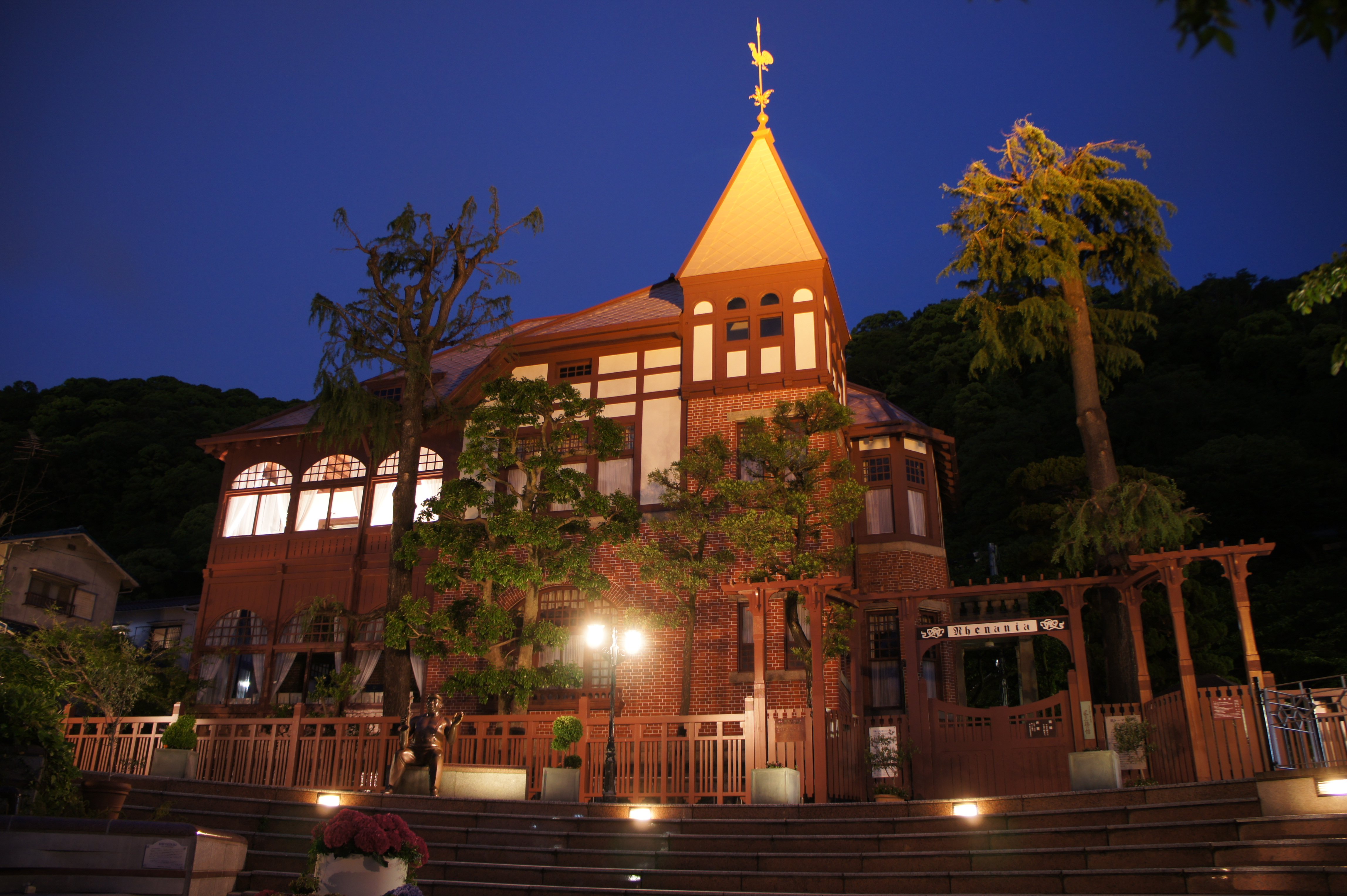
French mansions in morning quiet · steamed pork buns in the narrow lanes of Nankinmachi · sunset from the Port Tower · harbor lights at dusk in Harborland — the day that earns Kobe its reputation
Start the day at Ikuta Shrine (生田神社), an 1,800-year-old Shinto shrine tucked into the middle of Sannomiya's shopping district. It is free to enter, and the forested precincts feel removed from the city around them even when the streets outside are busy. Allow 20–30 minutes.
Walk uphill from Sannomiya Station (~15 minutes on foot) to Kitano Ijinkan (北野異人館) — the district of Victorian, Art Nouveau and Spanish Mission villas that foreign merchants and diplomats built from the 1860s onward. Around 30 original residences survive in good condition, many with their original furniture, wallpaper and garden plantings intact. A combination ticket for two houses costs around ¥1,500–¥2,200. The two most visited are Weathercock House (風見鶏の館), a red-brick German villa with a distinctive rooster weathervane, and Moegi-no-Yakata (萌黄の館), a pastel-green American consulate building from 1903. The streets themselves are free to walk and photograph at any time.
Walk down from Kitano to Nankinmachi (南京町), Kobe's compact Chinatown — a single block of red lanterns, dragon pillars and open-air stalls selling things you can eat while walking. The signature item here is butaman (豚まん), Kobe-style steamed pork buns made on-site at shops like Roushoukai and Minmindo. The skin is thin and slightly sticky, the filling loose and moist from the steam. Kobe's butaman is celebrated even in Osaka, which is a high bar. Lunch here is more of a walking, eating experience than a sit-down meal — plan to spend ¥800–¥1,500 on a mix of snacks and a proper plate at one of the restaurants set back from the main lane.
From Nankinmachi it is a 5-minute walk to Meriken Park, the waterfront plaza where Kobe Port Tower stands. The tower's unusual hourglass silhouette — 108 metres tall, drum-shaped at mid-height — is Kobe's most photographed landmark. A ¥700 ticket gets you to the 360-degree observation deck. The view takes in the entire Kobe waterfront, Awaji Island and, on clear days, the mountains of the Chugoku coast. Within Meriken Park itself, look for the 1995 Great Hanshin Earthquake Memorial — a section of the old quayside left exactly as the earthquake broke it, with buckled concrete and tilted lamp posts preserved behind glass. It is a sobering and important site, open free of charge at all times.
Walk or take a short Hanshin train ride to Harborland — the waterfront shopping and dining zone that looks its best when the sun is going down and the Port Tower starts to glow. The Mosaic complex has restaurants ranging from casual ramen to fresh Kobe beef grills, all with a direct view of the water and the illuminated bridge silhouette of Akashi in the distance.
If you have been saving your Kobe beef meal for the right moment, this is it. Mid-range Kobe beef restaurants in the Sannomiya and Harborland areas start at around ¥4,000–¥6,000 per person for a steak set — the entry point is lower than most visitors expect. A glass of wine from Kobe's own Ikuta winery rounds things off appropriately.
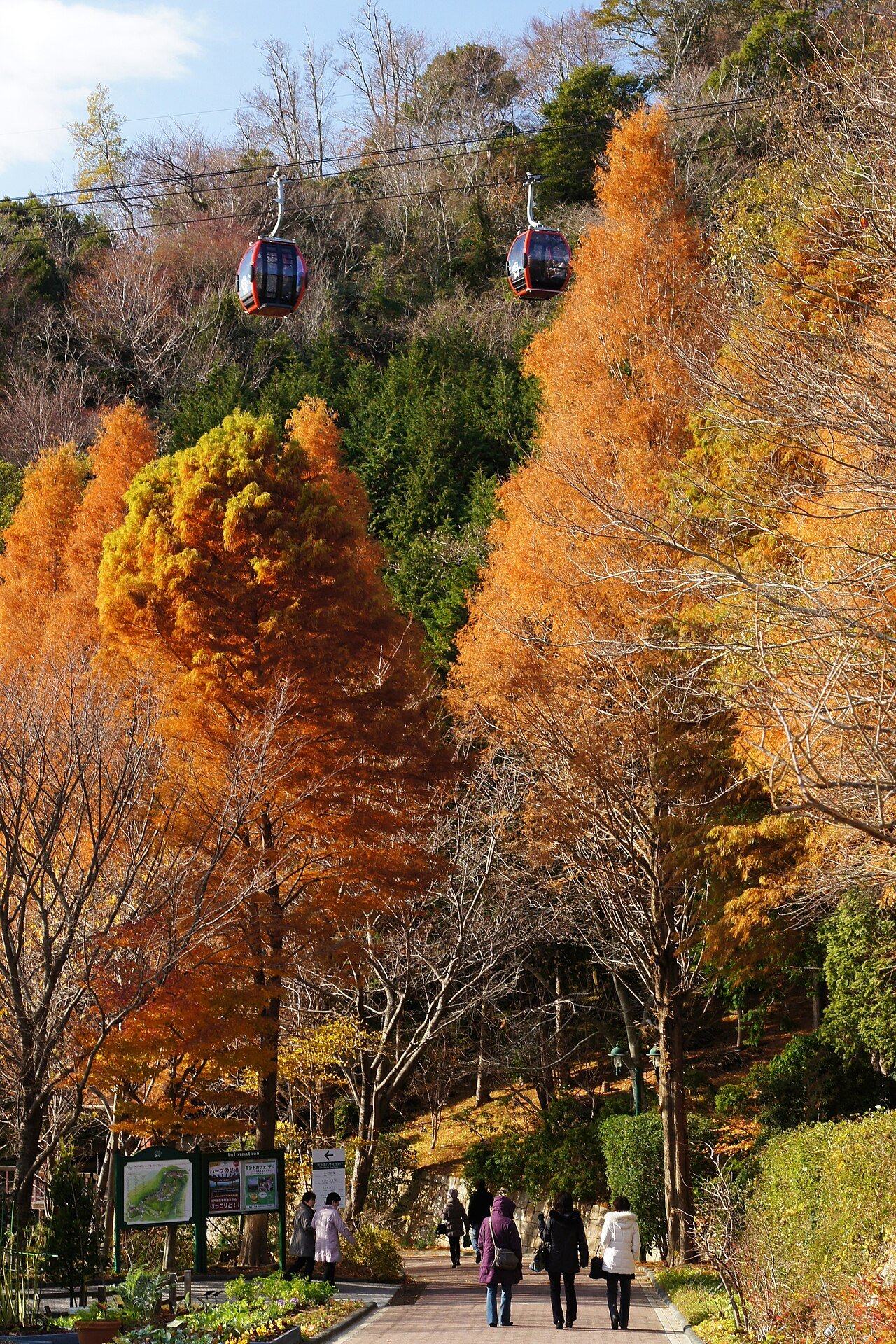
400 metres above the sea on a glass gondola · lavender and roses with a harbor panorama · then Arima's golden iron spring — the day Kobe first-timers remember longest
The Kobe Nunobiki Herb Garden Ropeway (布引ハーブ園) starts a five-minute walk from Shin-Kobe Station. Gondolas run every few minutes; the 10-minute ascent takes you from city level to 400 metres above sea. As the cable car climbs, Kobe shrinks beneath you into a grid of white buildings between green hills and blue water — the view alone justifies the ticket.
The garden covers 200,000 square metres with 75,000 plants of around 200 species, including rose gardens, a lavender field, an English herb parterre and a terrace cafe with unobstructed views toward Awaji Island. The Nunobiki Waterfall (布引の滝) — one of Japan's three most celebrated waterfalls — sits partway down the slope and can be reached by a 10-minute walk from the mid-station. Allow 1.5–2 hours in the garden before taking the ropeway back down.
From Shin-Kobe Station, take the Kobe City Subway to Tanigami (~15 minutes), then transfer to the Shintetsu Arima Line to Arima Onsen Station. Total journey time about 40 minutes, fare around ¥680 each way. The town sits in a valley in the Rokko mountains — 15 kilometres from central Kobe but feeling entirely different: narrow stone lanes, wooden inns, steam rising from grates in the pavement.
Arima Onsen is one of Japan's oldest hot spring towns, with written records going back to the 7th century. What makes it singular are two chemically distinct spring types found nowhere else in combination. Kin-no-Yu (金の湯 · Gold Bath) is deep orange-brown from dissolved iron and manganese, dense and heavy-feeling, with a warmth that penetrates muscle and bone in a way lighter springs cannot match. Gin-no-Yu (銀の湯 · Silver Bath) is clear and lighter — carbonated and radon-infused — easier to stay in longer and better for sensitive skin. The two public bathhouses are three minutes apart on foot.
After bathing, walk the Tansan-ji street through the old town. Every other shop sells tansan senbei (炭酸せんべい) — ultra-thin carbonated wafers that have been made here for over a century, light and faintly sweet, eaten in quantity while wandering.
If you are staying the night at an Arima ryokan, this is the hour things get very good: private in-room hot spring baths, a kaiseki dinner served in your room course by course, and complete quiet except for the sound of the mountain stream. Most ryokan packages run ¥15,000–¥40,000 per person including dinner and breakfast.
If returning to Kobe, the last trains from Arima Onsen Station run around 22:30. Back in Sannomiya, the Kitanagasa-dori neighbourhood has wine bars and small bistros that would feel at home in Lyon — a legacy of Kobe's 160-year history as Japan's most international port city. A glass of something local is a fitting way to end the day.
A mountaintop that holds the whole city in view · the longest suspension bridge on earth · a gentle final afternoon before heading out — the day that adds scale to everything you have already seen
Take Bus 16 or the Kobe City Loop from Sannomiya to Rokko Cable Shita (about 20 minutes), then ride the Rokko Cable Car up to the 931-metre summit plateau. The cable car takes 10 minutes and is itself good value — the views change continuously as the slope steepens and the city falls away below.
On the summit, the Rokko Garden Terrace has terrace restaurants and a viewpoint that — on the clearest days — reaches across the Seto Inland Sea toward the mountains of the Chugoku coast. The Kobe Arboretum section has walking paths through natural forest. Temperature at the summit is typically 5–8°C cooler than central Kobe, which makes it an escape in summer heat and, in winter, means occasional snow and the Rokko Snow Event illumination.
Come down from the mountain and take the Hanshin Railway from Sannomiya toward Osaka, alighting at Maiko Station (about 25 minutes). From here a short walk leads to the Maiko Marine Promenade, the best free viewpoint for the Akashi Kaikyo Bridge (明石海峡大橋).
The bridge spans 3,911 metres — the longest suspension bridge main span in the world — connecting Kobe with Awaji Island. Its two towers stand 298 metres tall. Standing under them at water level, the engineering is so much larger than expected that you find yourself stepping back just to frame it. The promenade is free, open always, and takes about 45 minutes to walk properly. If you want a higher vantage, the Maiko Park Observation Platform costs ¥250 and looks down across the full strait.
Return to Sannomiya for a final walk through Center Street and a last meal. Kobe's small food scene extends well beyond beef: fresh prawn from Akashi Bay, Kobe-style bread (the city introduced Western-style baking to Japan), Portuguese custard tarts from the old Nanban trade, and local sake from the Nada district — one of Japan's finest sake-producing regions, a short train ride east of center.
Sannomiya is the practical centre — all major train lines, the City Loop bus and subway pass through here, with hotels at every price point. For harbour views, look at Harborland or Meriken Park properties. For a completely different experience, a single night at an Arima Onsen ryokan transforms Day 2 into something that sticks with you. See the Kobe city guide for hotel picks.
JR Kobe Line connects to Osaka and Himeji. Kobe City Subway runs Shin-Kobe → Sannomiya → Harborland. City Loop Bus covers Kitano, the port and Nankinmachi for ¥260/ride; a 1-day pass costs ¥700 (good value if you use it 3+ times). Load a Suica or PASMO IC card and tap through every gate — no ticket machines needed.
IC cards (Suica/PASMO) work on all Kobe transit. Most larger shops, department stores and restaurants accept credit cards. 7-Eleven and Japan Post ATMs accept international cards reliably. Small ryokan, public bathhouses and market stalls in Arima may be cash-only — carry ¥5,000–¥10,000 in notes for those situations.
| Item | Budget | Mid-range | Comfortable |
|---|---|---|---|
| Accommodation (per night) | ¥6,000–9,000 (~$40–60 USD) |
¥12,000–20,000 (~$80–135) |
¥25,000–50,000+ (~$170–340+) |
| Food (3 meals) | ¥2,000–3,500 (ramen, pork buns, convenience) |
¥4,000–7,000 (sit-down lunch + dinner) |
¥10,000–20,000+ (Kobe beef, kaiseki) |
| Attractions & transport | ¥1,200–2,000 (tower + loop bus) |
¥2,500–4,500 (ropeway + Kitano + onsen) |
¥5,000–8,000 (ryokan + cable car + Himeji) |
| Total per day | ¥9,200–14,500 (~$62–97) |
¥18,500–31,500 (~$124–211) |
¥40,000–78,000+ (~$268–522+) |