Home Kawaguchiko Japan About
Home  ›  Asia  ›  Japan  ›  Kawaguchiko  ›  Travel Tips
🗻 Before You Go · Kawaguchiko 2026

Kawaguchiko Travel Tips:
Because Fuji Does Not Always Show Up

From Tokyo, the options are faster than you think — but if you do not know when the mountain hides behind clouds, or that the famous Lawson photo spot is permanently blocked, your trip could easily miss the shot. Read this first.

Getting There

Tokyo to Kawaguchiko — Which Option Is Right for You

Kawaguchiko sits in Yamanashi Prefecture about 100 km from central Tokyo. You can reach it by direct train, highway bus, or a combination of both.

🚃
Fuji Excursion Limited Express — Direct, No Transfer
Shinjuku → Kawaguchiko · runs 4 times daily

The Fuji Excursion is a JR East limited express running non-stop from Shinjuku to Kawaguchiko Station in 1 hour 54 minutes. The all-in fare is ¥4,200 including the reserved seat surcharge. It runs four round trips daily with additional services added on weekends and holidays. Comfortable reclining seats, enough luggage space, and a food cart on some services. If you hold a JR Pass you cover the base fare but still pay the ¥1,620 express surcharge separately.

1 hr 54 min direct ¥4,200 (reserved seat) No transfer required
Best for: Heavy luggage, anyone who values comfort and certainty, JR Pass holders who just want to pay the small surcharge.
🚌
Highway Bus from Shinjuku — Cheaper but Traffic-Dependent
Busta Shinjuku → Kawaguchiko Station · very frequent

Highway buses depart from Busta Shinjuku (the expressway bus terminal above Shinjuku Station South Exit) starting at ¥2,000. On a clear traffic day the journey takes about 1 hour 45 minutes to 2 hours. During Golden Week, cherry blossom weekends, or summer Saturdays, the same route can stretch to 3 hours or more. Buses have toilets, run frequently throughout the day, and are perfectly comfortable — just book ahead during peak periods.

From ¥2,000 ~1 hr 45 min–2 hr (no traffic) Varies with traffic
Best for: Budget travelers, weekday trips. Avoid during public holidays if you want a reliable arrival time.
From Tokyo Airports — Direct Bus from Haneda, Train from Narita
Haneda (HND) has a direct bus option · Narita (NRT) requires going via Shinjuku

If you fly into Haneda Airport (HND), a direct highway bus to Kawaguchiko avoids central Tokyo entirely. The journey takes about 2 to 2.5 hours and costs around ¥3,000–3,500; book in advance as seats are limited. Arriving at Narita (NRT) is less convenient — take the Narita Express or highway bus into Shinjuku first, then connect via Fuji Excursion or highway bus. Budget 3 to 3.5 hours total from Narita.

HND direct bus ~2–2.5 hr ~¥3,000–3,500 (Haneda bus) NRT → Shinjuku → Fuji Excursion
🚂
JR Chuo Line + Fujikyu Railway — Best Scenic Views
Shinjuku → Otsuki (JR) → Kawaguchiko (Fujikyu) · one transfer

Take the JR Chuo Limited Express from Shinjuku to Otsuki, then transfer to the Fujikyu Railway and ride to Kawaguchiko. Total journey time is about 2 to 2.5 hours with one transfer. The combined fare starts at roughly ¥3,000. A JR Pass covers the JR Chuo portion (to Otsuki) but you pay the Fujikyu segment separately at around ¥1,100. The views through the mountains — especially during autumn foliage — are genuinely spectacular.
~2–2.5 hr (one transfer) From ~¥3,000 JR Pass covers Shinjuku–Otsuki
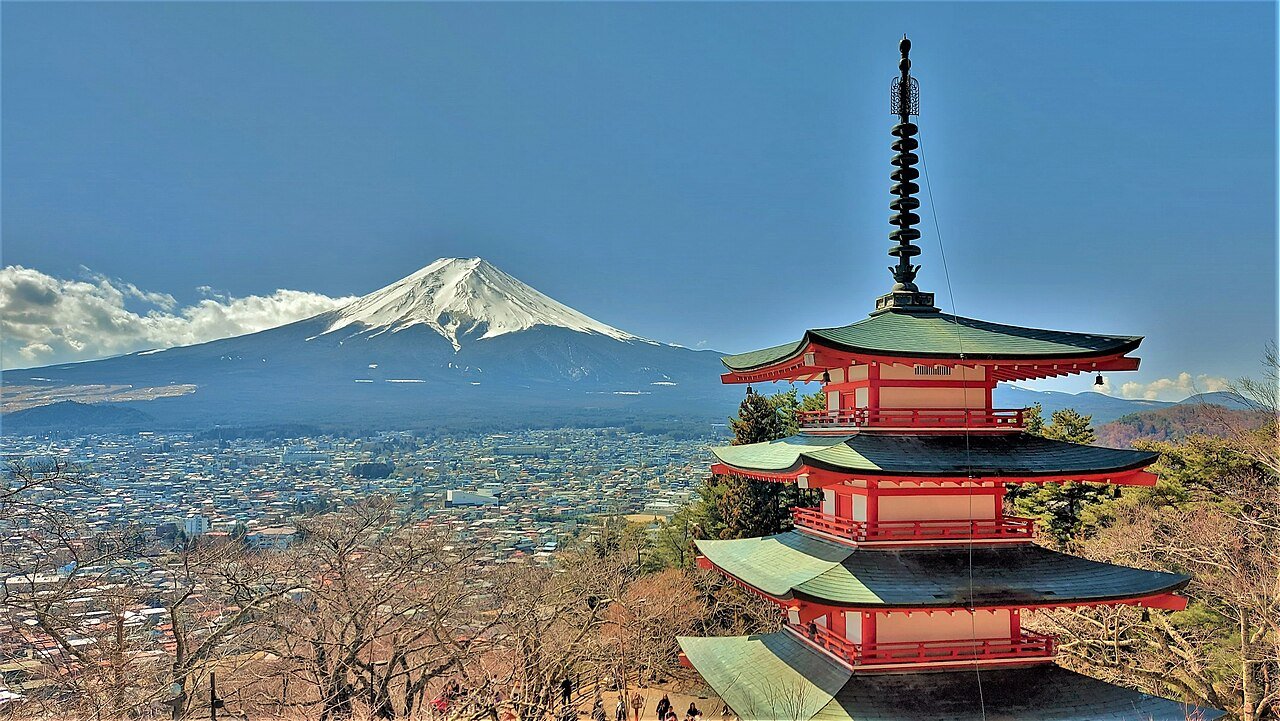
Chureito Pagoda above Lake Kawaguchiko with Mount Fuji rising in the background
Chureito Pagoda — 398 steps up from Fujiyoshida Station, and every one of them is worth it when Fuji cooperates
Getting Around

Retro Bus, Cycling, and How to Cover the Lake

The sights around Lake Kawaguchiko are spread out — Oishi Park is 5 km from the station, Chureito another 3 km. Getting your transport right is as important as getting there in the first place.

One thing that surprises first-timers: the attractions around Lake Kawaguchiko are not within easy walking distance of each other, and the most iconic spots — Oishi Park, Chureito Pagoda, Kachi Kachi Ropeway — each need their own travel segment. Plan transport before you plan your itinerary.

Retro Bus (Kawaguchiko Retro Bus)

Vintage-style red sightseeing buses circling Lake Kawaguchiko on two main routes. The Red Line runs the north shore, calling at Oishi Park and the Kachi Kachi Ropeway base station. The Blue Line loops south past Chureito Pagoda. Buses depart every 15 to 20 minutes from in front of Kawaguchiko Station.

Single fare: ¥200–500 per journey · Starts from: Kawaguchiko Station forecourt
Kawaguchiko·Saiko·Motosuko Area Pass (2-Day)

An unlimited-ride pass for all Fujikyu Bus routes in the Kawaguchiko, Saiko, Narusawa, Shojiko and Motosuko areas, valid for two consecutive days. Worth it if you plan to visit multiple spots or extend your trip to the quieter neighboring lakes.

Price: ~¥1,500 (2 days) · Where to buy: Kawaguchiko Station or online in advance
Bicycle Rental

The most popular choice for photographers. Rental shops cluster around the station and charge ¥500–1,500 per day for a standard bicycle. Lap the lake in a relaxed 2 to 2.5 hours. If you find hills tiring, an electric-assist e-bike at ¥2,000–3,000 per day is worth every yen — especially the steady incline toward Chureito.

Lake circuit: ~20 km · Time: 1.5–2.5 hr at a comfortable pace
Taxi / Car Rental

Taxis wait outside Kawaguchiko Station; the flagfall is ¥730. Good for groups or anyone with heavy bags. Car rental is possible from town, but you will need an International Driving Permit. Parking at peak-season viewpoints fills up fast and costs ¥300–500 per hour — most people find the bus or bike easier.

Note: Parking near Chureito is limited · Car rental agencies require an IDP
Tip: A Fuji-Q Highland + bus combo pass is available online (Klook, etc.) and saves money versus buying separately. See the full Kawaguchiko city guide for detailed information on each attraction.
Etiquette & Rules

What You Need to Know Before Pointing Your Camera

Kawaguchiko has dealt with significant overtourism in recent years. New rules are in force, and knowing them ahead of time makes the trip smoother for everyone.

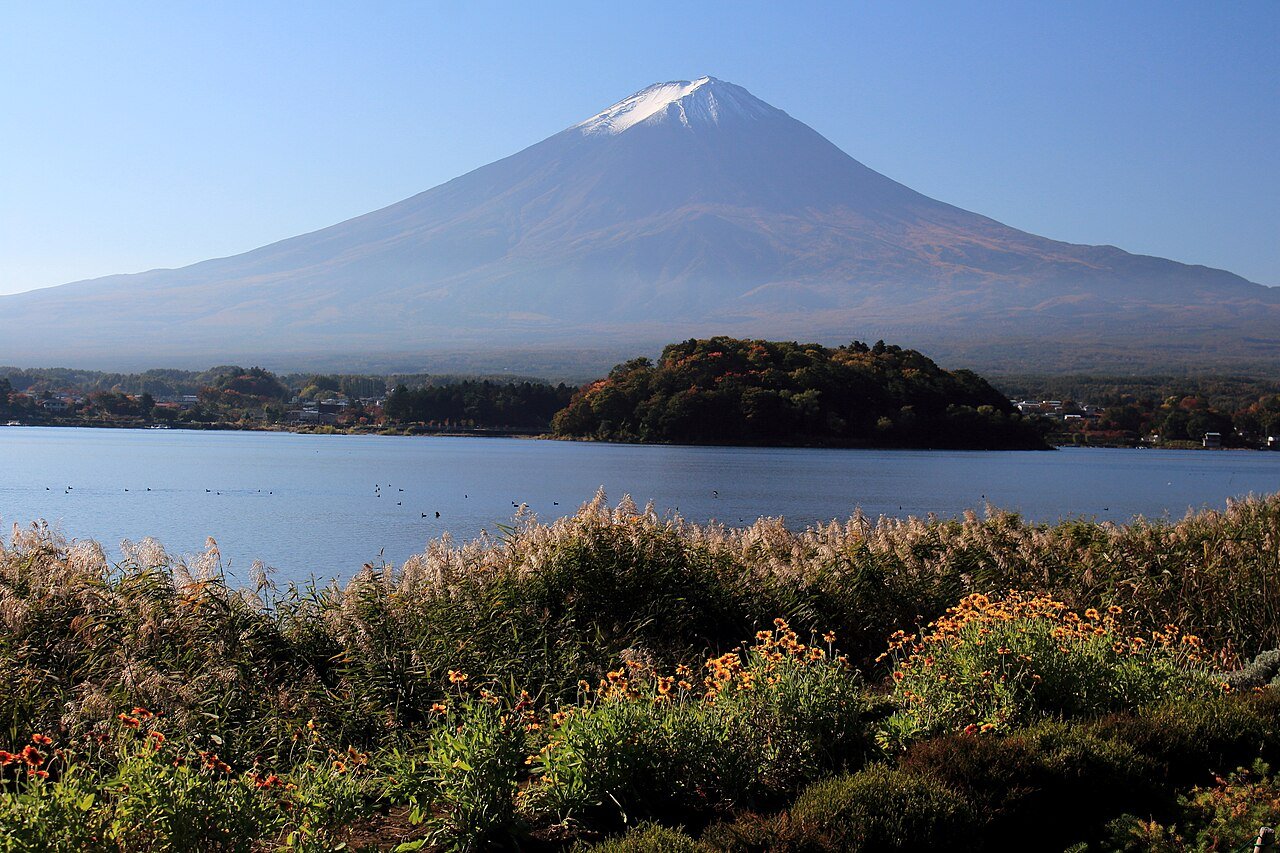
Oishi Park on the north shore of Lake Kawaguchiko with lavender flowers and Mount Fuji in the background
Oishi Park — the north-shore view of Fuji with lavender and cosmos is best before 9 AM, before the tour coaches arrive
Honest caveat: Mount Fuji is obscured by cloud more often than people expect, particularly in summer. Book at least two nights to give yourself a realistic chance of a clear view — guests who stay only one night and get cloudy weather go home without the photo they came for.
Best Time to Visit

Kawaguchiko Looks Different in Every Season

You can visit year-round, but what you see — and how many people you share it with — changes dramatically by season.

Spring (late March–May)

Cherry blossoms at Kawaguchiko peak around April 10–15. Chureito Pagoda with sakura in the foreground and snow-capped Fuji behind it is one of Japan's most iconic images. That said, this is the single busiest period of the year. Book accommodation 3–4 months out. Come on weekdays if at all possible.

Summer (June–August)

Peak Fuji-climbing season (July to early September). Humidity is high and cloud cover is frequent — Fuji can disappear for days. Fuji-Q Highland is busy and fun, and the Shibazakura festival (pink moss phlox with Fuji) runs through early May. If your main goal is a clear Fuji photo, summer is the riskiest season.

Autumn (October–November)

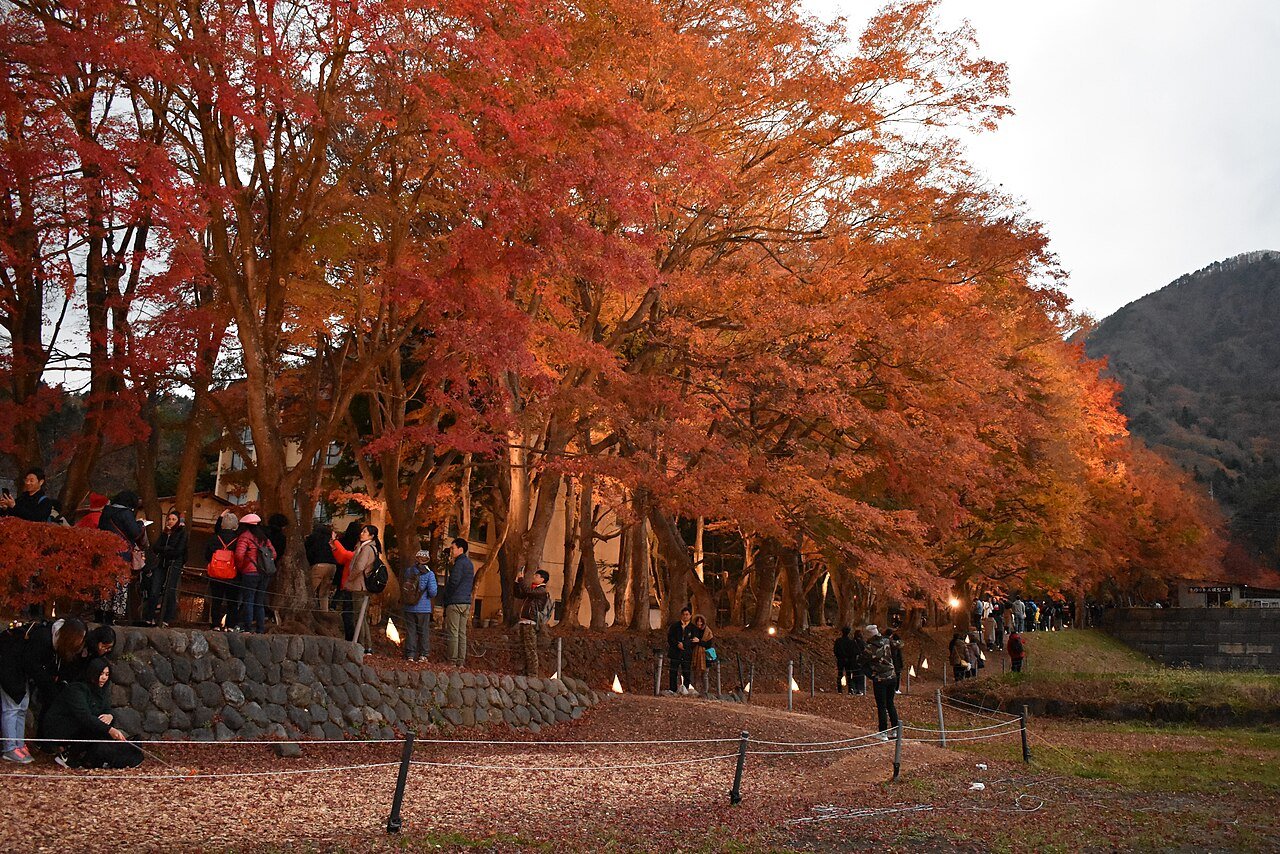
Maple leaves turn red and orange around the lake. The Fuji Kawaguchiko Autumn Leaves Festival runs in early November. Skies are more reliably clear than in summer, and Fuji views improve. Peak-foliage weekends fill hotels fast — book 2–3 months ahead. Temperatures 10–20°C; comfortable for walking.

Winter (December–February) — Clearest Fuji Views

Cold (0–8°C) and dry, with the highest ratio of clear days in the year. Fuji in fresh snow against a blue sky is the classic postcard image. Crowds are noticeably smaller than during cherry blossom season. Soaking in a rotenburo (outdoor hot spring) at a lakeside ryokan with Fuji reflecting in the water below is an experience worth the cold.

Red and orange autumn maple leaves (momiji) at Lake Kawaguchiko with Mount Fuji visible in the distance
Autumn foliage (momiji) at Kawaguchiko — the combination of red maples and snow-dusted Fuji peaks in early November
Crowd tip: Whatever season you visit, arrive at viewpoints before 9 AM. Oishi Park and Chureito are quiet and often fog-free at dawn; by mid-morning the tour buses from Tokyo have arrived and the atmosphere shifts completely.
Daily Budget

How Much Does a Day at Kawaguchiko Cost?

A rough breakdown to help you plan — adjust for your travel style.

Item Budget Mid-range Comfortable
Accommodation (per person per night) ¥3,500–5,000 (hostel/guesthouse) ¥8,000–15,000 (lake-view hotel) ¥20,000+ (ryokan with Fuji view and meals)
Food (3 meals) ¥1,500–2,500 (local diners / convenience store) ¥3,000–5,000 (sit-down restaurants · hoto noodles) ¥7,000+ (kaiseki dinner or Fuji-view restaurant)
Transport from Tokyo (one way) ¥2,000 (highway bus) ¥4,200 (Fuji Excursion reserved seat) ¥4,200+ (Green Car upgrade)
Local transport ¥500–1,000 (single bus tickets) ¥1,500 (2-day area pass) ¥3,000–5,000 (e-bike hire or taxi)
Attractions Free (Chureito hike) to ¥900 (Kachi Kachi Ropeway) ¥900–2,000 (ropeway + museum) ¥6,000 (Fuji-Q Highland 1-day pass)
Onsen / spa (optional) ¥600–1,000 (public onsen day-use) ¥1,500–2,500 (hotel day-use bath) ¥3,000+ (private kashikiri bath at ryokan)
Estimated daily total ~¥7,000–10,000 ~¥15,000–22,000 ¥30,000+
Local eat tip: Hoto (ほうとう) — flat wheat noodles in a thick miso broth with pumpkin and vegetables — is Yamanashi's signature dish and costs around ¥1,200–1,500 at local restaurants near the station. It is filling, warming, genuinely delicious, and a far better meal than a chain restaurant. Look for the wooden signs on the road toward Oishi Park.
What to Pack

Packing List and Practical Essentials

Clothing and Gear

A windproof jacket (the lakeshore is exposed and can be cold even in autumn), a small microfibre towel if you plan to use a public onsen, a hair tie for long hair, good walking shoes (Chureito involves 398 steep steps), and a portable battery pack for the hours before dawn when you are waiting for Sakasa Fuji.

Winter: Gloves, hat and a proper down jacket — mornings near 0°C are common December through February
Camera and Photography

A tripod is essential for Sakasa Fuji before sunrise. A polarising filter reduces glare on the lake surface later in the morning. If shooting on a phone, switch to Pro mode and manually set ISO and exposure. Map your golden-hour timing at home — the Fuji photographic window changes by 15–20 minutes per week across the year.

Best spots: Ubuyagasaki shoreline · Oishi Park north shore · Chureito Pagoda · Kachi Kachi observation deck
Money and Payments

Many local restaurants and public onsens are cash-only. The 7-Eleven ATM inside Kawaguchiko Station accepts most international cards and is the most reliable in the area. Suica or other IC cards work on the Fujikyu Railway and some buses, which saves fumbling for coins at each stop.

Currency: Japanese Yen (¥) · Best ATM: 7-Eleven inside Kawaguchiko Station
SIM / Wi-Fi and Apps

Mobile coverage around the lake is solid on all major networks. A data eSIM is tidier than renting a pocket Wi-Fi router. Apps worth installing before you leave: Google Maps (excellent for Japan), Navitime (for bus timetables), Google Translate with Japanese downloaded offline, and a weather app — check the forecast the night before for your Sakasa Fuji shot.

Airalo eSIM: Save $3 with code CHAT0027 · Activate before you board
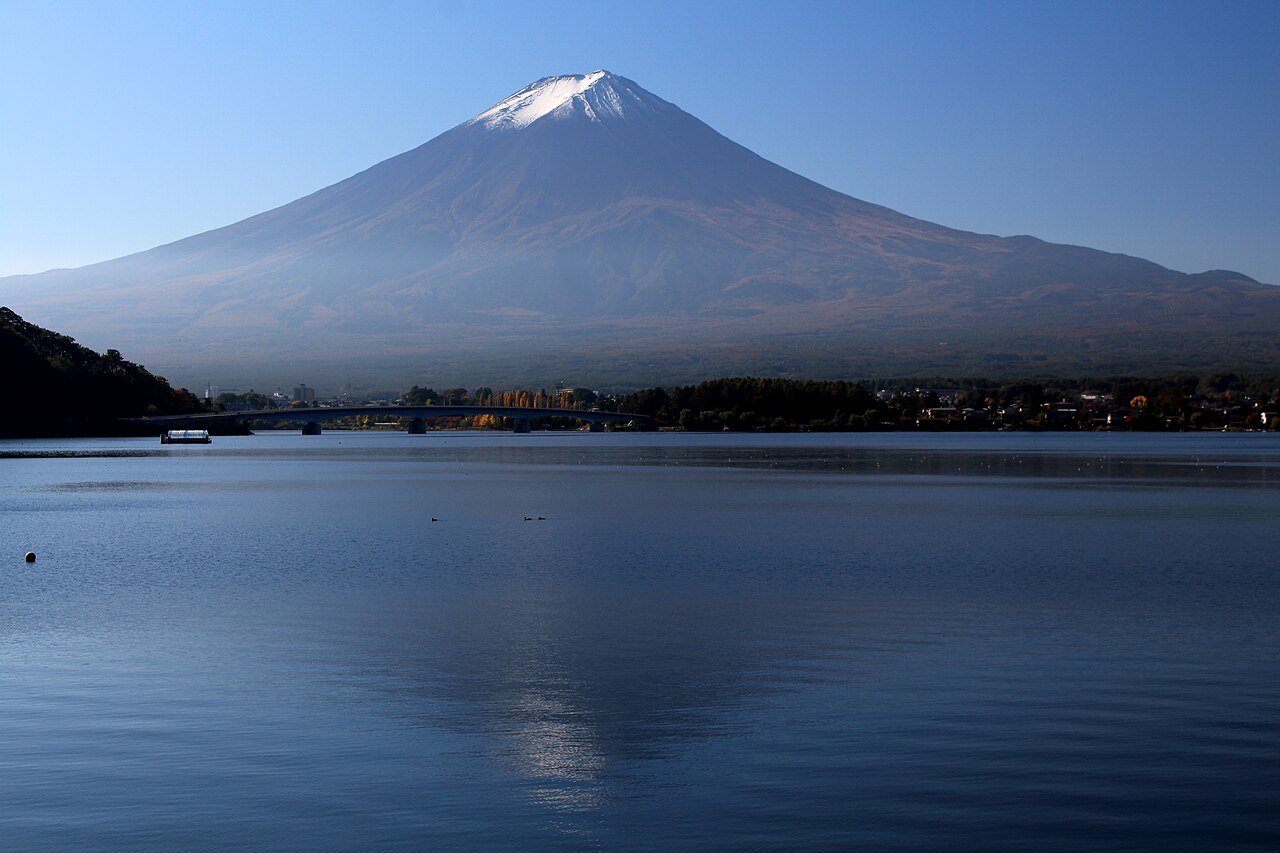
The inverted reflection of Mount Fuji (Sakasa Fuji) on the perfectly still surface of Lake Kawaguchiko at dawn
Sakasa Fuji — the inverted reflection requires a completely still surface, zero wind, and an alarm set well before sunrise
Families

Kawaguchiko with Kids

Kawaguchiko is genuinely family-friendly. Children enjoy Fuji-Q Highland, the folk-tale characters on the Kachi Kachi Ropeway, and swan boat rentals on the lake. Here are the highlights most families gravitate toward.

Fuji-Q Highland

An amusement park on the lakeshore with multiple world-record coasters. Fujiyama (79 m drop) and Do-Dodonpa (0 to 180 km/h in 1.56 seconds) are the headliners. Thomas Land is a dedicated zone for younger children with rides and characters. A genuinely excellent full-day option for mixed-age families.

Entry: ~¥6,000 adults (1-day pass) · Open: 09:00–17:00 (extended on holidays)
Kachi Kachi Ropeway

A 3-minute gondola ride to Tenjoyama (1,104 m) with 360-degree views of Fuji and the lake. Characters from the Kachi Kachi Yama folk tale (a rabbit and a raccoon) appear throughout the station area, which children in Japan tend to recognise immediately. An easy walk back down through the forest takes 20–30 minutes.

Ropeway fare: ¥900 return · Open: 09:00–17:20
Swan Boats and Lake Activities

Pedal-powered swan boats and rowboats are available at the jetty near Kawaguchiko Station for around ¥700–1,000 per 30 minutes. Children almost universally enjoy these. Bicycle rental shops also carry children's bikes if your kids are old enough to ride. Stick to the flatter north-shore path rather than the hillier south.

Boat rental: Jetty near Kawaguchiko Station · Children's bikes: Available at station-area rental shops
Oshino Hakkai — Clear-Water Village

An Edo-period farming village about 10 km from Kawaguchiko with eight crystal-clear spring pools fed by snowmelt from Mount Fuji. Children love watching the enormous koi in the pools. Quieter and more atmospheric than the main lakeside area. Reachable by bus in around 20 minutes from Kawaguchiko Station.

Entry: ¥500 adults (children ¥300) · Bus: ~20 min from Kawaguchiko Station
Frequently Asked Questions

FAQ · Before You Visit Kawaguchiko

How do I get to Kawaguchiko from Tokyo?
The most direct option is the Fuji Excursion limited express from Shinjuku Station, which runs non-stop to Kawaguchiko in 1 hour 54 minutes for ¥4,200 including the reserved seat. It operates four round trips daily. For a cheaper option, take the highway bus from Busta Shinjuku starting at ¥2,000 — it takes around 1 hour 45 minutes to 2 hours on a clear traffic day, but can stretch significantly on public holidays. Book the bus in advance during spring and autumn peak periods.
When is the best time to see Mount Fuji clearly?
Winter (December to February) statistically offers the most clear-sky days of the year, and Fuji in fresh snow against blue sky is at its most dramatic. Spring (April) adds cherry blossoms to the scene but brings the biggest crowds. Summer (June to August) is the highest-risk season for cloud cover — Fuji can hide for consecutive days. Regardless of when you visit, arrive at viewpoints before 9 AM, when the mountain tends to be clearest before the day's thermal activity builds up. And plan for two nights: one clear morning out of two is a reasonable expectation.
Is the sightseeing bus pass worth it?
Yes, if you are visiting multiple spots across the lake in one or two days. The 2-day Kawaguchiko, Saiko and Motosuko area pass (~¥1,500) covers the Retro Bus Red Line (Oishi Park, Kachi Kachi Ropeway base) and Blue Line (Chureito), plus services to neighboring lakes. If you are renting a bicycle and only passing through one or two stops, individual tickets (¥200–500 each) may work out cheaper. The pass is available from Kawaguchiko Station or in advance online.
How crowded does it get, and how do I beat the crowds?
Cherry blossom season (April) and autumn foliage (November) are the busiest periods. Popular viewpoints at Oishi Park and Chureito can feel genuinely uncomfortable after 10 AM when tour buses from Tokyo arrive. The Lawson photo spot has been permanently blocked by a black mesh barrier — do not waste a trip there. To avoid the worst of it: arrive at every viewpoint before 9 AM, travel on weekdays rather than weekends, and consider the quieter neighboring lakes — Saiko and Motosuko see roughly 40% fewer visitors and the Fuji views are equally fine.
What is a realistic daily budget for Kawaguchiko?
Budget travelers can manage on ¥7,000–10,000 per day (hostel, local meals, bus pass, a couple of entry fees). A comfortable mid-range day — lake-view hotel, hoto noodle dinner, a couple of activities — comes to ¥15,000–22,000. A traditional ryokan with Mount Fuji views and a kaiseki dinner included typically starts at ¥20,000–50,000 per night, but since dinner is built in it often represents better overall value than it appears. Remember to add the Tokyo round-trip transport cost (¥4,000–8,400 return depending on option).