As the sun drops, the curtains in the narrow alleys start rolling up one by one — Noge is Yokohama's retro nightlife quarter, nearly 600 little shops crammed into the back lanes, just a few minutes from Sakuragicho. We've pulled together the shops worth trying, how to bar-hop, the free zoo for daytime, and what to know before you go, all on one page.
Picture a district that by day looks like a row of shuttered shops — faded old signs, a barber's spinning pole — but as five o'clock rolls around, the shop curtains (noren) start sliding up one by one, the red lanterns flick on, and the smell of grilling yakitori drifts out from the counters. That's Noge, Yokohama's after-dark eating-and-drinking quarter, with nearly 600 little shops packed into its narrow alleys. It has been a drinking district since the postwar years and the atmosphere has barely changed, so people love to compare it to Tokyo's Golden Gai — the difference being that prices here are far gentler than in central Tokyo.
This page walks you through Noge knowing the lay of the land — what kinds of shops there are, how to bar-hop from one to the next for the most fun, what to do during the day (a free zoo), and the real things to know before you go, like the fact that shops open evening to late, seats are few, and some places are still cash-only. If you want to see the genuinely local side of Yokohama — not just the Ferris wheel by the bay — Noge is the place to walk.
Noge's alleys aren't just izakaya — there's a mix of different shop types side by side. Knowing the differences first helps you pick the right place and makes bar-hopping more fun (the prices below are rough per-person estimates and vary by shop).
| Shop type | Vibe | What you'll find | Rough budget/person |
|---|---|---|---|
| IzakayaIzakaya · Japanese pub | Sit-down drinking | Sashimi, grilled dishes, sake, small plates | ¥2,000–4,000 |
| Standing barStanding Bar · tachinomi | Quick standing drink | Beer, highballs, a clink of glasses with the person next to you | ¥1,000–2,500 |
| Yakitori shopYakitori · grilled chicken skewers | Counter seating | Charcoal-grilled chicken skewers, draft beer | ¥1,500–3,000 |
| Motsu-nikomi shopMotsu-nikomi · stewed offal | Deeply local | Miso-stewed offal, paired with Hoppy | ¥1,200–2,500 |
| Jazz bar / live houseJazz Bar · Live House | Live music | Drinks + a cover charge for the show | ¥3,000–5,000 |
| Snack / small barSnack Bar · owner-run bar | Chat with the owner | Drinks, karaoke, sometimes a seating charge | ¥2,500–5,000 |
From the red-lantern alleys at night to the free zoo by day — these are the things worth ticking off when you come, with the emphasis on wandering and trying a few shops rather than anchoring at just one.
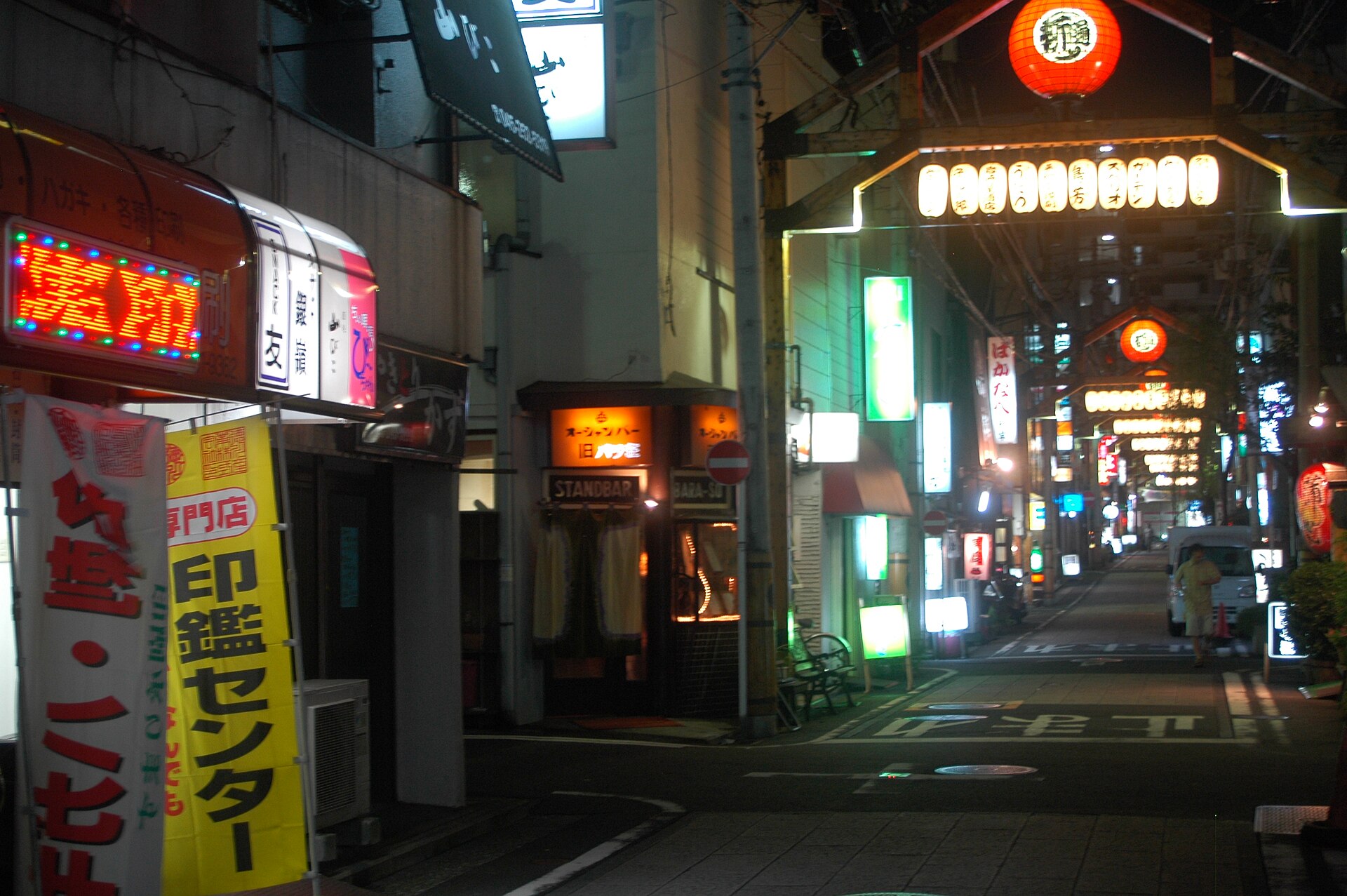
🏮 Heart of the District1
The heart of the district is the maze of narrow alleys with nearly 600 little shops packed wall to wall. Come evening, the red lanterns and old neon signs light up all at once; walk through and you catch the smell of grilling and the clink of glasses from every doorway. The real charm isn't any single shop — it's strolling around and ducking into whichever one catches your eye.
Yokohama Attractions →The way locals do Noge is to never anchor at one place — order a drink and a small plate at each shop, then move on (the Japanese call it hashigo-zake, "ladder drinking"). Because the shops are tiny, just 6–10 seats, moving on lets you try several styles and frees up a seat for someone else.
Yokohama Food Guide →A city-centre zoo with free entry, open since 1951, home to around 1,800 animals across more than 80 species — giraffes, lions, lesser pandas and more. It's compact enough to see fully in just over an hour, and it pairs perfectly with this district as a daytime activity, since the eating-and-drinking shops aren't open yet.
Yokohama Attractions →Yokohama has deep jazz roots going back to the days when the port first opened, and Noge is the heart of the city's jazz scene. Several long-running jazz bars are tucked into the alleys, putting on live sets in the evening in an intimate setting where you can sit, sip a drink, and listen all night.
Yokohama Attractions →Pio City is a classic restaurant building under the railway tracks near Sakuragicho Station, known for "Hoppy" (a traditional-style drink). Noge Tabemono Yokocho — the "Noge Food Alley" — is the most old-school yokocho in the district, with shops crammed shoulder to shoulder in a genuinely Showa-era huddle.
Yokohama Food Guide →Walk across from Noge to the other side and you reach Isezakicho, a long pedestrian shopping street, and Yoshidamachi, a quarter that mixes old shops with international ones. If you're not ready to head home, shift over here to keep going — the atmosphere is a little different from Noge's alleys, more open and busier.
Yokohama Attractions →The appeal here is small-shop food and bar snacks, not fine dining — these are the three things worth ordering at least once while you bar-hop.
Chicken skewers grilled over charcoal are the classic match for a draft beer, found in nearly every alley. Order them one skewer at a time — there's breast, skin, liver, and various offal cuts — and choose salt (shio) or sauce (tare). Prices start around 100–200 yen a skewer, a great way to kick off the night.
Motsu-nikomi — offal simmered in hot miso or soy broth — is the deeply local dish of an old drinking district. Pair it with Hoppy, a light, smooth malt-and-shochu drink that's easy on the wallet. It's the combination Noge regulars have been ordering for generations.
Yokohama is a port city, so many izakaya have fresh sashimi and seafood in season. Order small plates to share alongside chilled sake — a snack that suits the harbour-town mood. Want to dig deeper into where to eat in Yokohama? See our food guide.
Noge isn't a place you stay, but it's very easy to reach — come as a day trip from Tokyo or Yokohama, or tack it on after Kamakura. If you'd rather drink at ease without rushing back, a night in Yokohama is worth it.
The easiest way is to take the train to Sakuragicho Station — served by both the JR Negishi/Keihin-Tohoku line and the subway Blue Line — then walk across to the Noge side, about 3 minutes · the other option is Hinodecho Station on the Keikyu line, near the southern edge of the district · from central Tokyo, the train to Sakuragicho takes about 30–40 minutes.
The whole city at a glance — districts worth visiting, where to stay, where to eat, and how to get there from Tokyo, all on one page.
Yokohama Guide →Minato Mirai, the Red Brick Warehouse, Chinatown, Sankeien Garden, and the standout check-in spots across the port city.
Yokohama Attractions →The modern waterfront district — landmark towers, the Ferris wheel, and bay views after dark — a different zone from Noge.
Minato Mirai Guide →Japan's largest Chinatown — steamed buns, dim sum, and the lively alleys of Chinese food.
Chinatown Guide →Yokohama ramen, port-city seafood, and standout spots across the city — keep hunting after Noge.
Yokohama Food Guide →A full-day route taking in Minato Mirai, Chinatown, and Noge in the evening — make the most of one trip.
Yokohama Itinerary →Start by browsing well-placed stays around Sakuragicho-Minato Mirai that are walkable to Noge, or open the Yokohama guide to plan a full-day route that flows into a night in the izakaya alleys.