A small island off the coast of Kagoshima where it rains almost every day — and that rain grew a moss forest so green that Ghibli used it as the backdrop for Princess Mononoke. We'll walk you through the legendary moss trails, the hunt for thousand-year-old cedars, and how to prepare for this island's relentless rain.
Picture a near-circular island in the sea off the southern tip of Japan, almost entirely mountain cloaked in ancient forest, where it rains so often that locals joke "it rains 35 days a month" — this is Yakushima, an island of Kagoshima Prefecture that became one of Japan's first Natural World Heritage Sites (in 1993). That rain is the real star, because it keeps the trees, rocks and forest floor blanketed in soft emerald moss until the whole place looks like it stepped out of a fairy tale.
People who've been all say the same thing — Yakushima feels like stepping into another world: walking the moss forest that inspired Ghibli's Princess Mononoke, standing before giant cedars thousands of years old, listening to waterfalls thunder through the drizzle. This page will show you what there is to do, how to pick a hiking trail to match your fitness, which way to reach the island from Kagoshima, and how to prepare for the island's rain so your trip is still a great one.
The magic of this island is in the hiking, but the difficulty varies wildly — from a paved, easy hour-long stroll to a full-day, 22-kilometre trek. Here's a side-by-side so you choose the right one (distances and times are approximate and shift with the weather and your pace).
| Trail | Level | Distance (round trip) | Total time | Known for |
|---|---|---|---|---|
| Yakusugi Land (short loop)Yakusugi Land | Easy | ~0.8–1.2 km | 30–50 min | Old cedars, paved path, easy walking |
| Yakusugi Land (long loop)Yakusugi Land · mountain | Easy–moderate | ~3–8 km | 80 min–7 hrs | The Yamato-sugi cedar, ~3,000–4,000 years old |
| Shiratani (Yayoi-sugi route)Shiratani Unsuikyo | Easy | ~2 km | ~1 hr | A taste of the moss forest without the effort |
| Shiratani (moss forest–Taikoiwa)Shiratani · Taikoiwa | Moderate | ~5.6 km | ~4 hrs | The Mononoke moss forest + a rock viewpoint |
| Jomon Sugi (Arakawa route)Jōmon Sugi | Hard | ~22 km | 9–11 hrs | The thousand-year cedar · pre-dawn start |
These are the spots people come back raving about — from the legendary moss forest and ancient cedars to a giant waterfall and a seaside onsen. Mix and match them to the energy and time you've got.
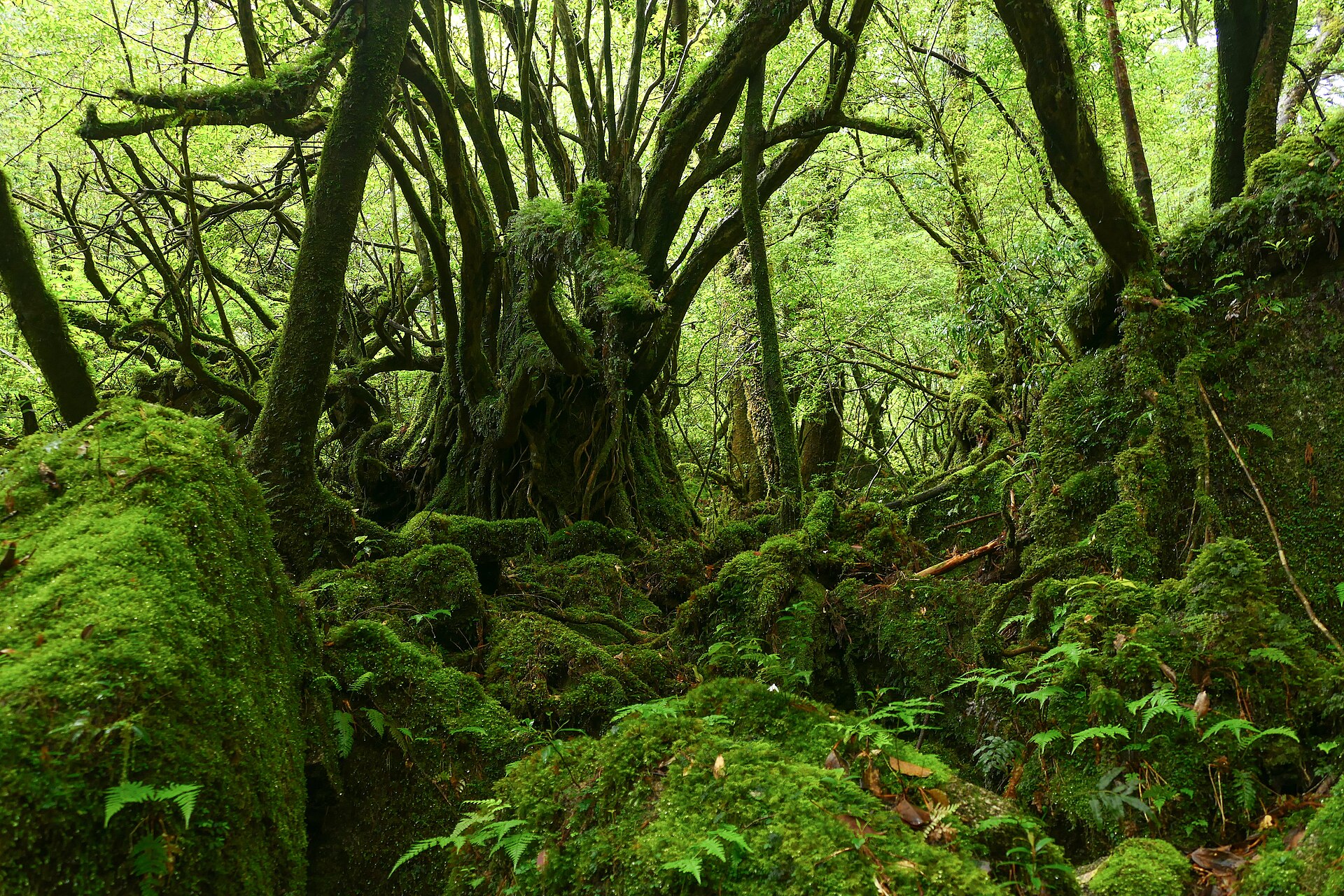
🌲 Moss Forest1
If you only have time for one thing, make it this — the moss-covered area (Kokemusu) was the inspiration for the forest in Studio Ghibli's Princess Mononoke. Ancient trees and rocks draped in thick, soft moss turn the whole forest fairy-tale green. There are several routes to choose from, from about 1 hour up to the Taikoiwa route at around 4 hours.
Japan Nature Escapes →
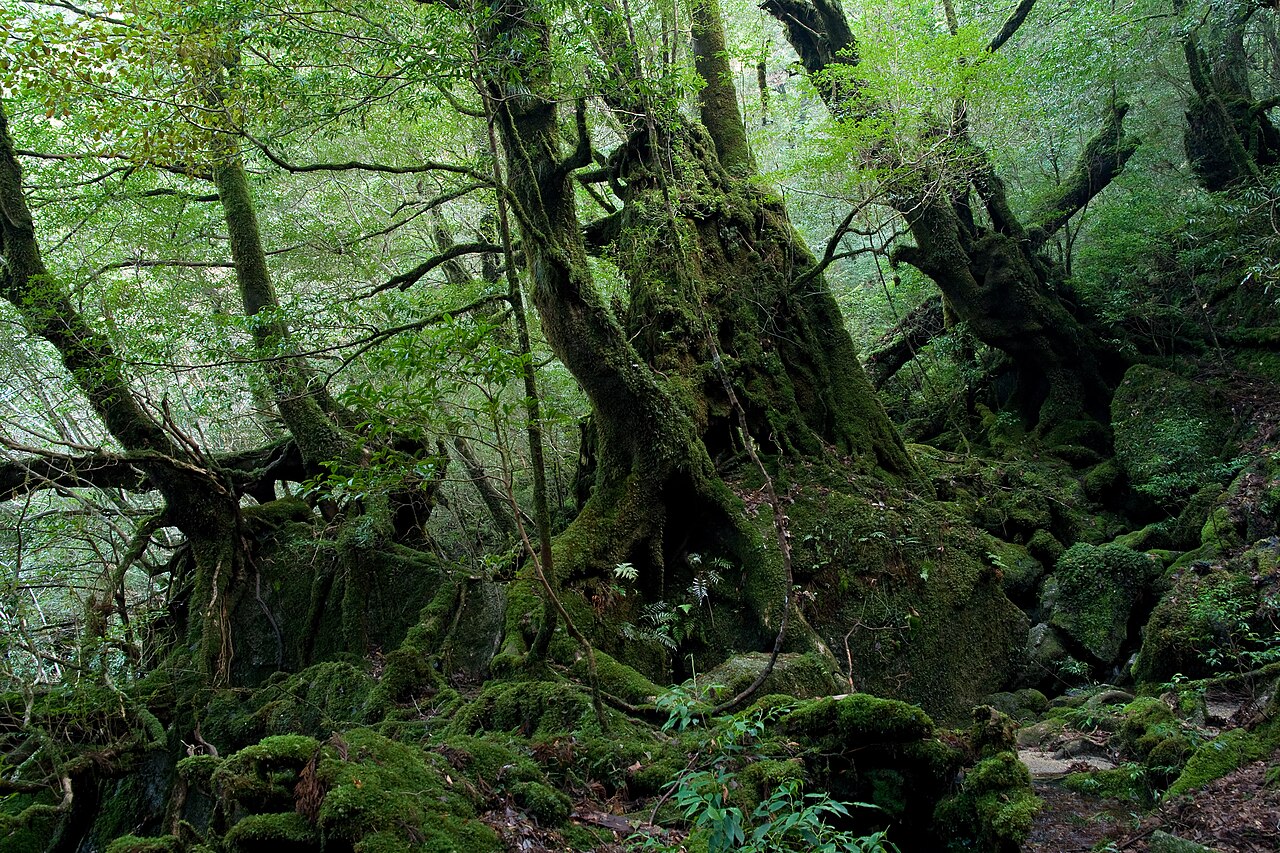
🌳 Ancient Cedar2
The oldest Yaku cedar on the island and reckoned to be one of the oldest trees in Japan, with an estimate spanning a huge range — roughly 2,000 to 7,000 years old. Standing before it is a real test of yourself, because it means the Arakawa trek: a round trip of about 22 kilometres, 9–11 hours in a single day. The first stretch follows an old wooden railway. The tree in this photo is from Yakushima's own Yaku cedar forest.
Kagoshima Guide →A great option if you want to see ancient cedars but don't fancy an all-day trek — there are paved, easy loops of just 30–50 minutes, up to longer mountain routes (80–210 minutes). The medium long loop of about 8 kilometres passes the Yamato-sugi cedar, estimated at roughly 3,000–4,000 years old. Ideal for families or anyone short on time.
Japan Nature Escapes →All that rain leaves the island scattered with beautiful waterfalls — Oko-no-taki, around 88 metres tall, is on Japan's list of the 100 finest waterfalls, while Senpiro is about 60 metres and can be admired from a viewpoint without any trekking. The falls here are at their most spectacular on a rainy day, and on clear days you'll sometimes catch a rainbow.
Japan Nature Escapes →The island's strangest and most fun onsen — a natural rock pool by the sea that only emerges from the water for about 2 hours either side of low tide. When the tide rises, the pool vanishes back into the sea. Soaking here while you watch the waves roll in is an experience you won't find just anywhere — just check that day's tide table before you go.
Japan Onsen Guide →The island's largest sandy beach and one of the biggest loggerhead-turtle nesting sites in the North Pacific. Female turtles return every year to the beach where they hatched, between May and August. Outside nesting season, this is also one of the island's finest sunset spots.
Kagoshima Guide →An island like this has incredibly fresh seafood, plus local fruit and forest fare — drop into a restaurant in Miyanoura or Anbo town after a day's hiking (menus are seasonal, so some things only appear in certain months).
Yakushima lands more flying fish (tobiuo) than anywhere in Japan — the flesh is firm and lean, eaten as sashimi, salt-grilled, or fried whole with crisp fins. The favourite souvenir is "tsukeage", deep-fried fish cakes. Another local catch is kubi-ore saba (neck-snapped mackerel), which fishermen kill the moment it's caught and serve as very fresh sashimi.
The island grows more tankan and ponkan citrus than anywhere in Japan — sweet, juicy and local. Ponkan is harvested around December and tankan around February–March, when you'll find them fresh at the stalls. Out of season there's fresh-pressed juice, sweets and processed souvenirs to try.
The island has its own Yaku deer, so some restaurants serve venison as steak or grilled, rich and gamey. You'll also find mixed sashimi platters that change with the day's catch — it's worth asking the restaurant what's especially fresh today.
To be clear, Yakushima isn't a luxury-resort island — most places to stay are lodges, minshuku (family guesthouses) and small hotels, clustered in the two main port towns: Miyanoura in the north, the biggest port and closest to the Shiratani trailhead, and Anbo in the east, near the trailheads for Jomon Sugi and Yakusugi Land. Pick the side closest to your main activity and you'll save a lot of travel time on the island.
If you're doing the pre-dawn Jomon Sugi trek, staying on the Anbo side is more convenient. If you're focused on the Shiratani moss forest and arriving by boat, Miyanoura is easier. Another popular option is to stay in Kagoshima city and take the fast ferry over and back — good if you want to see the island in a day or don't want to keep changing hotels, but allow ~2 hours per crossing for the boat.
Lodges and small hotels in Miyanoura and Anbo — pick the side closest to the trail you plan to hike, then compare prices and reviews.
🏨 Search Yakushima Stays →Want a day trip to the island, or to see more of Kagoshima? Base on the mainland and take the fast ferry across.
🏨 Search Kagoshima Stays →Yakushima is an island, so you always start in Kagoshima Prefecture. From the city there's both boat and plane to suit your budget and time (prices and 2026 schedules can change, check the latest before booking).
The Toppy/Rocket hydrofoils from Kagoshima port take about 2 hours, arriving at Miyanoura or Anbo port, with several sailings a day (around 5 return trips · fewer in winter). It's the most popular choice because it's fast and flexible.
The Yakushima Ferry 2 takes about 4 hours each way, once a day (leaving Kagoshima around 08:30 · returning from Miyanoura around 13:30). It's cheaper than the fast ferry and can carry cars — good if you're not in a hurry and want to save.
Direct from Kagoshima Airport to Yakushima Airport in about 40 minutes, several times a day (JAC, part of the JAL group). It's the quickest and most comfortable if you don't mind a small plane. A regular fare is around ¥21,000, with discount fares often ¥12,000–18,000 — check the latest.
See clearly where each highlight sits on the island — the moss forest and cedars are in the centre, the waterfalls and onsen are scattered along the coast. Plan your loop route from here.
Kumamoto's giant volcanic caldera — the turquoise Nakadake crater, the Kusasenri grasslands, and viewpoints over the whole rim.
Mount Aso Guide →The ancient pilgrimage trails of the Kii Peninsula — Nachi Falls, the three Kumano shrines, and onsen deep in the forest.
Kumano Kodo Guide →The doorway to Yakushima — Sakurajima volcano, onsen, and the port city you sail or fly across from.
Kagoshima Guide →How to bathe, the etiquette, the tattoo question, and everything a first-timer needs to know before their first soak.
Onsen Guide →Nature and World Heritage destinations across Japan — forests, mountains, islands, and city escapes worth the trip.
Japan Nature →Visa · eSIM · IC cards · JR Pass · yen · power plugs · etiquette — everything before you fly to Japan.
Travel Prep →Start by choosing the side of the island closest to the trail you want, book your ferry or flight from Kagoshima, and pack a proper rain set — island accommodation is limited, so book early before the rainy season and long weekends sell out.