🌏 Destinations · All 🇯🇵 Japan · full guide Matsumoto Matsumoto Attractions Kamikochi 🏯 Tsumago & Magome 🧭 Travel Prep Guide About Contact 🇹🇭 ไทย🇬🇧 English🇨🇳 中文🇪🇸 Español🇫🇷 Français
🏯 Tsumago & Magome · Nagano/Gifu

Tsumago & Magome — Edo-Era Post Towns and the Nakasendo Trail

Picture walking a wooden street with no cars and no power poles, as if you'd stepped into Japan 400 years ago — two of the best-preserved post towns in the Kiso Valley, linked by an 8 km ancient forest trail you can actually walk in the footsteps of Edo-era samurai and merchants.

Start Here

Two Towns Where Time Stopped —Walking the Old Nakasendo Highway

Back in the Edo period, the Nakasendo (Nakasendo) was one of the two great highways linking Edo (today's Tokyo) with Kyoto, threading its way through the inland mountains. Along the route, 69 post towns gave travellers, samurai, and merchants a place to rest — and the two best preserved of them all are Tsumago-juku and Magome-juku, sitting in the heart of the Kiso Valley, separated by cedar forest and the Magome Pass.

What makes this place special is how real it feels — Tsumago bans cars during the day and hides every power line, so you can walk the wooden street with nothing from the 21st century cluttering the frame. For many people the highlight is walking the 8 km Nakasendo trail that links the two towns, past old farmhouses, tiny shrines, and waterfalls. This page pulls together everything you need to know — what to see, the local Kiso food, where to stay, and exactly how to get there.

🚶 Straight up, first thing: if you're going to walk the trail, do it from Magome → Tsumago — you climb the Magome Pass (peaking at about 801 metres) early on and then have a longer descent, which is less tiring than going the other way. There's also a luggage-forwarding service between the two towns (about ¥1,000 per piece) so you can walk hands-free — details further down.
🏯
Edo Post Towns
Tsumago = the 42nd stop on the Nakasendo, preserved since 1968.
🚶
8 km Trail, ~2–3 hrs
Over the Magome Pass through cedar forest, bear bells along the way.
🚫
Car-Free, Wires Hidden
Tsumago's main street is car-free by day — photos with an authentic feel.
🧳
Luggage Forwarding
Drop bags in the morning, collect them in the other town — about ¥1,000.
The Two Towns Compared

Tsumago vs Magome —What Each One Is Like

Both are Edo-era post towns on the Nakasendo, but their atmosphere is clearly different — Tsumago is a flat, strictly preserved wooden street, while Magome is a steep stone-paved street climbing the hillside with wide views. Knowing this helps you choose where to stop, or whether to walk the trail linking the two.

FeatureTsumago-jukuMagome-juku
PrefecturePrefectureNaganoGifu
The streetStreetFlat wooden street, houses close on both sidesSteep stone-paved street up the hillside
AtmosphereVibeQuiet, classic, authentic EdoWide mountain views, water wheels, livelier
HighlightHighlightHonjin + Waki-honjin (Okuya), car-free by dayWater wheels, Mount Ena views, Toson Shimazaki's home
Nearest stationStationNagiso (JR Chuo), ~8–15 min busNakatsugawa (JR Chuo), ~25 min bus
Overall elevationElevationLower (the downhill end of the trail)Higher (near the pass, ~600 m)
Best forBest forThose who love quiet towns and atmospheric photosThose who love big views and roadside shops
🚶 How to choose: if you have half a day and want an easy walk, start at Magome (from Nakatsugawa), walk the trail downhill to Tsumago, then catch the bus to Nagiso · if you're very short on time, just visit Tsumago alone — its car-free street has the more intense Edo atmosphere · you can see each town in roughly an hour.
6 Things to See

The Highlights ofTsumago-Magome and the Nakasendo Trail

A hand-picked list of what visitors agree is worth it — from both historic town streets and the forest trail linking them, to the waterfalls and historic lodgings, ordered so you can follow them in a single trip.
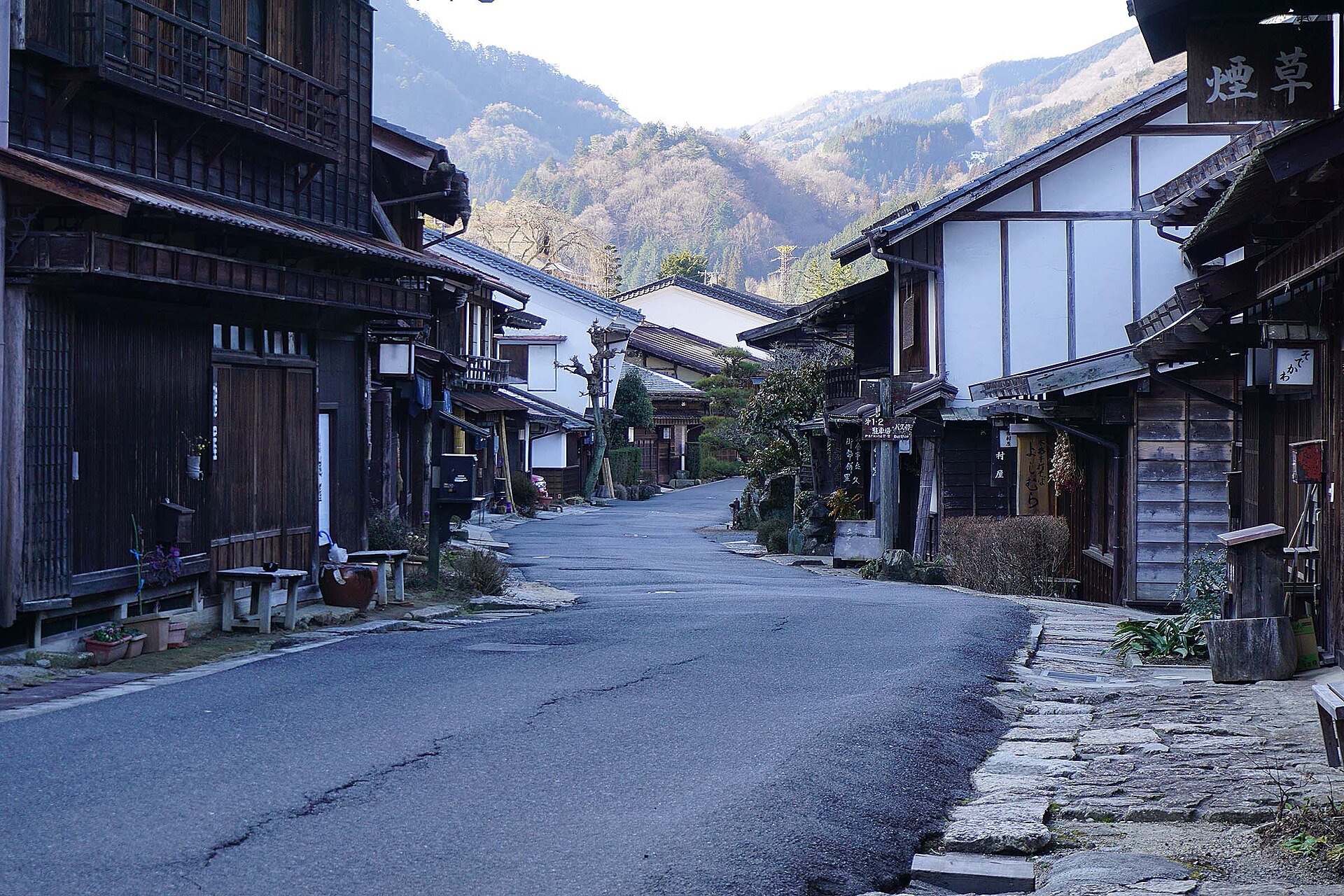
The wooden street of Tsumago-juku Edo-era post town, wooden houses on both sides, Kiso Valley 🏯 Nagano1
Tsumago-juku Post Town
Tsumago-juku · Nagano

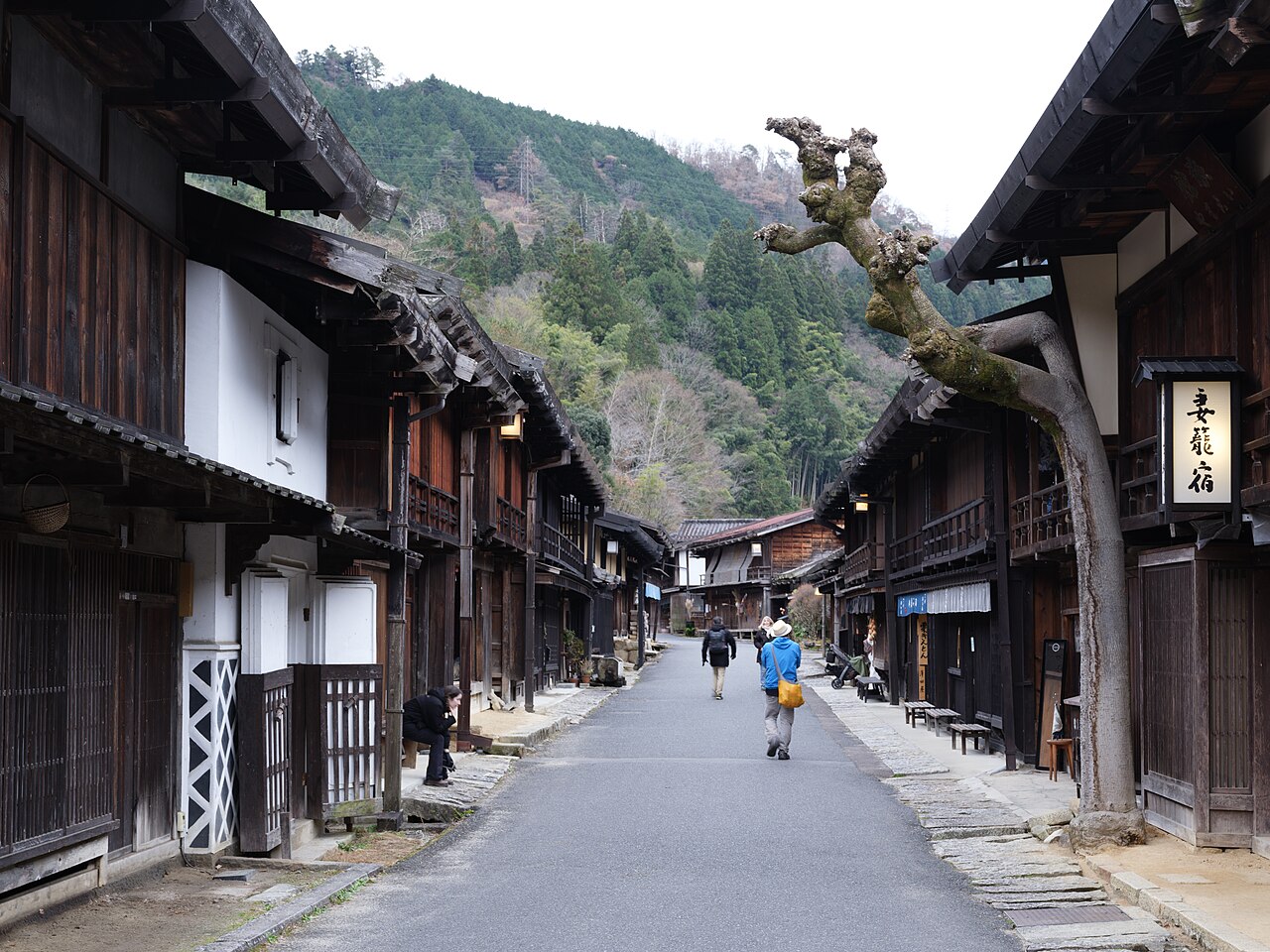
The heart of it all is the main street, which bans cars during the day and hides every power line — walk it and you genuinely feel as if you've stepped into Edo-era Japan. Dark wooden houses stand shoulder to shoulder, and you can step inside the main lodging (honjin) and the secondary lodging (waki-honjin / Okuya). This was the first town in Japan whose community came together to preserve it, back in 1968.

📍Location: Nagiso, Nagano Prefecture · Kiso Valley
🚫Known for: a car-free street by day, strict preservation, national preservation district (1976)
🚆Getting there: Nagiso Station (JR Chuo), then an 8–15 min bus
💡Tip: Come at dawn or stay overnight to see the street once the day visitors have gone — it's at its most peaceful.
Matsumoto Guide (gateway) →
The steep stone street of Magome-juku post town, wooden houses and white walls, Gifu Prefecture 🏔️ Gifu2
Magome-juku Post Town
Magome-juku · Gifu

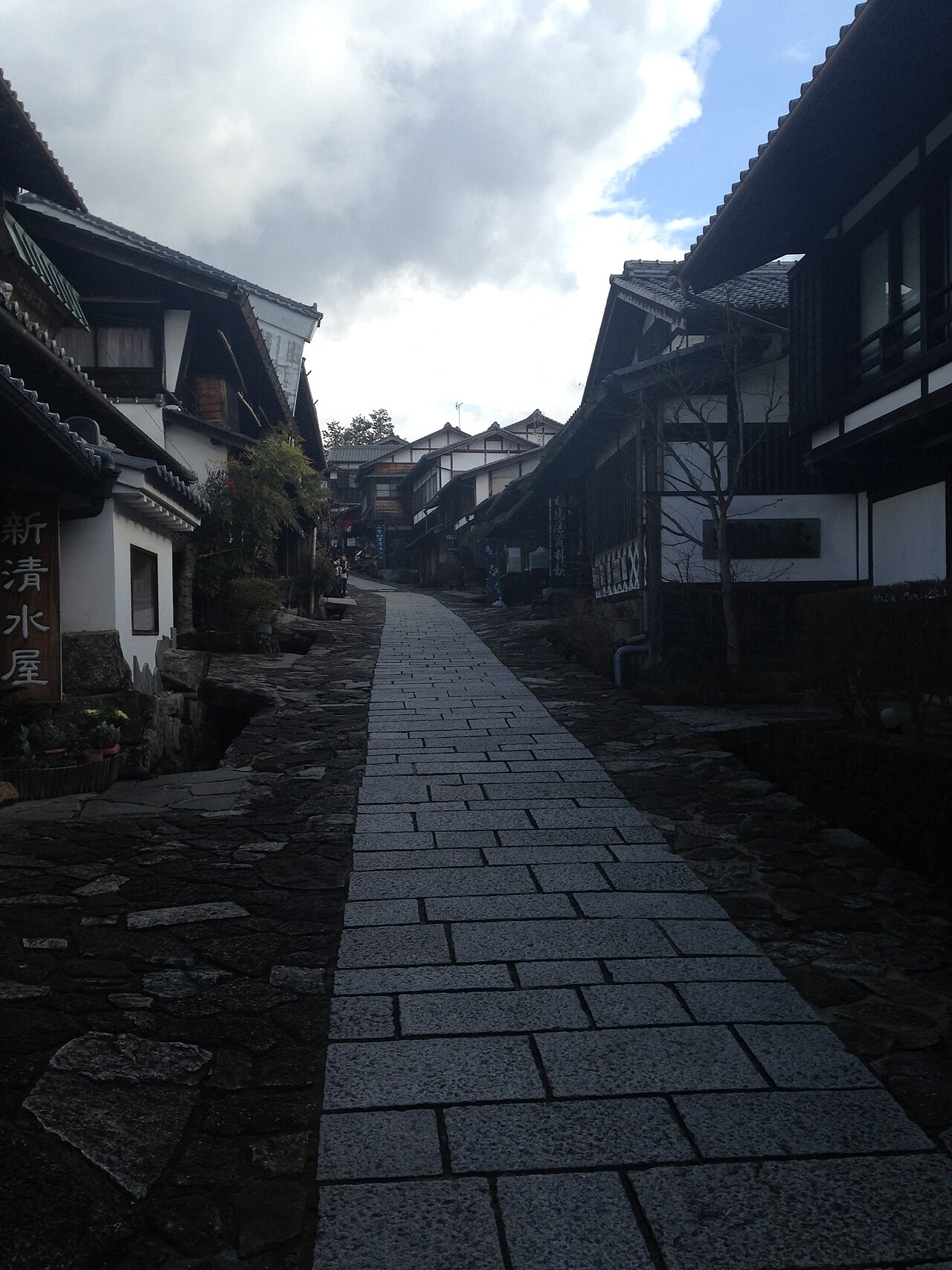
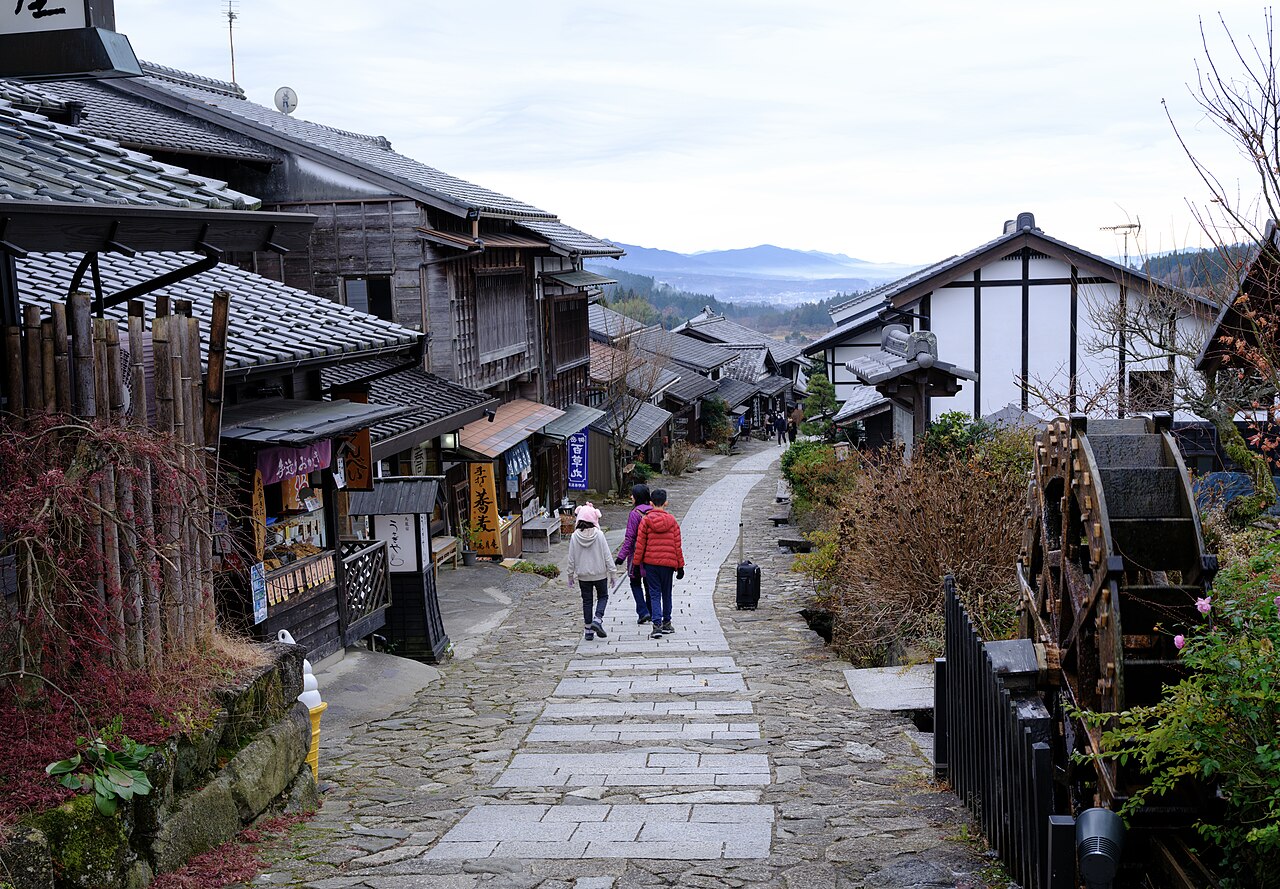
Unlike Tsumago, Magome is a steep stone-paved street climbing the hillside, lined with sweet shops, tea houses, and an old water mill. Walk to the top and a wide view of Mount Ena opens up before you. This was the birthplace of Toson Shimazaki, a major Japanese writer who wrote about the Kiso road — there's a Toson museum to visit.

📍Location: Nakatsugawa, Gifu Prefecture · the southern end of the trail
⚙️Known for: a stone street, water wheels, Mount Ena views, roadside shops
🚆Getting there: Nakatsugawa Station (JR Chuo), then a ~25 min bus (~¥1,100)
💡Tip: Try the gohei-mochi from a roadside stall — warm, with a fragrant walnut-miso sauce.
Explore Gifu Prefecture →
The stone-paved Nakasendo trail with a hiker and water wheel, mountain views of the Kiso Valley 🚶 Nakasendo3
The 8 km Nakasendo Trail
Nakasendo Trail · Magome ↔ Tsumago

The highlight for many — you follow the old Edo-era road that's still intact, past mossy stone paths, cedar forest, farmhouses, and tiny shrines. It's roughly 8 km and takes 2–3 hours, with around 200 metres of elevation change. The route is signed in both English and Japanese, and there are bear bells mounted at intervals for you to ring as you pass.

📏Distance/time: ~8 km · ~2–3 hrs · ~200 m elevation change
⛰️Highest point: the Magome Pass (Magome-toge) ~801 metres
🧭Recommended direction: Magome → Tsumago (climb early, then a long descent)
🔔Tip: Ring the bear bells at each point, wear comfortable shoes, and pack water.
More hiking at Kamikochi →
💧 🌲 On the trail4
Meoto Falls (Odaki & Medaki)
Odaki & Medaki Waterfalls

On the section of trail nearer Tsumago, a short side path drops down to the "husband and wife" waterfalls — Odaki (the male falls) is taller and stronger, while Medaki (the female falls) is smaller and gentler. It's a refreshing breather in the cool cedar forest, where the sound of the water drowns out everything else.

📍Location: on the Nakasendo trail, on the Tsumago side (a short side path)
💧Known for: twin falls in the forest, a cool resting spot mid-walk
🚶Getting there: a few minutes off the main route, signposted
💡Tip: Allow 10–15 minutes for the detour; the ground can be slippery in the rain, so step carefully.
Explore Nagano Prefecture →
🏮 🏯 Tsumago5
Honjin + Waki-honjin Lodgings
Honjin & Waki-honjin (Okuya) · Tsumago

In Edo times the "honjin" was the main lodging for the lords and officials passing through, while the "waki-honjin" was the secondary lodging — in Tsumago you can step inside both. The honjin was rebuilt in 1995 to the original design, while the waki-honjin Okuya is still the original building and is listed as an Important Cultural Property. Walking through both makes the life of a post town clear.

📍Location: on the main street of Tsumago-juku
🎟️Known for: stepping inside Edo-era lodgings, entry fee applies (check the latest at the info centre)
🏛️Highlight: Okuya = the original building, an Important Cultural Property
💡Tip: Photography may be restricted in some spots inside — check the signs and ask first.
Matsumoto Attractions →
A traveller on the old town street of Tsumago, the Nakasendo trail in the Kiso Valley 🧳 Handy service6
Town-to-Town Luggage Forwarding
Luggage Forwarding · Magome ↔ Tsumago

The trick that makes the trail far more enjoyable — the information centres in both towns will take your luggage in the morning and deliver it for pickup in the other town in the afternoon, so you can walk the 8 km with empty hands and never haul a suitcase over the pass. The fee is roughly ¥1,000 per piece, daily from about late March to November.

🕗Hours: drop-off ~8:30–11:30 · pickup in the other town ~13:00–17:00
💴Fee: ~¥1,000/piece (prices can change — check the latest at the centre)
📅Season: roughly late Mar–Nov (may close out of season)
💡Tip: Drop bags early before you start, and keep essentials (water/camera) on you.
Japan Travel Prep →
Food & Drink

Kiso Valley Local Eatsto Try Along the Way

The Kiso Valley has clear water, cool air, and ingredients straight from the mountains, so the food is simple but genuinely good — drop into the tea houses and little roadside shops in both towns to refuel as you walk.

LOCAL SNACK
Gohei-mochi

The valley's signature snack — pounded rice shaped onto a skewer and grilled with a walnut-miso sauce, sweet and savoury and fragrant, eaten warm by the roadside. You'll find it in both Magome and Tsumago, and it's a walking snack plenty of people fall for.

FAMOUS NOODLES
Kiso Soba (Shinshu Soba)

The clear mountain water makes the buckwheat here taste great. Soba is served hot or cold at the shops in the old towns — chewy and aromatic, a light lunch that suits the rural setting perfectly.

MOUNTAIN FLAVOURS
Wild Vegetables (Sansai) + Chestnuts

Sansai-ryori is seasonal wild mountain vegetables (warabi, fuki, zenmai) made into tempura, simmered, or pickled · and the Nakatsugawa area is known for chestnuts, with chestnut sweets (kuri-kinton) to take home as a gift.

Where to Stay

Overnight in the Old Townor Base Yourself Nearby

You can comfortably walk the trail as a day trip, but if you want to see the towns at their quietest — after the day visitors have gone — staying a single night is a completely different experience.

Most accommodation inside the old towns of Tsumago and Magome is minshuku (family-run guesthouses) and old ryokan in wooden houses — you sleep on a futon on tatami, the bathroom is usually shared, and the rate typically includes a Kiso-style dinner and breakfast (grilled river fish, wild vegetables, soba). Some have been running for over 200 years. The charm is chatting with the owners and seeing the town at the truly quiet hour of early morning. Rooms are very limited, so book ahead.

🛏️ Where to stay, your options: (1) a minshuku/ryokan in the old town — the best atmosphere, but few rooms and hard to book at peak times · (2) stay in Nagiso (near Tsumago) or Nakatsugawa (near Magome) — more hotel choices and easy transport · (3) use Matsumoto or Nagoya as a base and visit on a day trip.
🏮
Minshuku in the Old Town
Old wooden houses with dinner and breakfast included, futon on tatami, shared bathrooms — book ahead as rooms are few.
🚉
Stay in Nagiso / Nakatsugawa
Towns with train stations, more accommodation choices, a range of prices, and easy access into the old towns.
🏙️
Base in Matsumoto/Nagoya
If you'd rather not overnight, use a big city as a base and day-trip in — far more hotels and easier to book.
Map

Tsumago, Magome, andthe Nakasendo Route on the Map

See clearly how far apart the two towns are, where the Magome Pass sits in the middle, and which way Nagiso Station (the Tsumago side) lies — so you can plan the walk and connections more easily.

Getting There + Tips

How to Get There andWhat Makes the Trip Smoother

The key is the JR Chuo Line — get off at Nagiso for Tsumago, or Nakatsugawa for Magome, then catch a bus into the old town. The most convenient gateways are Nagoya or Matsumoto.

🚆
Magome — via Nakatsugawa
Take the JR Chuo to Nakatsugawa (~50 min from Nagoya on the limited-express Shinano), then a bus to Magome, ~25 min (~¥1,100).
🚉
Tsumago — via Nagiso
Take the JR Chuo to Nagiso, then a bus to Tsumago, ~8–15 min (~¥650) — the closest station to Tsumago.
🧭
Walk Magome → Tsumago
This direction climbs the pass early then descends longer, so it's less tiring; finish at Tsumago and catch the bus to Nagiso.
🧳
Use the Luggage Forwarding
Drop bags in the morning at the info centre, collect them in the other town in the afternoon (~¥1,000/piece) and walk the 8 km hands-free.
👟
Comfortable Shoes + Water
The mossy stone path can be slippery in the rain, so wear trainers/hiking shoes, pack water, and ring the bear bells at each point.
🧥
Pack a Warm Layer
The Kiso Valley sits at altitude and is cooler than the lowlands, especially morning and evening and outside summer — bring a jacket.
Related Guides

Keep Exploring Nagano-Gifu — Cities, Nature, and Prep

🏯

Matsumoto Guide

An ancient black-castle town and the gateway to the Kiso Valley and the Japan Alps — hotels, sights, and how to get there.

Matsumoto Guide →
⛩️

Matsumoto Attractions

Matsumoto Castle, the old Nakamachi district, and the sights around town that pair well with a Kiso trip.

Matsumoto Attractions →
🏔️

Kamikochi Guide

A crystal-clear alpine valley deep in the mountains — nature hikes to add on after a Nakasendo trip in Nagano.

Kamikochi Guide →
🌲

Japan Nature Escapes

A roundup of nature spots, forests, mountains, and off-the-path villages across Japan for hikers and photographers.

Japan Nature →
♨️

Japan Onsen Guide

Tired after the trail? Soak in an onsen — how to bathe, the etiquette, and what first-timers need to know about tattoos.

Onsen Guide →
ℹ️

Japan Travel Prep

Visa · eSIM · IC cards · JR Pass · yen · power plugs · etiquette — everything before you fly to Japan.

Travel Prep →
Frequently Asked Questions

Questions AboutTsumago-Magome

What are Tsumago and Magome, and how do they differ?
Both are Edo-era post towns on the old Nakasendo highway that linked Edo (Tokyo) with Kyoto, set in the Kiso Valley · Tsumago-juku (Nagano Prefecture) is a flat, strictly preserved wooden street where cars are banned during the day and all power lines are hidden · Magome-juku (Gifu Prefecture) is a steep stone-paved street climbing the hillside, with water wheels and mountain views. The two towns are about 8 km apart and are linked by the walkable Nakasendo trail.
How long does the Nakasendo trail take from Magome to Tsumago?
It is about 8 km and takes roughly 2–3 hours at an easy pace, with around 200 metres of elevation change. Walking from Magome to Tsumago is the recommended direction because you climb the Magome Pass (peaking at about 801 metres) early on and then have a longer descent — less tiring than going the other way.
Is there a luggage-forwarding service between the two towns?
Yes. The tourist information centres in both towns accept luggage in the morning (around 8:30–11:30) and deliver it to the other town for pickup in the afternoon (around 13:00–17:00). The fee is roughly ¥1,000 per piece, and the service runs daily from about late March to November (prices and dates can change — check the latest at the information centre first). It lets you walk the trail with empty hands.
How do you get to Tsumago and Magome?
Take the JR Chuo Line and get off at Nagiso Station for Tsumago (then an 8–15 minute bus) or Nakatsugawa Station for Magome (then a roughly 25 minute bus). From Nagoya, the limited-express Shinano reaches Nakatsugawa in about 50 minutes. The most convenient gateways are Nagoya or Matsumoto.
Why are cars banned in Tsumago during the day?
Tsumago launched its preservation project back in 1968 to keep its Edo-era streetscape intact. It was the first community in Japan to agree to ban cars from the main street during daytime and to hide all power and telegraph lines. In 1976 it was designated an Important Preservation District, so you can photograph an authentic Edo atmosphere with no cars or utility poles cluttering the frame.
Should I stay overnight in Tsumago-Magome, or is a day trip enough?
A day trip works comfortably if you start early, but if you want to see the towns after the day visitors have left (quiet at dusk and dawn), stay a night in a minshuku or an old ryokan in the historic district. Most are old wooden houses that include a Kiso-style dinner and breakfast with shared bathrooms; book ahead because rooms are limited. Alternatively, stay in Nagiso or Nakatsugawa, which have more options.
Ready to Walk in Edo's Footsteps?

Plan Your Kiso Valley Trip
and Walk the Nakasendo in One Go

Base yourself in Matsumoto or Nagoya, take the train into Tsumago-Magome, then walk the trail in the footsteps of Edo-era samurai. Open the city guide for stays and transport, or start lining up accommodation in the Nagano/Kiso area first.

🔴 Search Kiso-area Stays Matsumoto Guide