Home Tokyo Japan Tokyo Attractions About
Home  ›  Japan  ›  Tokyo  ›  Getting Around
🚇 Getting Around Tokyo · Trains, Cards, Passes

How do you get around Tokyo?
JR trains, the metro and the Suica card, made simple

Does the Tokyo rail map make your eyes glaze over? Honestly, you only need one idea: the JR Yamanote loop circles the city, Tokyo Metro and Toei dig into the centre, and a single Suica card taps you through every one of them — and suddenly this city is far easier to navigate than it looks.

The big picture before you set off

Lots of lines, but the logic clicks in 5 minutes

Ever opened the Tokyo rail map and felt your heart sink? A screen full of coloured lines with no obvious place to start. Honestly, it looks far scarier than it is to actually use, because the whole thing comes down to three layers — the JR Yamanote Line, a loop that circles the city centre and touches almost every famous district (Shibuya, Shinjuku, Tokyo, Ueno); Tokyo Metro and Toei Subway, which dig into the area inside the loop; and the private railways that carry you out to the suburbs.

Good news for us: every station has English signage and a line code plus station number (like G09). A single Suica or Pasmo card taps you through every company — JR, Metro, Toei and the private lines — so there's no buying separate tickets for each operator. And Google Maps works fully (Japan doesn't block it the way China does), right down to telling you which platform to use and which exit to take.

The thing that trips people up most is that Tokyo has several rail companies running on separate ticketing systems — JR, Metro and Toei are different operators, and switching between them sometimes means tapping out and tapping back in. This guide walks you through it layer by layer: what each line is good for, which cards tap where, which unlimited-ride pass is worth it, and how to dodge the rush-hour crush.

The main options

The JR Yamanote loop + the metro for the centre

Master these two and you can reach most of Tokyo — Yamanote runs a circle past the famous districts, while the metro and Toei dig into everything inside the ring.

Start with the single most useful thing for a visitor — the JR Yamanote Line (山手線), the pale-green loop train that circles central Tokyo through 30 stations, a full lap taking about 60 minutes, with trains every 2–4 minutes from around 04:30 until past midnight. What makes it so valuable is that it touches nearly every district you'll want to visit — Shibuya, Shinjuku, Harajuku, Tokyo Station, Ueno, Akihabara, Ikebukuro, Shinagawa. Hop on this one loop and you can tour the main districts with ease.
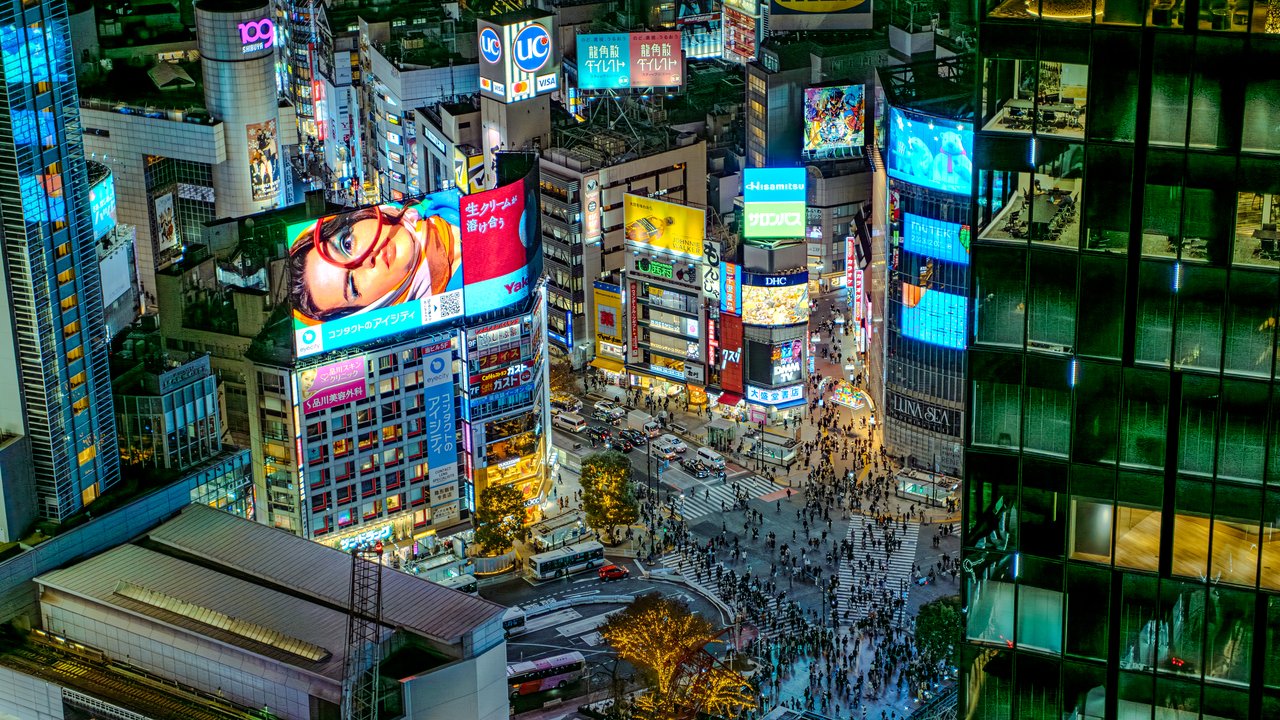
Shibuya Crossing from above at night, neon signs covering the buildings — Shibuya Station is one of the major interchanges on the JR Yamanote Line
Shibuya Station on the JR Yamanote Line — one of the busiest interchanges in Tokyo, and you walk straight up into the famous scramble crossing.

When you want to reach somewhere inside the Yamanote loop (like Ginza, Roppongi, Asakusa or Tsukiji), it's time for Tokyo Metro with its 9 lines and Toei Subway with another 4, together forming a dense underground network. The most important thing to know: Tokyo Metro and Toei are different companies on separate ticketing systems, so switching between the two charges each leg separately (a little pricier overall) — but if you tap a Suica/Pasmo, the system handles it all for you, no need to overthink it.

Lines visitors use most

Tokyo Metro — 9 lines, learn only the ones you'll use

Line Colour · code Key districts it reaches
Ginza (銀座) Orange · G Asakusa · Ueno · Ginza · Shibuya
Marunouchi (丸ノ内) Red · M Tokyo Station · Ginza · Shinjuku · Ikebukuro
Hibiya (日比谷) Silver-grey · H Tsukiji · Ginza · Roppongi · Ueno
Chiyoda (千代田) Green · C Omotesando · Meiji-jingumae · Otemachi
Fukutoshin (副都心) Brown · F Shibuya · Shinjuku-sanchome · Ikebukuro

Tokyo Metro's other 4 lines are Tozai (light-blue · T), Yurakucho (gold · Y), Hanzomon (purple · Z) and Namboku (mint-green · N). Toei Subway adds 4 more: Asakusa (A), Mita (I), Shinjuku (S) and the Oedo (E), an underground loop line.
How to handle the lines: don't try to memorise all 13 — open Google Maps, type your destination, and it tells you which line to take, the station code, and where to transfer. The easy rule of thumb is Yamanote = the outer ring, Metro/Toei = inside it. If your destination sits on the ring, taking the Yamanote first is usually simpler and cheaper.
Cards and paying

How to pay your fare — Suica, Pasmo and single tickets

💳
Suica

JR East's rechargeable IC card. Taps you in and out on every company in Tokyo and across Japan. The shortage has eased — on sale again at airports and major stations.

📲
Pasmo

The private-rail and metro IC card. Interchangeable with Suica 100% — JR, Metro, Toei and buses. Already have a Suica or ICOCA? No need to buy a new one.

🎫
Single ticket

Buy from a machine in the station with an English menu — pick your destination and it shows the fare. Takes coins and notes. Keep the ticket to tap out.

🗓️
Tokyo Subway Ticket

Unlimited Metro + Toei for 24/48/72 hr, for foreign visitors only. Worth it if you ride the metro a lot — see the table below.

What to know about Suica/Pasmo in 2026: back in 2024 the IC cards ran short because of a chip shortage, but that eased back in March 2025 — the green Suica is on sale normally again at Narita/Haneda airports and major JR stations. As a foreign visitor you also have two special options: the Welcome Suica (valid 28 days · collect at a JR East Travel Service Center) and the Welcome Suica Mobile app (valid 180 days · lives on your phone, no physical card). If you have an iPhone, you can add a Suica straight to Apple Wallet.
Value pass

Tokyo Subway Ticket — worth it when you ride the metro a lot

Pass Price (adult) Covers / conditions
Tokyo Subway 24 hr ¥800 Unlimited Tokyo Metro + Toei for 24 hr · child ¥400 · worth it from ≥4–5 rides
Tokyo Subway 48 hr ¥1,200 Same, counted over 48 continuous hours · child ¥600
Tokyo Subway 72 hr ¥1,500 Same, counted over 72 continuous hours · child ¥750 · best value per day
Suica / Pasmo (top-up) Per ride Every company including JR Yamanote · most flexible · best for days with only a few rides

Honestly, choosing is easy: if you'll make 4–5 or more metro/Toei rides in a day, grab the Tokyo Subway Ticket, since rides cost ¥180–330 and quickly top ¥800. The catch is that this pass doesn't cover JR or the Yamanote Line — so if your trip mainly runs the Yamanote loop (Shibuya–Shinjuku–Ueno), a top-up Suica tapping per ride is more flexible and better value. One more condition: the Tokyo Subway Ticket is sold only to foreign visitors, and you must show your passport to buy it. Prices may change in 2026, so check the latest on the Tokyo Metro website.

Other ways

Other JR lines, private rail, buses and taxis

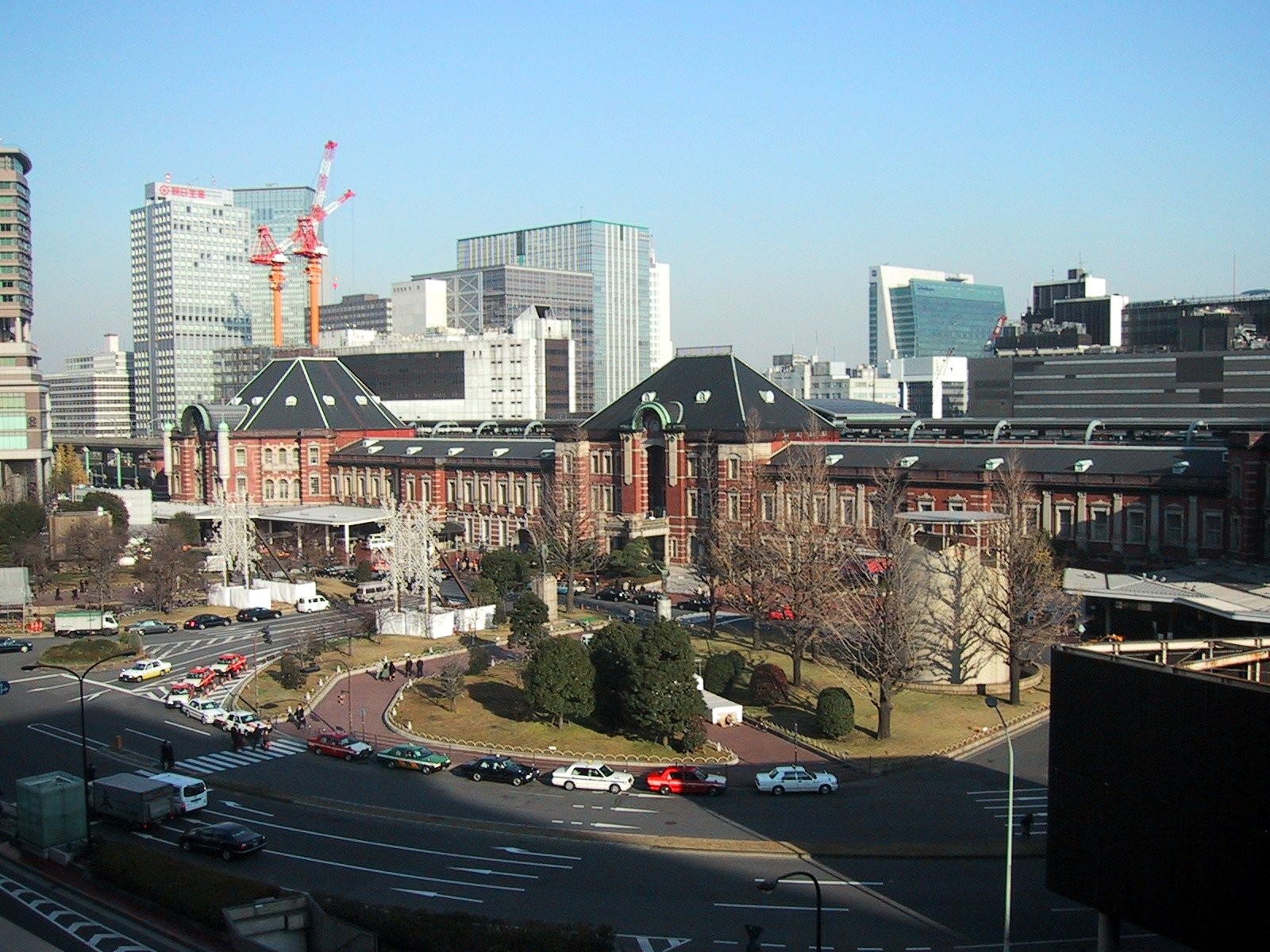
The Marunouchi side of Tokyo Station, a European-style red-brick building in the business district — Tokyo Station is the hub for JR and shinkansen trains JR · beyond the Yamanote
Other JR lines
JR East · cut across + head out

Beyond the Yamanote loop, JR also runs lines that cut straight across the ring to save time, like the Chuo Line (orange), which runs from Tokyo Station through Shinjuku out to the west, and the Sobu Line (yellow), which runs east–west. The minimum fare is ¥160 (raised in March 2026).

JR also carries you out to the surrounding towns and connects to the shinkansen at Tokyo Station (the red-brick building pictured). If you hold a JR Pass these city lines are free, but the pass doesn't work on Metro or Toei.

Handy: Chuo (orange) cuts across · Sobu (yellow) east–west
Fare: from ¥160 · distance-based
Pay with: Suica/Pasmo or buy a ticket at the machine
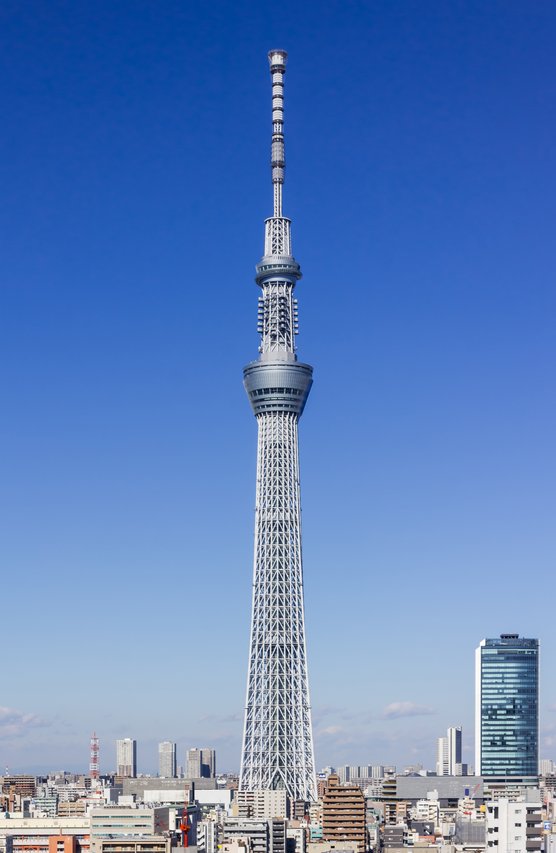
The white Tokyo Skytree tower standing tall against a clear sky — Tokyo Skytree Station is on the private Tobu Skytree Line Private · out to the suburbs
Private railways
Keio · Odakyu · Tokyu · Tobu

Several private railways run out from the edge of the Yamanote loop into the suburbs — for example Odakyu from Shinjuku to Hakone, Keio heading west, Tokyu linking Shibuya–Yokohama, and the Tobu Skytree Line to Tokyo Skytree and Nikko.

A Suica/Pasmo taps you onto all of them, no fuss. The two visitors use most are the Odakyu Romancecar from Shinjuku to Hakone, or the Tobu to Skytree (pictured).

To Hakone: Odakyu Romancecar from Shinjuku
To Skytree/Nikko: Tobu Skytree Line from Asakusa
Pay with: Suica · Pasmo · special tickets on some trains
🚌
City buses
都バス Toei Bus · fills the gaps trains miss

Tokyo's rail coverage is so complete that visitors barely need buses, but some areas like Odaiba or riverside spots are easier by bus. Toei buses in the city charge a flat ¥210 per ride (a little less by Suica), boarded at the front where you pay on entry.

Worth knowing: Tokyo buses come from several operators with different payment systems — some pay on boarding, some on exit. Open Google Maps to plan the route and it gives you the line number and the stop to get off, making buses easy to ride.

Fare: Toei Bus flat ~¥210/ride
Pay with: Suica · Pasmo · cash (have coins ready)
Tip: use Google Maps to plan bus routes
🚕
Taxis
タクシー · every car metered

Tokyo taxis are all metered, with a flag-fall of around ¥500 (a short first leg). They're ideal late at night after the trains stop (most run until around midnight–01:00), or when you have lots of luggage and are heading somewhere the trains don't reach. Most cars take credit cards and IC cards.

Tip: most drivers speak little English, so have your destination written in Japanese, or show the driver a dropped pin in Google Maps — that's easiest. The GO and DiDi apps hail cars conveniently across Tokyo. Watch the fare climb in heavy traffic.

Flag-fall: from around ¥500
Best for: late night after trains stop · luggage · no train nearby
Pay with: cash · credit card · IC card (most cars)
Pick the right line

JR or metro? And how to dodge the rush-hour crush

The question that confuses people most in Tokyo is "to get to this spot, do I take JR or the metro?" A simple rule that works almost every time: if your destination sits on the Yamanote ring (Shibuya, Shinjuku, Ueno, Ikebukuro, Akihabara), take the JR Yamanote — it's usually more direct and faster. But if it's inside the ring (Ginza, Roppongi, Asakusa, Tsukiji), take the metro or Toei, because the Yamanote doesn't reach it.

On cost: if your day mostly runs the Yamanote loop, a top-up Suica is the most flexible and best value. But if you're digging into several spots inside the ring by metro, the Tokyo Subway Ticket may work out cheaper. The thing that wastes money most often is switching between companies — going from JR to the metro, or from Tokyo Metro to Toei, charges the fare afresh on each. If your route has an option that stays within one company the whole way, it's cheaper.

🕗
Dodging rush hour
Morning 7:30–9:00 · evening 17:30–19:30

Tokyo is famous for packed trains at weekday rush hour, especially around 7:30–9:00 in the morning and 17:30–19:30 in the evening. The Yamanote, Chuo and the metro lines into the centre get so crowded you can barely move. If you can avoid it, plan trips to far-off sights for mid-morning or afternoon — far more comfortable.

Busiest: morning 7:30–9:00 · evening 17:30–19:30 (weekdays)
Tip: visit distant spots late morning/afternoon, avoid the first cars
🧳
What to do with a big suitcase
Lifts · coin lockers · forwarding

Hauling a big suitcase onto a rush-hour train is a nightmare. The trick is to avoid the peak and find a lift or escalator (every station has one, though sometimes you'll walk around to it). If you're sightseeing before check-in, leave your bag in a coin locker in the station (¥400–800/day), or use a luggage-forwarding service (takkyubin) straight to your hotel.

Coin locker: ¥400–800/day · in almost every major station
Avoid: dragging a suitcase onto trains during 7:30–9:00
First time in Tokyo? Pick a hotel near a station on the Yamanote Line (such as Shinjuku, Shibuya, Tokyo or Ueno) and life gets much simpler — step out of your hotel, hop on the loop and tour the main districts with no fiddly line changes. See the best areas to stay and things to do in the Tokyo travel guide and our round-up of Tokyo hotels.
The real tip

Match the card to your style and save across the whole trip

If we had to recommend one thing: start with a Suica or Pasmo, because it taps you onto every company and every city across Japan, and you can use it to buy things at convenience stores, vending machines and drink machines too. It's the most flexible card for a visitor. If you have an iPhone, add a Suica to Apple Wallet and top it up with a credit card — no queuing at the machine.

Then decide which days deserve a Tokyo Subway Ticket on top: on any day you plan to dig into several spots inside the Yamanote ring by metro (Ginza–Roppongi–Asakusa–Tsukiji), add a 24/48/72-hour pass — worth it from 4–5 rides. On days that mainly run the Yamanote loop, tapping a Suica per ride is enough. Splitting the roles like this keeps you from buying more pass than you need.

About navigation apps: Tokyo's rail network is far more complex than other cities', so lean on an app — Google Maps works best, giving you the line, platform, exit, times and fares. Japan Transit Planner and Navitime are built specifically for Japanese rail and are even better at picking the cheapest, fastest, fewest-transfer train. Don't forget to keep mobile data on you (SIM/eSIM) while you travel — see more on SIMs and getting ready in our Japan travel-prep guide.
Common questions

FAQ · Getting around Tokyo

How much do Tokyo trains cost to start with?
It depends which company you ride, because Tokyo has several. JR trains (including the Yamanote Line) have a minimum fare of ¥160 after the March 2026 revision — Tokyo to Shibuya, for example, is around ¥260. Tokyo Metro starts at ¥180 (around ¥178 with an IC card) for 1–6 km, and Toei Subway also starts at around ¥180. Fares are distance-based, and the easiest way to pay is to tap a Suica or Pasmo at the gate. Prices may change in 2026, so check the latest on the ticket-machine screen.
What's the difference between Suica and Pasmo, and which should I get?
Suica is issued by JR East and Pasmo by the private railway and metro companies, but in practice the two are 100% interchangeable — both work on JR trains, Tokyo Metro, Toei, private railways and buses across Tokyo. They're also interoperable nationwide, so the same card works in Osaka, Kyoto or Fukuoka. Pick either one. The 2024 shortage eased back in March 2025, so the green Suica is on sale again at airports and major stations. Foreign visitors also have the Welcome Suica (valid 28 days) and the Welcome Suica Mobile app (valid 180 days).
Is the Tokyo Subway Ticket worth it, and who can buy it?
The Tokyo Subway Ticket gives unlimited rides on Tokyo Metro and Toei Subway, priced at ¥800 for 24 hours, ¥1,200 for 48 hours and ¥1,500 for 72 hours (children half price). It's great value if you make about 4–5 subway rides or more in a day, since each ride costs ¥180–330. But it's reserved for foreign visitors and for Japanese residents living outside the Tokyo/Kanto area, and you must show your passport when buying. Note that it does not cover JR trains or the Yamanote Line — if your trip relies on the Yamanote loop, a Suica may suit you better.
Is the JR Pass worth using in Tokyo?
Not if you're staying within Tokyo. The Japan Rail Pass is designed for inter-city travel on the shinkansen, such as Tokyo–Kyoto–Osaka. Inside the city it only works on JR lines (Yamanote, Chuo, Sobu and so on) and can't be used on Tokyo Metro or Toei. The pass is also too expensive to pay for itself from city rides alone. If you're staying in Tokyo, a Suica/Pasmo or the Tokyo Subway Ticket is far better value — save the JR Pass for the days you actually travel to other cities.
When is rush hour in Tokyo, and how do I avoid it?
The most crowded windows are roughly 7:30–9:00 in the morning and 17:30–19:30 in the evening on weekdays, especially on the Yamanote and Chuo lines and the main metro lines into the centre — carriages get so packed that staff help push people on. If you can, plan trips to far-flung sights for mid-morning or afternoon. If you can't avoid it and you have a big suitcase, travel off-peak or take a less-busy line, keep your bag and drinks held close, and stand toward the inside of the car.
Can I use Google Maps to navigate in Tokyo?
Yes, and it works very well. Japan doesn't block Google, so Google Maps shows complete, accurate data for JR, Tokyo Metro, Toei, private railways and Tokyo buses — routes, times, platforms, exits and fares. Tokyo's rail network is more complex than other cities', so the app is a big help in telling you which company to ride and where to transfer. Alternatives like Japan Transit Planner and Navitime are also good. Carry a SIM or eSIM with data so you can navigate as you go.