🌏 Destinations · All 🇯🇵 Japan · full guide Osaka Osaka Attractions Koyasan (Sacred Mountain) ⛩️ Kumano Kodo Guide 🧭 Japan Travel Guide About Contact 🇹🇭 ไทย🇬🇧 English🇨🇳 中文🇪🇸 Español🇫🇷 Français
⛩️ Kumano Kodo · Wakayama

Kumano Kodo — The Ancient Pilgrimage Trail, Nachi Falls and the Three Kumano Grand Shrines

A path people have walked to worship for more than a thousand years, deep in the cedar forests of the Kii Peninsula — Nachi Falls beside the Seiganto-ji pagoda, the three Kumano Grand Shrines, the stone Nakahechi trail, and the ancient hot springs pilgrims bathed in before reaching the shrines, all on one page.

Start Here

A Trail People Have Walked to Worship for More Than a Thousand Years, Deep in the Cedar Forest

Picture a moss-green stone path winding through cedar forest hundreds of years old, past tiny roadside shrines, up over ridges and down into ravines until it reaches a great shrine in a valley — this is the Kumano Kodo (Kumano Kodō), a network of ancient pilgrimage trails on the Kii Peninsula in Wakayama Prefecture. Emperors, nobles, and ordinary people have walked it to worship at the three Kumano Grand Shrines (Kumano Sanzan) for over a thousand years. UNESCO inscribed it as a World Heritage Site back in 2004, and it's one of only two pilgrimage routes in the world to hold that status, alongside the Camino de Santiago in Spain.

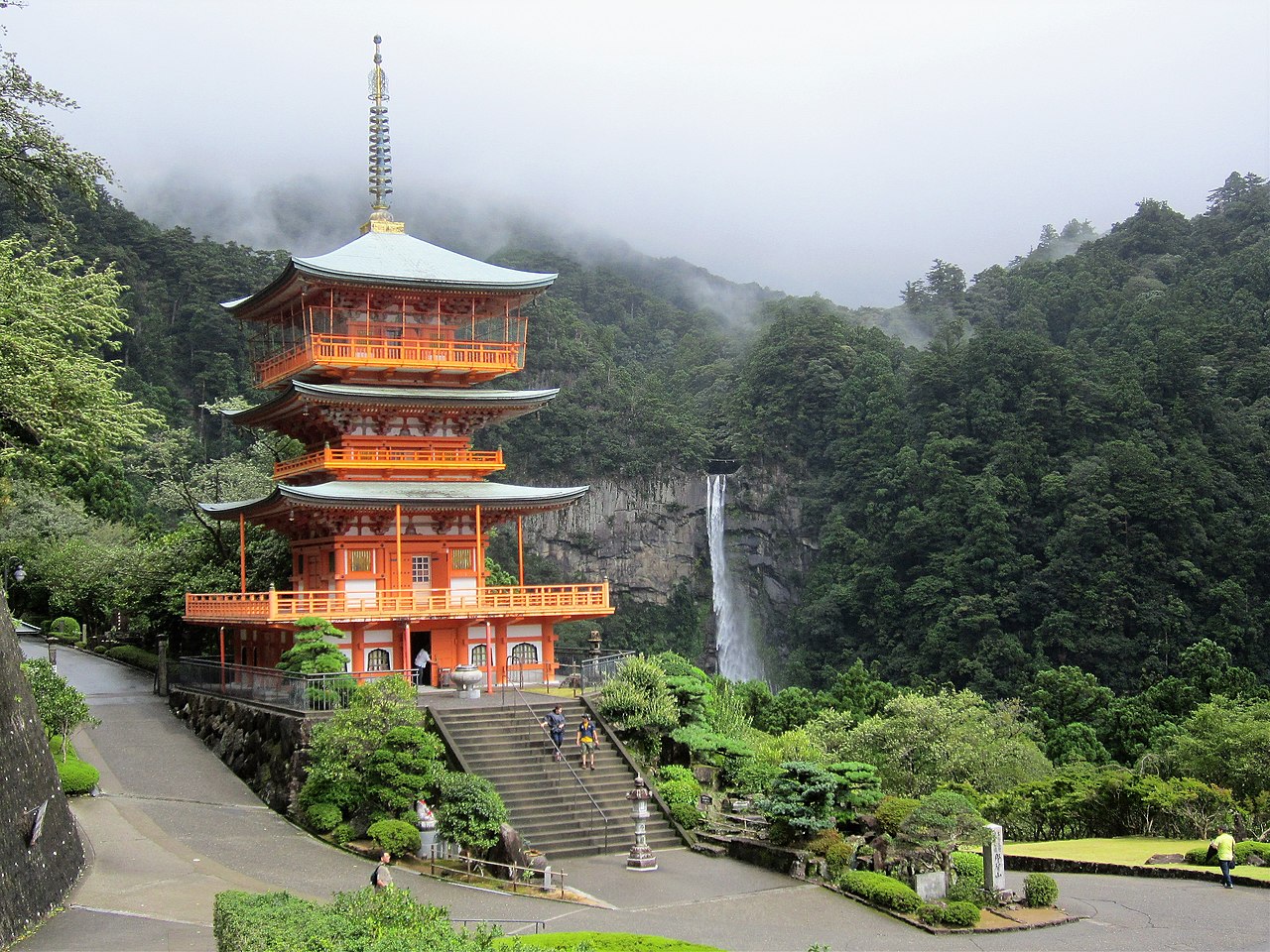
The star most people recognise is Nachi Falls, a 133-metre single drop set beside the vermilion Seiganto-ji pagoda — an iconic image of Japan that countless travellers know by sight. But the Kumano Kodo is far more than that: three grand shrines, the ancient Nakahechi trail, and hot springs where pilgrims purified themselves before entering the shrines. This page walks you through every key stop, plus how to get there from Osaka and how to pair it with Koyasan.

⛩️ Let's be straight up first: this isn't a half-day photo stop you tick off and leave — the sights are spread 20–40 kilometres apart and you rely mostly on buses. Plan for at least 1–2 nights to see it comfortably. Bus times and ticket prices change, so always check the latest schedules with the Tanabe City Kumano Tourism Bureau or JR West before you travel.
💧
Japan's Tallest Waterfall
Nachi, 133 m in a single drop, beside the Seiganto-ji pagoda.
⛩️
Three Grand Shrines
Nachi · Hongu · Hayatama, the heart of Kumano faith.
🥾
A World Heritage You Can Walk
The Nakahechi — a short stretch or a multi-day hike, your call.
♨️
Pilgrim Onsen
Yunomine's Tsuboyu, the only World Heritage bath in the world.
The Three Kumano Grand Shrines

Kumano Sanzan —the Heart of the Pilgrimage

The three grand shrines are the destinations of the Kumano Kodo trails. They sit roughly 20–40 kilometres apart, linked by footpaths and buses. This table gives you a quick picture of what makes each one special and how to reach it.

ShrineTown / areaKnown forTravel baseBus / walk
Kumano Nachi TaishaKumano Nachi TaishaNachikatsuuraNachi Falls + Seiganto-ji pagodaKii-Katsuura~30-min bus
Kumano Hongu TaishaKumano Hongu TaishaHonguSpiritual centre + giant 34 m Oyunohara toriiKii-Tanabe~1 hr 15 min bus
Kumano Hayatama TaishaKumano Hayatama TaishaShinguVivid vermilion shrine by the Kumano RiverShingu~15-min walk
🗺️ How to plan without wearing yourself out: if you're short on time, pick a single base and explore around it — Kii-Katsuura is best for Nachi Falls + Nachi Taisha, while Hongu works if you want to fold in the Yunomine-Kawayu onsen. With two nights or more, you can ride the buses and tick off all three shrines. Check the latest bus times on the Kumano Tourism Bureau site.
What You Have to See

7 Key Stops on theKumano Kodo

From a legendary waterfall to sacred shrines, a World Heritage onsen, and a stone trail through cedar forest — these are the stops people come back and agree are worth the long trip out to the Kii Peninsula.
Nachi Falls, a 133-metre single drop beside the vermilion Seiganto-ji pagoda in green forest, Wakayama 💧 Nachikatsuura1
Nachi Falls + Seiganto-ji Pagoda
Nachi Falls & Seiganto-ji Pagoda

This is the iconic image that pulls people out to the Kii Peninsula — a single continuous drop 133 metres tall, the highest in Japan, falling as a backdrop to the three-story vermilion Seiganto-ji pagoda. The waterfall itself is a sacred object of worship at Hiro Shrine, and people have come to pay their respects here for over a thousand years.

📍Location: Nachikatsuura, Wakayama · beside Kumano Nachi Taisha
💧Highlight: Japan's tallest single-drop waterfall + the paired pagoda (rebuilt 1972)
🚆Getting there: train to Kii-Katsuura Station, then a ~30-min bus
💡Tip: the angle that frames the falls with the pagoda is near Seiganto-ji — come early for soft light and thinner crowds.
Osaka Attractions →
Kumano Nachi Taisha shrine with the vermilion Seiganto-ji pagoda and Nachi Falls behind it ⛩️ Nachikatsuura2
Kumano Nachi Taisha
Kumano Nachi Taisha

One of the three grand shrines, set on a hillside looking down over Nachi Falls. It's a place where Shinto and Buddhism meet in one spot — the shrine sits right beside Seiganto-ji temple, and you can walk between them. The climb up is by stone steps through the forest, but the view of pagoda and waterfall together is exactly what so many people come to capture.

📍Location: a hill above Nachi Falls · connected on foot to Seiganto-ji pagoda
🪜Highlight: reach it via the Daimon-zaka stone path through ancient cedar + ~473 steps
🚆Getting there: Kii-Katsuura Station, ~30-min bus, get off at the Nachi stop
💡Tip: for a real pilgrim feel, get off the bus before Daimon-zaka and walk up the short stone stretch.
Koyasan Guide →
⛩️ 🏞️ Hongu3
Kumano Hongu Taisha
Kumano Hongu Taisha

The spiritual centre of all the Kumano shrines. Its dark, weathered wooden halls feel calm and solemn, unlike the usual vermilion shrines. It once stood on a sandbar in the middle of the river at Oyunohara, until a great flood swept it away and it was rebuilt on higher ground. Today Oyunohara still holds a giant torii gate, 34 metres tall and the largest in Japan, standing for you to walk beneath.

📍Location: Hongu, central Kii Peninsula · the torii is at Oyunohara
⛩️Highlight: the spiritual heart of Kumano + the largest torii gate in Japan
🚌Getting there: Kii-Tanabe Station, then the Kumano Hongu Line bus ~1 hr 15 min
💡Tip: easy to combine with the nearby Yunomine-Kawayu onsen in the same trip.
Japan's Onsen Towns →
⛩️ ⛩️ Shingu4
Kumano Hayatama Taisha

The third of the three grand shrines, sitting in the town of Shingu by the Kumano River near the river mouth. Its buildings are painted a striking vivid vermilion, and it's a short walk from the station — which makes it the easiest of the three to reach, and a natural place to start or end a Kumano trip. The grounds hold a sacred tree several hundred years old.

📍Location: town of Shingu, Wakayama · by the Kumano River, near the sea
⛩️Highlight: vivid vermilion shrine, the easiest of the three to reach + a sacred tree
🚆Getting there: a ~15-min walk from JR Shingu Station
💡Tip: Shingu makes a handy base, connecting both Nachi (south) and Hongu (inland).
Day Trips from Osaka →
🥾 🌲 Walking Trail5
The Ancient Nakahechi Trail
Nakahechi Trail & Daimon-zaka

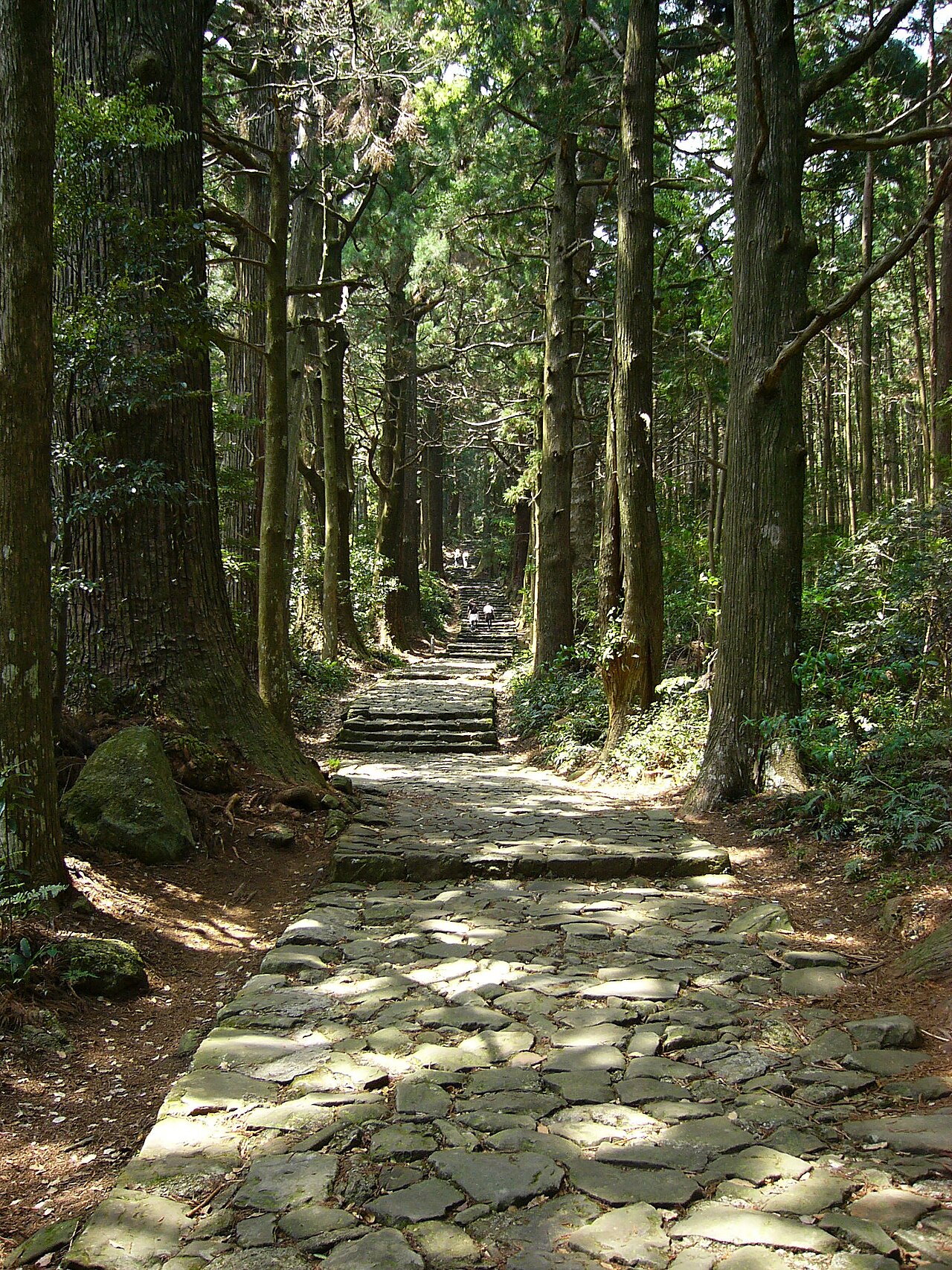
The heart of the Kumano Kodo experience is actually walking the stone trail. The Nakahechi (the "middle route") is the most popular, lined with little shrines (oji) and ancient stone markers. The most beautiful and easiest stretch to walk is Daimon-zaka, a moss-covered stone path winding up through giant cedars to Kumano Nachi Taisha.

📍Location: Daimon-zaka near Nachi · the Takijiri–Hongu section for multi-day walks
🥾Highlight: a short ~600 m at Daimon-zaka, or a multi-day trek along the Nakahechi
🚌Getting there: buses from Kii-Katsuura/Kii-Tanabe drop you at your chosen trailhead
💡Tip: wear shoes with good grip — the stone is slippery in rain. Start early for the light and the bus times.
Japan Nature Escapes →
♨️ ♨️ Near Hongu6
Yunomine + Kawayu Onsen
Yunomine & Kawayu Onsen

Pilgrims have bathed in these hot springs to purify themselves before entering the shrines since ancient times. Yunomine is one of the oldest onsen in Japan, with the Tsuboyu, the only hot spring in the world inscribed as a World Heritage Site — about two people bathe at a time in 30-minute slots. Nearby Kawayu has a brilliant twist: you can dig your own bath in the riverbed.

📍Location: near Hongu Shrine · inland on the Kii Peninsula
♨️Highlight: Tsuboyu, the world's only World Heritage bath + Kawayu's dig-your-own riverbed pools (winter brings the giant Senninburo)
🚌Getting there: the Hongu Line bus from Kii-Tanabe stops at Yunomine/Kawayu
💡Tip: Tsuboyu has a queue — come early, or stay at a ryokan in the onsen village to bathe in peace.
Japan Onsen Guide →
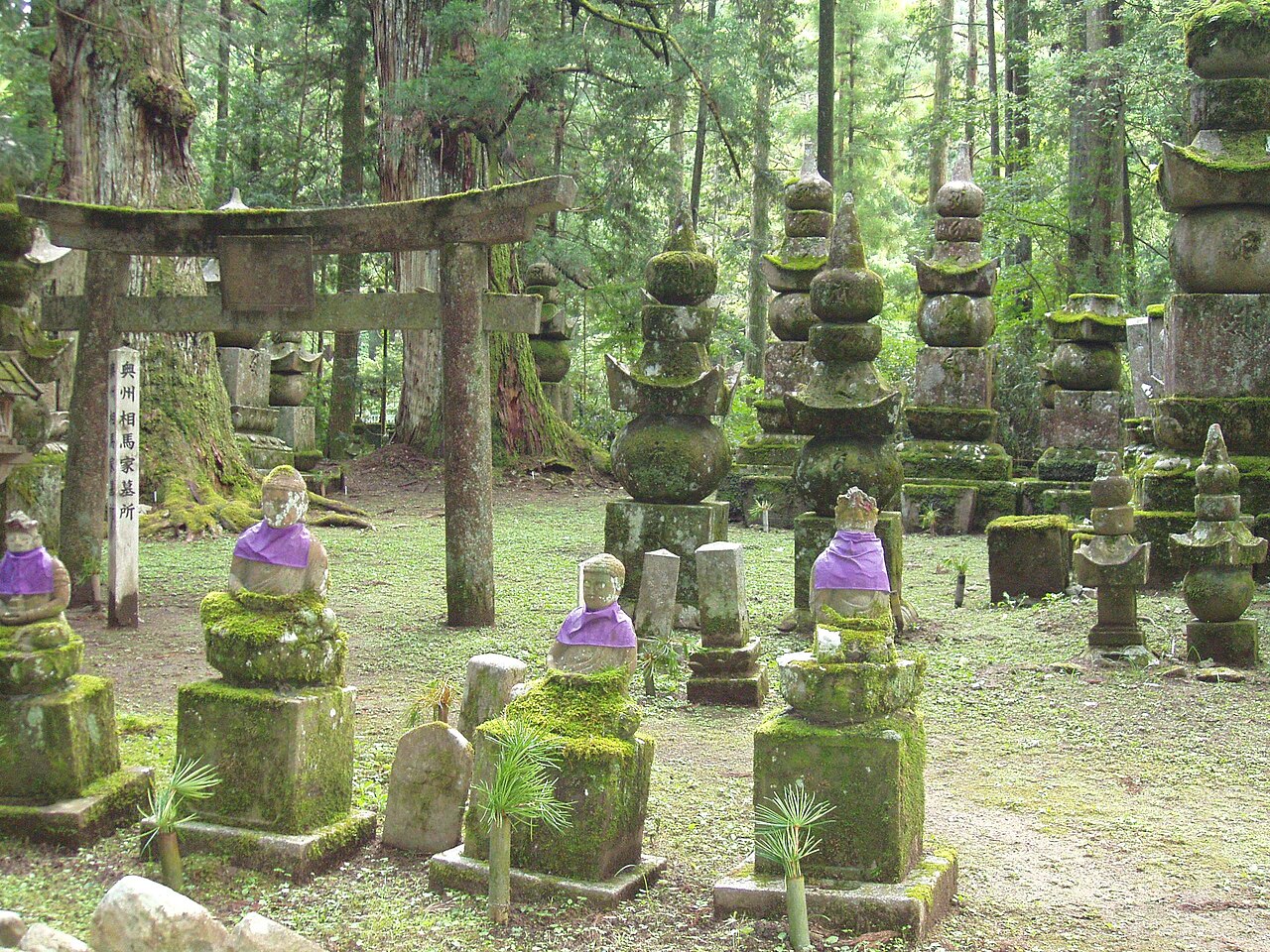
Okunoin cemetery on Mount Koya, moss-covered grave stones among cedar forest 🛕 Wakayama7
Pair It with Koyasan
Koyasan · Mount Koya

If you've come to the Kii Peninsula for the spiritual side of Japan, don't miss pairing it with Koyasan, the mountain centre of Shingon Buddhism. Here you'll find the Okunoin cemetery in ancient cedar forest and temple lodgings (shukubo) where you can spend a night with the monks. Kumano + Koya is the World Heritage pair of Wakayama that many people fit into a single trip.

📍Location: on Mount Koya, Wakayama · same World Heritage listing as Kumano
🛕Highlight: the Okunoin cemetery + temple lodging (shukubo) + shojin ryori vegetarian meals
🚠Getting there: from Osaka, the Nankai train to Gokurakubashi, then a cable car up the mountain
💡Tip: Koya and Kumano are linked by the Kohechi trail for serious trekkers.
Koyasan Guide →
How to Get There

From Osaka to Kumano,Step by Step

The Kumano Kodo runs mainly on a coastal train plus buses heading inland — not complicated, but it takes time. Understand these three steps and you can plan the whole thing (bus times and schedules change, so check the latest before you travel).

STEP 1
Train down the Kii Peninsula

Take the Limited Express Kuroshio from Shin-Osaka / Tennoji along the coastal Kinokuni Line and get off at your chosen base — Kii-Tanabe ~2 hrs (the gateway to Hongu), Kii-Katsuura ~3.5 hrs (near Nachi Falls) or Shingu ~4 hrs.

STEP 2
Transfer to a bus to the sights

From the station, transfer to a bus for the shrines — Kii-Katsuura → Nachi ~30 min, Kii-Tanabe → Hongu ~1 hr 15 min (Kumano Hongu Line), while Hayatama at Shingu is a ~15-min walk from the station. You can get off mid-route for the Yunomine-Kawayu onsen on the Hongu line.

STEP 3
Pick a base + leave time to spare

Because the sights are far apart, plan to stay 1–2 nights and pick a base on the route you want: Nachi → stay Kii-Katsuura · onsen + Hongu → stay Yunomine/Kawayu · several sights → stay Shingu. Leave a buffer for the last bus, which often runs early.

What to Eat

What's Good to EatAround Kumano

Food in the Kii Peninsula is simple but delicious, in the style of a region between sea and mountains — fresh seafood at Nachikatsuura, hot-spring-boiled eggs at Yunomine, and snacks along the pilgrim trails.

🐟
Kii-Katsuura Tuna
Nachikatsuura is one of Japan's major tuna ports. The fresh tuna sashimi here is hard to find elsewhere — a standout meal if you're staying nearby.
🥚
Onsen Tamago (Hot-Spring Eggs)
At Yunomine there's a public boiling pool where you can cook your own eggs and vegetables in the hot spring — a simple, distinctive snack of the onsen village.
🍱
Mehari-zushi
A Kii regional rice ball wrapped in pickled mustard-leaf, a big single bite — the classic provision pilgrims carried along the trail.
🍵
Trail-Side Snacks
Near trailheads and shrines you'll find tea houses, sweets, and small snacks. Carry cash — many rural shops still don't take cards.
🍲
Dinner at the Ryokan
If you stay at an onsen ryokan, dinner is usually a local set already included in the room rate, built from seasonal sea and mountain produce.
💴
Keep Cash on Hand
This is the countryside — many restaurants and buses take cash only, and ATMs are scarce. Withdraw enough in a bigger city before you head in.
Map

The Key Kumano Kodo Stopson One Map

See clearly where Nachi Falls, the three grand shrines, and the other sights sit on the Kii Peninsula — it makes choosing a base and planning your bus route much easier.

Where to Stay

Pick a BaseThat Matches the Route You Want

The Kumano Kodo has no dense cluster of city hotels — most accommodation is small ryokan and minshuku scattered around the key bases. Pick the one closest to what you most want to see and the travel falls into place.

🐟
Kii-Katsuura — the Nachi Falls Base
A tuna port with the widest choice of hotels and ryokan in the area, some with seaside or cave onsen, close to the bus up to Nachi.
♨️
Yunomine / Kawayu — for Onsen
Small onsen ryokan in a valley near Hongu Shrine, ideal if you want to bathe in Tsuboyu and see Hongu the same day. Quiet and peaceful.
🚉
Shingu / Kii-Tanabe — Connecting Bases
Towns beside the train stations with affordable business hotels, handy as a hub between shrines or a night before and after walking the trail.
⛩️
Ryokan Along the Trail
The Nakahechi has minshuku and guesthouses at rest points for multi-day walkers. Book ahead — rooms are few and fill fast.
📅
Book Ahead
Accommodation here is limited, especially onsen ryokan and during the autumn-leaf season. Book early for better choice and prices.
🌃
Stay the Night for the Real Mood
Kumano is quiet and still at night — another part of its charm. Wake early to walk the shrines while crowds are thin, far better than a day trip from a big city.
🏨 Finding a place to stay around Kumano: ryokan and hotels here are limited, so compare prices and book ahead — try searching stays around Nachikatsuura on Agoda → or get the bigger picture in the Osaka guide, the main base before you take the train into the Kii Peninsula.
Tips Before You Go

Prepare Well and Your Kumano Trip Runs Smoothly

The Kumano Kodo is rural mountain country, not a city. Get these six things sorted and you won't be caught out along the way.

🚌
Check Bus Times in Advance
Buses out here run only a few times a day and the last one leaves early. Plan your in-and-out rounds carefully — don't assume there's always a bus.
👟
Shoes with Good Grip
Stone paths like Daimon-zaka get slippery when wet. Wear good-tread trainers or hiking shoes, and skip the sandals.
🌧️
Pack an Umbrella / Rain Jacket
The Kii Peninsula gets a lot of rain, especially in the wet season. Carry a packable rain jacket — mountain weather turns quickly.
💴
Carry Enough Cash
Restaurants, small ryokan, and many buses take cash only, and ATMs are hard to find. Withdraw cash in a bigger city before you head in.
📶
Have an eSIM for Navigation
Signal is weak in parts of the forest, but mostly you can use maps and check timetables. Set up data before you reach the peninsula.
🥾
Match the Walk to Your Energy
You don't have to walk the whole trail. A short, scenic stretch like Daimon-zaka gives you the atmosphere; plan a multi-day trek separately.
Related Guides

Exploring the Kii Peninsula + Japan's Nature from Here

🛕

Koyasan

The sacred mountain that pairs with Kumano in Wakayama — the Okunoin cemetery, temple lodgings, and vegetarian cuisine, often done in the same trip.

Koyasan Guide →
🌲

Yakushima

A World Heritage rainforest island of thousand-year-old cedars and legendary moss forest — another of Japan's sacred natural sites.

Yakushima Guide →
🌋

Mount Aso

A giant volcanic caldera, the Nakadake crater, and the Kusasenri grasslands in Kumamoto — Kyushu's most epic landscape.

Aso Guide →
♨️

Japan's Onsen Towns

12 hand-picked onsen towns across every region — find the one for you, a natural next step from the pilgrim onsen at Yunomine-Kawayu.

Onsen Towns →
🏞️

Japan Nature Escapes

Natural sites and World Heritage spots across Japan, for anyone who loves mountains, waterfalls, and quiet walking trails.

Japan Nature →
🍜

Osaka Guide

The main base before the train into the Kii Peninsula — where to stay, what to see, and how to travel on to Kumano.

Osaka Guide →
Frequently Asked Questions

Questions Aboutthe Kumano Kodo

What is the Kumano Kodo?
The Kumano Kodo (Kumano Kodō) is a network of ancient pilgrimage trails on the Kii Peninsula in Wakayama Prefecture, walked for more than a thousand years by people travelling to worship at the three Kumano Grand Shrines (Kumano Sanzan). It was inscribed as a UNESCO World Heritage Site in 2004 and is one of only two pilgrimage routes in the world with that status, alongside the Camino de Santiago in Spain.
How tall is Nachi Falls and how do you get there?
Nachi Falls (Nachi Falls) is 133 metres tall, the highest single uninterrupted-drop waterfall in Japan. The iconic image pairs the falls with the three-story vermilion Seiganto-ji pagoda. Getting there: take the Limited Express Kuroshio train from Osaka to Kii-Katsuura Station (about 3.5 hours), then a bus of roughly 30 minutes to the Nachi area.
What are the three Kumano Grand Shrines (Kumano Sanzan)?
The three Kumano Grand Shrines are Kumano Hongu Taisha (Kumano Hongu Taisha), the spiritual centre, near the giant Oyunohara torii gate that stands 34 metres tall and is the largest in Japan; Kumano Nachi Taisha (Kumano Nachi Taisha), beside Nachi Falls and the Seiganto-ji pagoda; and Kumano Hayatama Taisha (Kumano Hayatama Taisha), a vivid vermilion shrine by the Kumano River in the town of Shingu. The three sit roughly 20–40 kilometres apart, linked by the Kumano Kodo trails.
Do you have to walk the entire Kumano Kodo, or can you walk just part of it?
You don't have to walk all of it. The most popular route is the Nakahechi (Nakahechi), which can be walked in sections. If you're short on time, do a short, scenic, easy-to-reach stretch such as the Daimon-zaka stone path, which climbs through ancient cedar forest to Kumano Nachi Taisha (about 473 steps). Those who want a serious multi-day hike can continue from Takijiri-oji to Hongu. Buses link the various trailheads so you can walk only the sections you like.
What makes Yunomine and Kawayu onsen special?
Yunomine Onsen (Yunomine Onsen) is one of the oldest hot springs in Japan and has long been tied to the Kumano pilgrimage. It has the Tsuboyu bath, the only hot spring in the world inscribed as a World Heritage Site — about two people can bathe at a time in 30-minute slots. Kawayu Onsen (Kawayu Onsen), nearby, is special because you can dig your own bathing pool in the riverbed, and in winter a giant open-air bath called Senninburo is built beside the river.
Should you stay overnight at the Kumano Kodo, and how do you get there from Osaka?
The Kumano Kodo is best with at least one or two nights, because the sights are spread out and travel takes time. Popular bases are Kii-Katsuura (near Nachi), the town of Shingu, Kii-Tanabe, or a ryokan in Yunomine-Kawayu. Getting there: take the Limited Express Kuroshio from Shin-Osaka or Tennoji on the Kinokuni Line to Kii-Tanabe (about 2 hours), Kii-Katsuura (about 3.5 hours) or Shingu (about 4 hours), then transfer to a bus to the shrines and onsen.
Ready to Set Out on the Pilgrimage?

Plan Kumano + Koyasan
Wakayama's World Heritage Pair

Open the Koyasan guide to pair it with Kumano in one spiritual trip, or start hunting for a place to stay around Nachikatsuura early — ryokan and onsen here are limited.

🔴 Find Stays Around Kumano Koyasan Guide