Deep in the mountains of western Tokushima lie plunging gorges, an emerald-green river, thatched houses clinging to the hillsides, and a legendary vine bridge swaying high above the ravine — this is the Shikoku most travellers never reach.
Picture a mountain road that twists deeper and deeper until your phone loses signal, sheer cliffs dropping to an emerald-green river far below on either side — and then, out of nowhere, a bridge woven from vines swinging over the ravine. This is Iya Valley, a remote valley in western Tokushima Prefecture, in the heart of Shikoku, that the Japanese count among the "three hidden valleys of Japan" (Nihon Sankei). Legend says it was once a refuge for defeated Taira clan warriors, who chose to hide themselves deep in mountains exactly like these.
The charm of Iya is its rawness and quiet — old thatched houses clinging to steep slopes, villages where almost no one is left, and nature that has never been tidied up. To be honest, this isn't an easy day trip from a big city. But if you love off-the-tourist-track places, enjoy driving yourself, and want to see a side of Shikoku that's in no brochure, this page walks you through every spot worth seeing, along with how to get there and where to actually stay.
Iya Valley is wide and its sights are spread out. This table shows how deep each spot sits from the Oboke gateway and who it suits best. Travel times are rough estimates by car — check the latest before you go.
| Sight | Zone | Known for | From Oboke (by car) | Best for |
|---|---|---|---|---|
| Oboke GorgeOboke Gorge | Gateway | Gorge boat ride | Starting point | Arriving by JR train |
| Iya Vine BridgeIya no Kazurabashi | Central Iya | Legendary vine bridge | ~20–25 min | Everyone · main highlight |
| Peeing Boy StatueShōben Kozō | Central Iya | Clifftop photo spot | ~30–35 min | Photographers · the brave |
| Oku-Iya Double BridgesOku-Iya Niju Kazurabashi | Deep Iya | Double bridge + hand-pulled cable car | ~1 hr+ | Lovers of remote spots |
| Nagoro Scarecrow VillageNagoro Scarecrow Village | Deep Iya | Hundreds of life-sized scarecrows | ~1 hr+ | The curious · road-trippers |
From the legendary vine bridge to the strangely moving scarecrow village — these are the spots people who've been say are worth the drive deep into the valley, arranged from easiest to reach to deepest in.
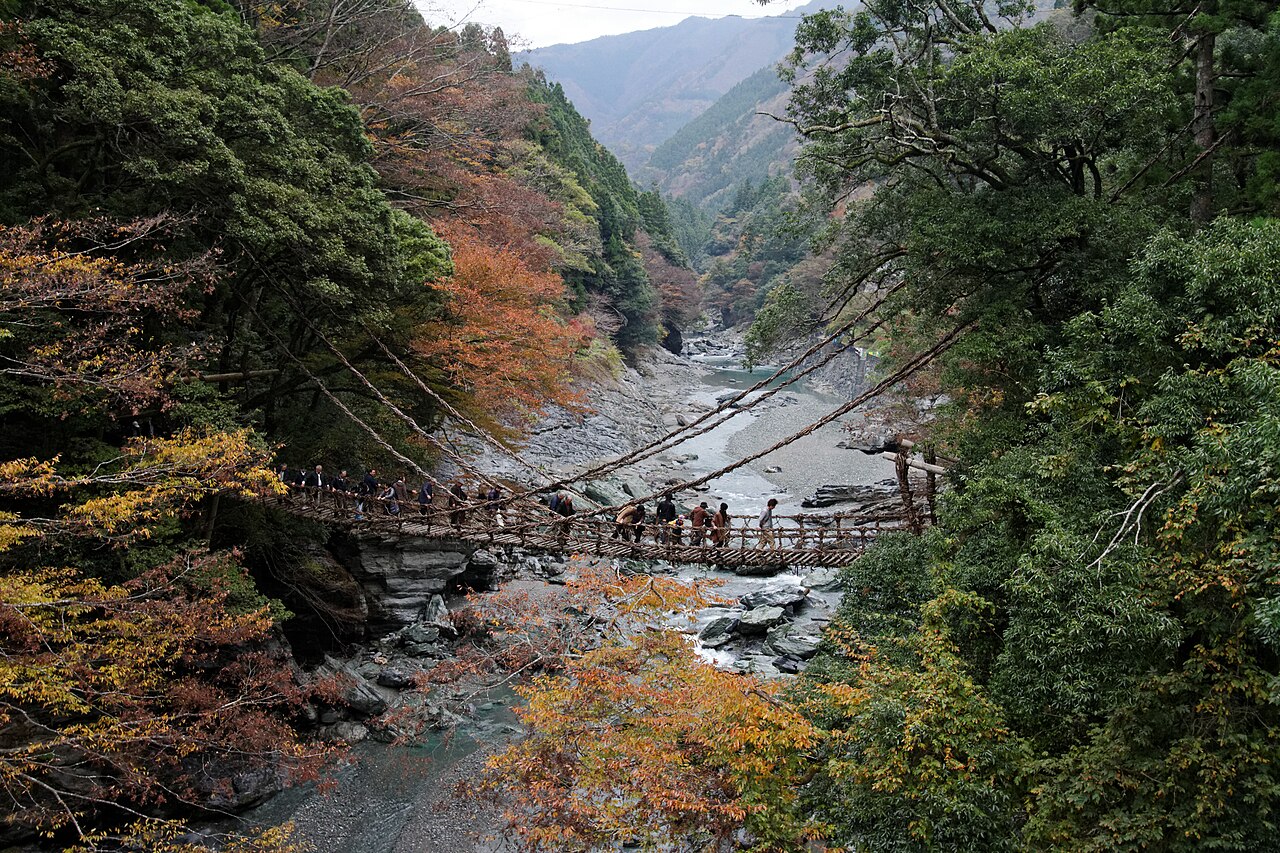
🌉 Central Iya1
The highlight everyone comes for — a bridge woven from real mountain vines, about 45 metres long, suspended roughly 14 metres above the river. The deck is wooden slats set far enough apart that you can see straight down to the emerald water below, so your heart races with every step. Steel cables are hidden inside for safety, and it's rebuilt with fresh vines every three years.
Tokushima Travel Guide →
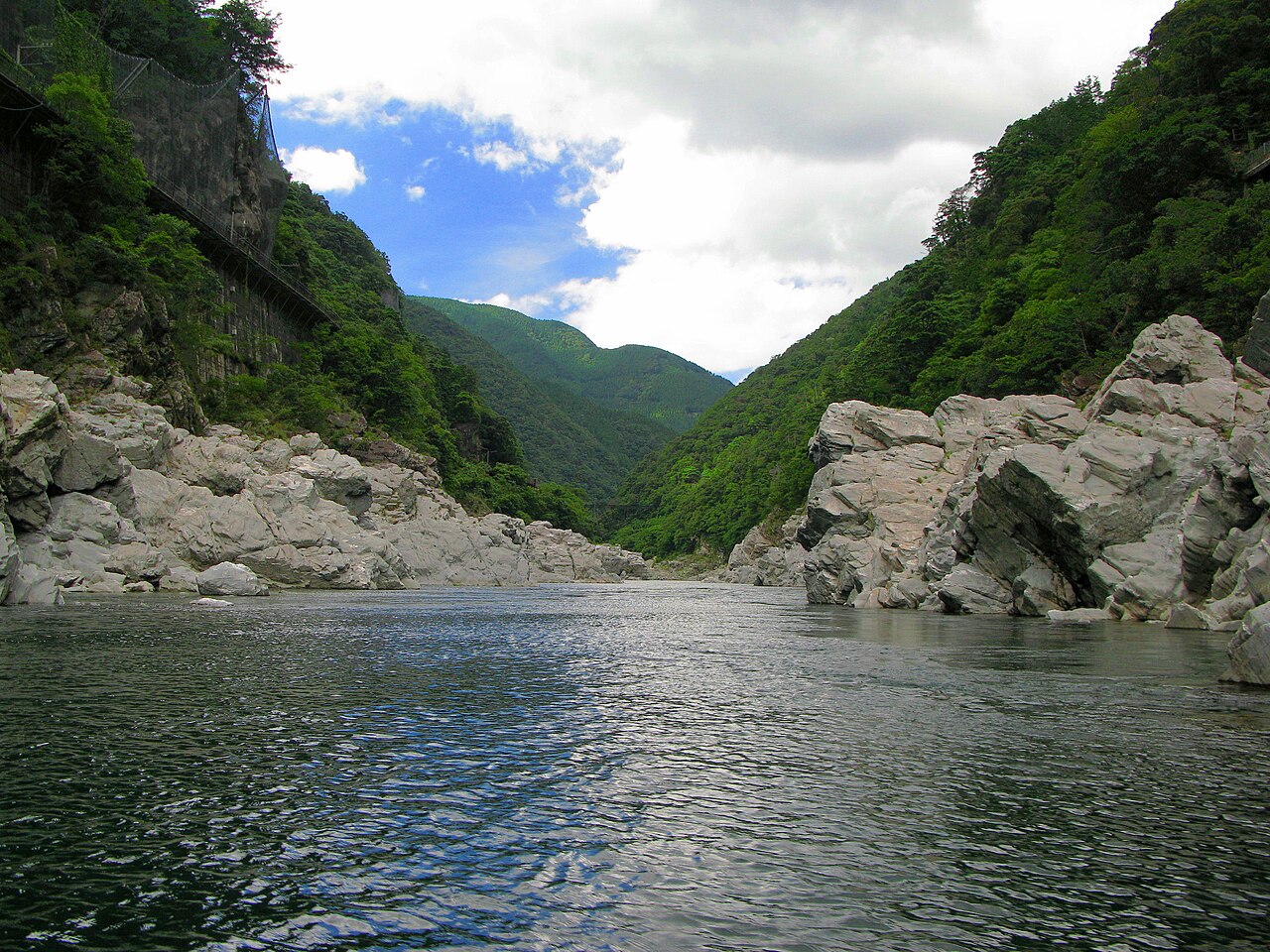
🚣 Gateway2
The gateway to Iya Valley you can reach by train — the Yoshino River has carved the rock here into giant white pillars in strange shapes, with clear emerald-green water running between them. You can take a roughly 30-minute boat ride through the gorge from a pier near the station, and if you're after adventure, this is the spot for white-water rafting on the famous Yoshino River.
Explore Shikoku →A small statue of a boy striking a peeing pose on a rocky ledge high above a deep ravine. It's said to have been made to tease the daring of local children and old-time travellers who liked to stand and relieve themselves right over the drop here. Today it's a nerve-testing photo spot — everyone's legs go a little wobbly standing on the cliff edge, and the view over the valley below is genuinely stunning.
Tokushima Travel Guide →Set far deeper in the valley than the main bridge, this is a pair of vine bridges crossing the same river — known as the "husband and wife" bridges (the long one is the husband, the short one the wife). The real treat is the "yaen", a wooden cable car you sit in and pull across the river by hand to the other side. There are far fewer people than at the main bridge, and the atmosphere is rawer and quieter.
Explore Shikoku →A tiny village deep in the valley filled with hundreds of life-sized scarecrows — more than the real residents who remain. Tsukimi Ayano made them to remember the people who once lived here but moved away or passed on, posing them waiting for the bus, working the fields, and studying in the abandoned school. It's a sight that's endearing and quietly heartbreaking at once, reflecting the ageing and emptying of rural Japanese villages.
Tokushima Travel Guide →End your day exactly the way a long drive deserves — an onsen ryokan perched on the cliff above the valley. The special part is a cable car that slowly descends to an open-air bath (rotenburo) right beside the river far below, where you soak in warm water to the sound of the rushing stream in the gorge. It's an onsen experience that's hard to find anywhere else, ideal for a real overnight rest while exploring the valley.
Onsen Towns Across Japan →Iya food is pure mountain fare — buckwheat noodles, grilled potatoes, and salt-grilled river fish on skewers. Simple, but delicious in a way you can only get here.
Buckwheat noodles made from buckwheat grown on the steep slopes — the strands are shorter and thicker than usual soba because they're pure buckwheat and break easily, with a deep, nutty flavour. Eaten hot on a cool mountain day, it's bliss. Valley restaurants often make it fresh daily.
Tiny potatoes (dekomawashi) skewered, brushed with sweet miso, and grilled over charcoal, turned as they cook until fragrant — served alongside tofu and konjac in dengaku style. A classic roadside snack around the vine bridge, cheap and warming.
Freshwater fish like ayu or amago from the valley's rivers, skewered whole and salt-grilled over charcoal until the skin crisps and the flesh turns sweet and tender — you eat it whole. A truly authentic mountain-river flavour, usually found at restaurants near the Oboke boat pier.
Iya Valley sits deep in the Shikoku mountains, with no train running to the sights themselves. The gateway is Oboke Station, then a bus or rental car — and honestly, having your own wheels is far easier.
See how deep each spot sits — Oboke is the gateway, the vine bridge is in the central zone, and the double bridges and Nagoro are deepest, to the east. Plot your driving route straight from here.
Because the sights are spread out and buses are few, staying overnight makes the trip far more relaxed. You can choose anything from a clifftop onsen ryokan to a restored thatched farmhouse, or a hotel in a base town that's easier to book.
The main page for Tokushima Prefecture — towns, hotels, sights, and how to get around the whole prefecture, including Iya Valley.
Explore Tokushima →The whole island of Shikoku — Tokushima, Ehime, Kagawa, Kochi, the 88-temple pilgrimage, and the nature inland.
Shikoku Region →A 70 km cycling route across the Seto Inland Sea linking Honshu and Shikoku — the sister guide to this page.
Shimanami Kaido →A basalt-pillar gorge, the Manai Falls, and the land of the gods in Miyazaki, Kyushu — another legendary valley.
Takachiho Gorge →The best nature spots across Japan — mountains, valleys, lakes, and places to escape the cities for fresh air.
Japan Nature →Destinations travellers haven't reached yet, for anyone who loves quiet, unusual places off the beaten path.
Hidden Gems →Plot your driving route from Oboke into the valley, browse sights and stays across the prefecture in the Tokushima guide, or start hunting early for the valley's limited rooms before everyone else books them.