🌏 Destinations · All 🇯🇵 Japan · Full guide Kawaguchiko (Fuji) Kawaguchiko Attractions Tokyo 🗻 Fujiyoshida Guide 🧭 Travel Prep Guide About Contact 🇹🇭 ไทย🇬🇧 English🇨🇳 中文🇪🇸 Español🇫🇷 Français
🗻 Fujiyoshida · Yamanashi

Fujiyoshida — the Chureito Pagoda, Fuji Views, and Retro Honcho Street

The town-and-pagoda side of Mount Fuji — the red five-story pagoda paired with the snow-capped peak that everyone hunts for, a Showa-era street with Fuji towering at its end, and the ancient shrine where the original Fuji climb begins. A different mood from the lakeside at Kawaguchiko, but only a few minutes away by train.

Start Here

The Fuji Photo You've Seen the Most —It Was Taken in This Town

Picture a red five-story pagoda, pink cherry blossoms, and snow-capped Mount Fuji all lined up in a single frame — that's the image that ends up on calendars, posters, and Japan travel feeds more than almost any other, and it's shot from Fujiyoshida, a small town in Yamanashi Prefecture sitting right at the foot of Fuji. Honestly, plenty of people assume this is Kawaguchiko, but it's a different place — Fujiyoshida is the town-and-pagoda side of Fuji, while Kawaguchiko is the lakeside that sits right next to it.

This page takes you through the whole town — the Chureito Pagoda, that legendary Fuji photo spot; Honcho Street, a retro Showa-era road with Fuji towering at its end; Kitaguchi Hongu Fuji Sengen Shrine, the original Fuji climbing trailhead set among ancient cedars; plus the Fuji-Q Highland theme park and the local Yoshida udon — along with how to get there and how to combine it with Kawaguchiko in one trip.

🗻 One honest thing up front: the whole point of Fujiyoshida is "seeing Fuji clearly" — but Fuji is a shy mountain that's often hidden by cloud. The sky tends to be clearest at dawn and through winter into early spring (Nov–Apr) when the air is dry. Always check the forecast and aim for a clear day before you go. If the sky is closed in, the pagoda is still beautiful, but you won't see Fuji behind it.
⛩️
Pagoda + Fuji
Chureito plus the snow-capped peak — Japan's icon shot.
🏮
Retro Showa Street
Honcho — Fuji standing at the end of an old road.
🌲
Ancient Shrine
Fuji Sengen, the Fuji trailhead, in 1,000-year-old cedars.
🎢
Theme Park + Udon
Fuji-Q Highland and chewy local Yoshida udon.
Getting There

How to Reach Fujiyoshida from Tokyo and Around

Fujiyoshida is on the same Fujikyu (Fujikyuko Line) railway as Kawaguchiko — the key thing is getting off at the right station, because the Chureito Pagoda and Honcho Street are near Shimoyoshida Station, while the town centre and the shrine are around Fujisan Station.

FromHow to get thereGet off at / destinationApprox. time
Tokyo (Shinjuku)Express busFuji Excursion / direct highway busFujisan Station / Kawaguchiko~2 hrs
Tokyo (Shinjuku)TrainJR to Otsuki, transfer to the Fujikyu LineShimoyoshida / Fujisan~2–2.5 hrs
Chureito PagodaFrom within townFujikyu Line to Shimoyoshida, then walkArakurayama Sengen Park~10-min walk + steps
Honcho StreetFrom within townFujikyu Line to Shimoyoshida, then walkShimoyoshida district (Honchō St)~5-min walk
Fuji Sengen ShrineFrom within townNear Fujisan Station — walk or local busKitaguchi Hongu Fuji Sengen~20-min walk / bus
Fuji-Q HighlandFrom within townFujikyu Line or busFujikyu-Highland Station~4–5 min
KawaguchikoPair it upFujikyu Line to the terminusKawaguchiko Station~10 min from Fujisan
🚆 Travel tip: if you're doing both Fujiyoshida and Kawaguchiko in one day, look for an all-day pass for the Fujikyu train/bus — it works out cheaper than buying single tickets each leg · trains get very crowded on weekends and during the autumn-leaf season, so leave extra time and book buses ahead · always check the latest timetable and fares on the official Fujikyu Railway site before you travel.
6 Must-See Spots

What to Doand See in Fujiyoshida

People who've been all say the same thing — Fujiyoshida gives you Fuji from angles you can't get anywhere else, from the legendary pagoda to the old street and the ancient shrine. They're arranged in an order you can walk in a single day.
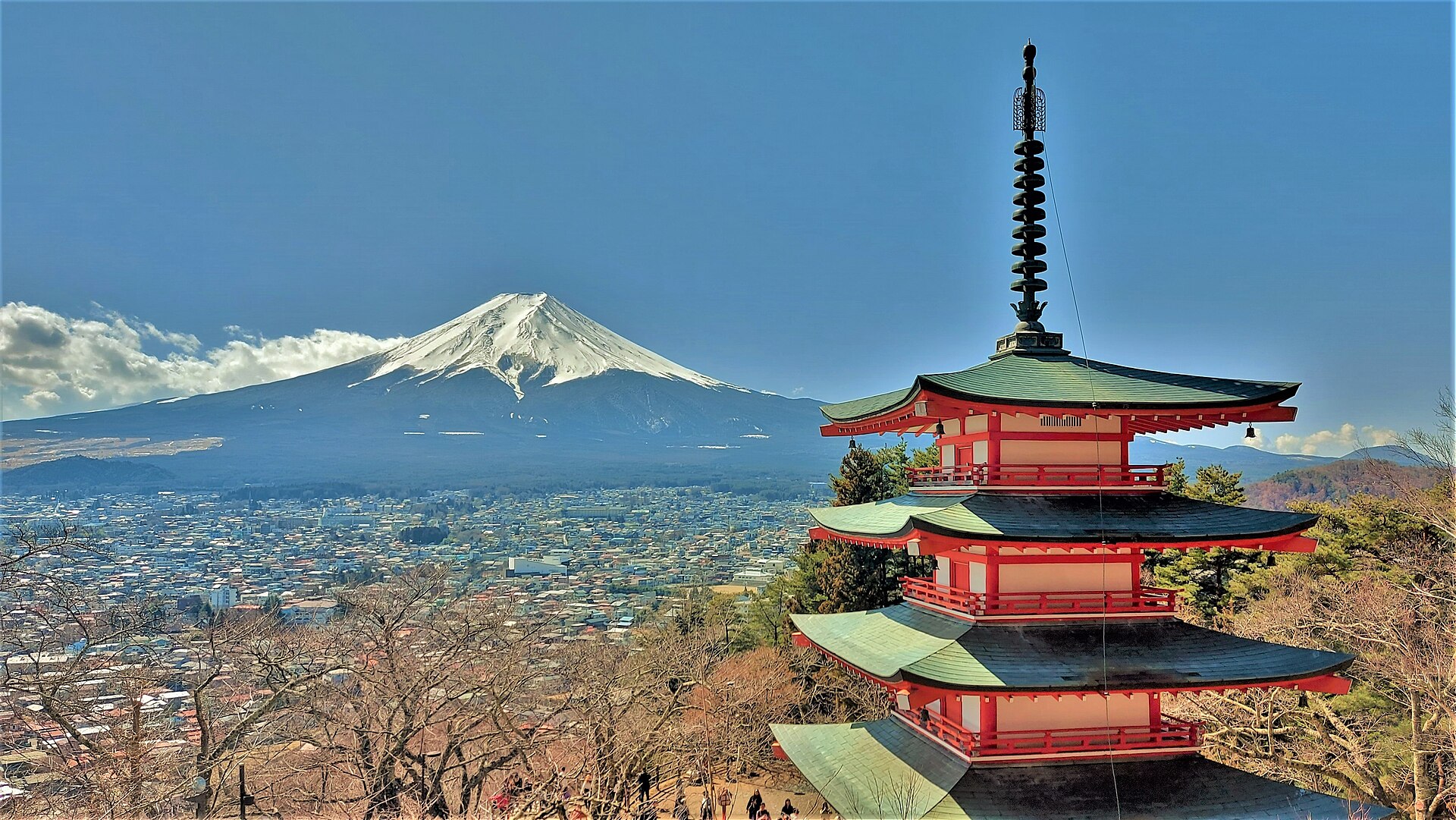
The Chureito Pagoda, a red five-story pagoda at Arakurayama Sengen Park in Fujiyoshida, with Mount Fuji behind ⛩️ Arakurayama1
Chureito Pagoda
Arakurayama Chūreitō Pagoda

The icon shot of Fuji lives right here — a red five-story pagoda set on a hilltop, looking down over Fujiyoshida town with snow-capped Mount Fuji behind it. Cherry blossoms ring the pagoda in spring and turn to red leaves in autumn. You climb 398 stone steps (about 10–15 minutes) to reach the viewpoint deck.

📍Location: Arakurayama Sengen Park, Fujiyoshida · free entry, open all year
🌸Best window: cherry blossoms early–mid Apr · red leaves around Nov
🚆Getting there: Shimoyoshida Station (Fujikyu Line), ~10-min walk to the base of the steps
💡Tip: Go before 8 am for both the light and a place to shoot. If the steps are too much, there's a gentler sloped path around.
Kawaguchiko Attractions →
🏮 🏮 Shimoyoshida2
Honcho Street
Honchō Street · Shimoyoshida

An old Showa-era street of retro shop signs, lanterns, and tangled power lines — but what made it famous is that the straight road makes Mount Fuji look like it's standing right at the far end. It went viral, and now people queue to shoot it. It's still a neighbourhood where people actually live, not a film set, so a walk here feels like the real, old Japan.

📍Famous spot: around the Honchō 2-chome intersection, Shimoyoshida district
🌤️Condition: you need a clear day to see Fuji at the end — check the forecast first
🚆Getting there: Shimoyoshida Station (Fujikyu Line), ~5-min walk
💡Tip: Come at dawn or late afternoon for fewer people — it gets busy after 9 am. Don't stand in the road and block traffic.
Kawaguchiko Attractions →
⛩️ 🌲 Foot of Fuji3
Fuji Sengen Shrine
Kitaguchi Hongu Fuji Sengen Shrine

This ancient shrine deep in a cedar forest is the "starting gate" of the original Yoshida route up Mount Fuji. In the Edo period, pilgrims climbing on foot to the summit began from a small gate behind this shrine. It's marked by a deep-red wooden torii about 18 metres tall and giant cedars said to be over 1,000 years old — a hushed, solemn place, quite different from the other photo spots in town.

📍Location: north foot of Fuji, Fujiyoshida · main hall dates to 1615
🙏Highlights: 18 m red torii · ancient cedar forest · start of the Yoshida trail
🚆Getting there: near Fujisan Station — ~20-min walk or a local bus
💡Tip: Come in the morning for lovely light through the cedars — a quiet spot most people miss.
Kawaguchiko (Fuji) Guide →
🎢 🎢 Near town4
Fuji-Q Highland
Fuji-Q Highland

A famous theme park right next to Fujiyoshida, known for several record-breaking roller coasters and a haunted house rated one of the most terrifying in Japan. The selling point is riding with Mount Fuji filling the view behind you. Worth a stop if you're travelling with kids or you're into thrill rides and still want that Fuji backdrop.

📍Location: on the Fujiyoshida–Fujikawaguchiko edge · has its own train station
🎟️Tickets: free entry, pay per ride or buy a combined pass (check the latest prices)
🚆Getting there: Fujikyu Line or bus from Fujisan Station, ~4–5 min
💡Tip: Check opening days ahead — it sometimes closes for maintenance or on weekdays.
Kawaguchiko Attractions →
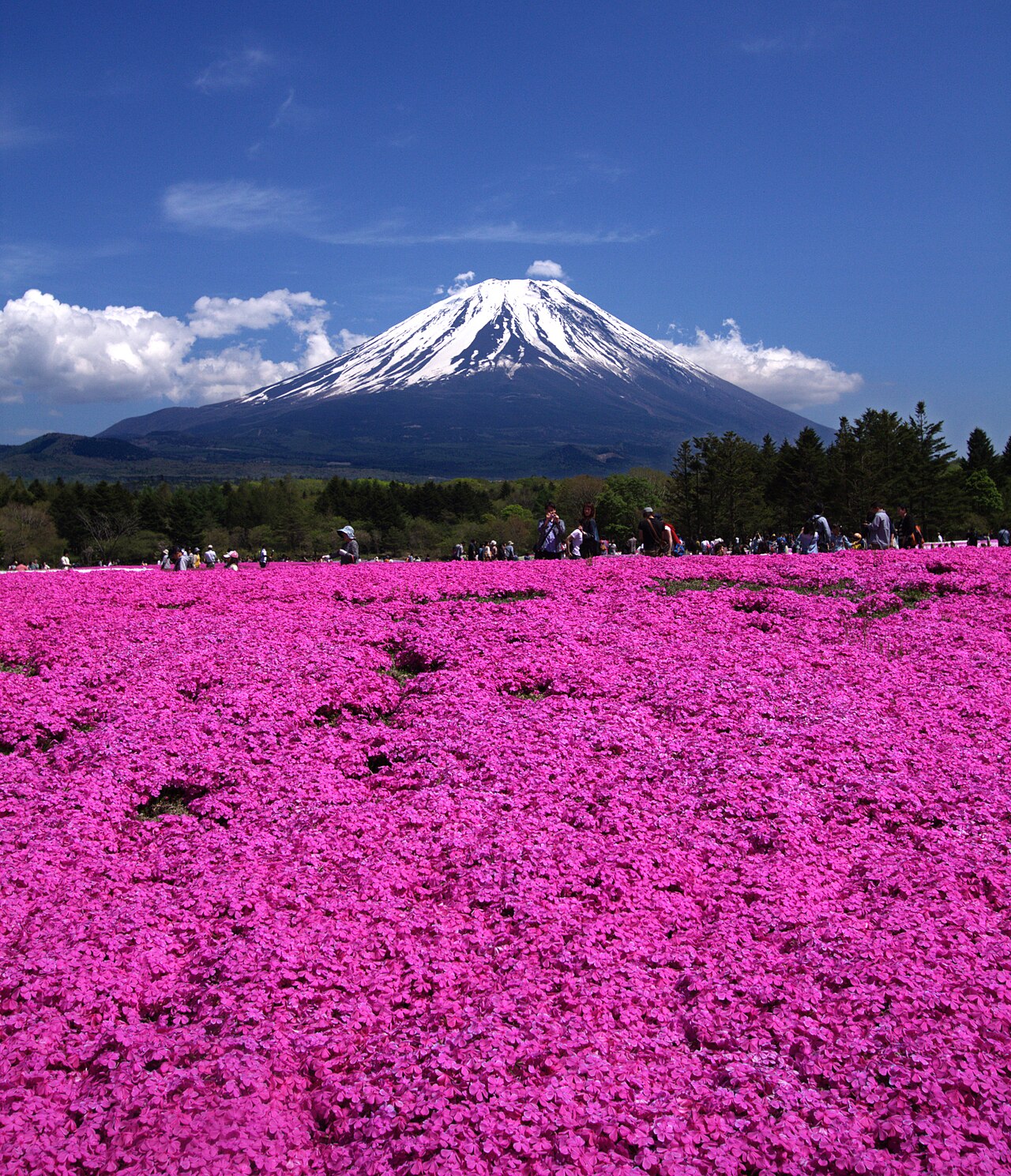
The Fuji Shibazakura (pink moss) Festival — fields of pink flowers with Mount Fuji, in the Fuji Five Lakes area 🌸 Nearby (seasonal)5
Pink Moss Festival (Shibazakura)
Fuji Shibazakura Festival

The area's most popular spring trip — fields of pink, white, and purple moss phlox (shibazakura) carpeting the lower slopes, with Mount Fuji behind. It's held at Fuji Motosuko Resort near Lake Motosu. It isn't in Fujiyoshida itself, but it's an easy day-trip add-on from this area — and a completely different image of Fuji from the pagoda and the old street.

📍Location: Fuji Motosuko Resort, Fujikawaguchiko · near Lake Motosu
🌸Dates: roughly Apr 11–May 24, 2026 · peak in early May (check the latest)
🚌Getting there: from Kawaguchiko Station, take the Shibazakura Liner ~40 min
💡Tip: Go early to dodge traffic and crowds, and pack a warm layer — the foothills are still chilly.
Kawaguchiko Attractions →
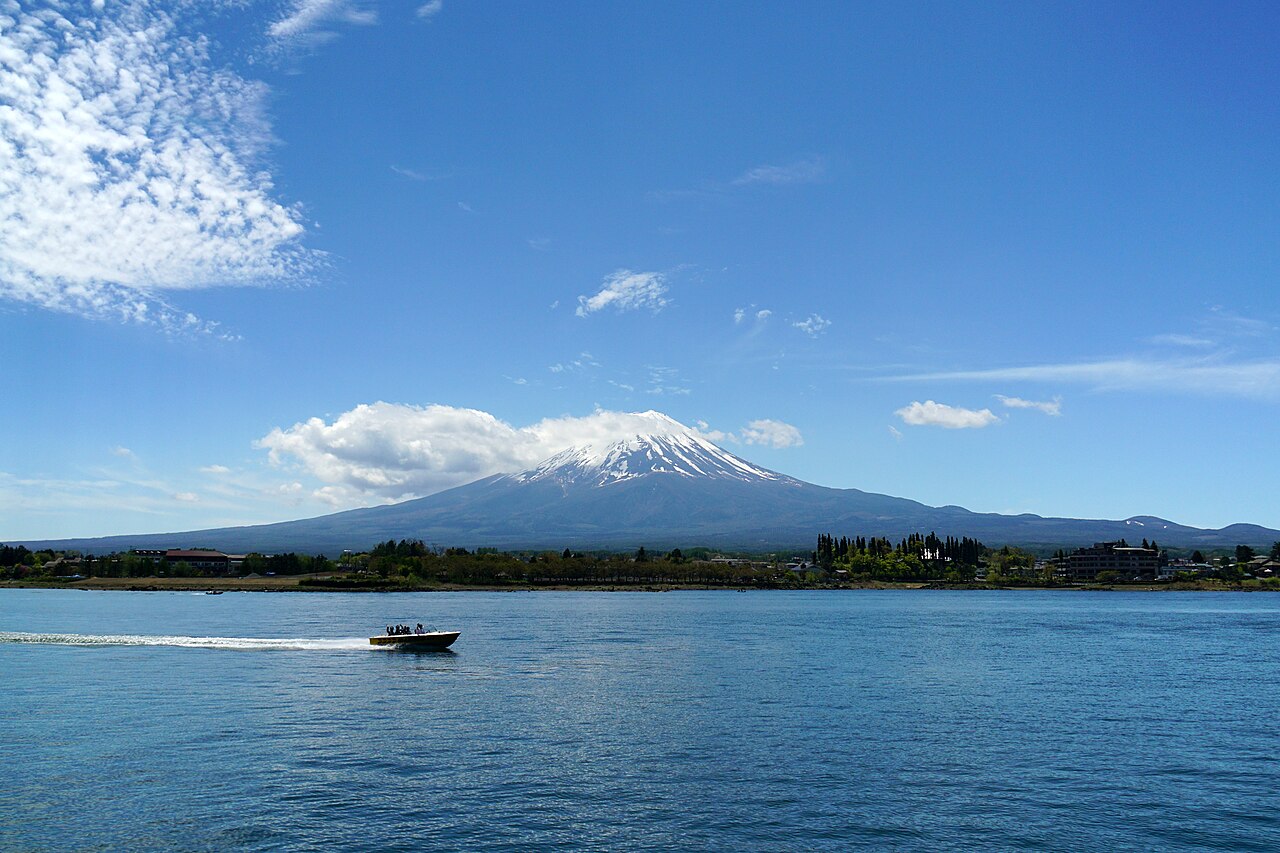
Lake Kawaguchiko with snow-capped Mount Fuji mirrored on the water, in the Fuji Five Lakes area 🌊 Pair it up6
Lake Kawaguchiko
Lake Kawaguchiko · next after Fujiyoshida

After Fujiyoshida you can carry straight on to Kawaguchiko — it's at the end of the same Fujikyu line, just about 10 minutes from Fujisan Station. This is the lakeside — known for Fuji mirrored on the water, a ropeway up to a viewpoint, and lakeside hotels where you wake to Fuji in the morning. A different mood from Fujiyoshida's pagoda and old street; do both in one trip.

📍Location: Fujikawaguchiko, Yamanashi · Fujikyu Line terminus
🚡Highlights: lakeside Fuji views · Kachi Kachi ropeway · lake-view stays
🚆Getting there: Fujikyu Line to the terminus, ~10 min from Fujisan Station
💡Tip: Stay one night on the lake and wake early for Fuji — the highlight most people say is worth it most.
Kawaguchiko (Fuji) Guide →
Eat & Drink

What to Eat and Drink in Fujiyoshida

You've come all the way to the foot of Fuji — don't settle for the usual. This town has local specialities you'll struggle to find elsewhere, from a one-of-a-kind chewy noodle to craft beer brewed with Fuji's own water.

LOCAL #1
Yoshida Udon

Yoshida udon has distinctively thick, firm, chewy noodles in a miso-and-soy broth with cabbage and carrot; some shops add horse meat (baniku) and most finish it with a spicy condiment called suridane. The town has more than 40 shops, many run out of ordinary houses — spot them by the noren curtain or flag out front.

DRINK WITH THE VIEW
Fujizakura Craft Beer

Fujizakura Kogen Beer is a German-style craft beer brewed with water from Mount Fuji, and it's won medals at several international competitions. There's Pils, Weizen, and Rauch, available around the Fuji Five Lakes — it makes a good souvenir, and a cold one with a view of Fuji is hard to beat.

SIT AND RELAX
Cafés + Sweets near Honcho

The Honcho Street and Shimoyoshida area has little cafés tucked into old buildings, perfect for a break after a photo walk. Several have corners where Fuji forms the backdrop — order a coffee and a Japanese sweet, sit, and take in the quiet old-town feel. A nicely timed pause in a full day of sightseeing.

Where to Stay

Where to Sleep — Fujiyoshida or Kawaguchiko

You can see Fujiyoshida in a day, so many people choose to stay on the Kawaguchiko side, which has more lake-view accommodation and onsen, then ride the train a few minutes over to catch the pagoda and old street in the morning.

Honestly, the town of Fujiyoshida itself leans business-and-community — most accommodation is simple hotels and budget-friendly guesthouses, ideal if you want to be up and walking the Chureito Pagoda steps early, before the crowds. Right next door, Kawaguchiko has far more ryokan, Fuji-view hotels, and lakeside onsen to choose from, which makes it the popular base for people doing both sides of the area.

🏙️
In Fujiyoshida town
Budget hotels and guesthouses near Shimoyoshida/Fujisan stations — easy to walk up to the pagoda first thing in the morning.
🌊
On Lake Kawaguchiko
Ryokan and Fuji-view hotels — wake to Fuji mirrored on the water, the widest choice in the area.
♨️
If you want an onsen
The Kawaguchiko side has Fuji-view onsen stays — perfect for an overnight to unwind after a full day on foot.
🚆
If you want easy transport
Pick a stay near a Fujikyu Line station to move easily between Fujiyoshida, Kawaguchiko, and Fuji-Q.
📅
Book ahead
During sakura, autumn leaves, and weekends, Fuji-view rooms fill fast and prices jump — book months in advance.
🌄
Fuji-view rooms
Choose a room marked "Mt. Fuji view" and check the forecast — a clear dawn is your best shot at seeing Fuji.
🏨 Find a stay: compare prices and reviews for accommodation in the Fuji-Kawaguchiko area at search Kawaguchiko stays on Agoda → or read the full city guide at Kawaguchiko Guide
Map

Fujiyoshida's Sightson One Map

You can see how close everything is, all strung along the Fujikyu line — easy to walk between in a single day, from the Chureito Pagoda to Honcho Street to Fuji Sengen Shrine.

Before You Go

6 Things That Keep You FromMissing the Fuji View

🌅
Aim for a clear day, go early
Fuji usually shows clearest at dawn before clouds build. Check the forecast, and if the sky is clear, get to the photo spot before 8 am.
🍂
Match the season to your image
Cherry blossoms early–mid Apr · red leaves around Nov · Fuji's snow-cap clearest Nov–Feb. Each season gives a different shot.
🎫
Look for a Fujikyu day-pass
If you're doing Fujiyoshida + Kawaguchiko + Fuji-Q in a day, an all-day train/bus pass beats buying single tickets each leg.
🚉
Get off at the right station
Chureito Pagoda + Honcho Street = Shimoyoshida · shrine + town centre = Fujisan. Don't accidentally ride past your stop.
📶
Get an eSIM before you fly
Keep data on to navigate with Google Maps to the pagoda steps and the Honcho spot, and to check the often-changing Fujikyu timetable.
🧥
Pack a warm layer
Fujiyoshida sits around 800 m, noticeably cooler than Tokyo — especially morning and evening, and in winter.
Related Guides

Keep Exploring the Fuji Area — Lakes, Nature, and Heritage Towns

🗻

Kawaguchiko (Fuji) Guide

The lakeside of Fuji right next door — waterfront Fuji views, the ropeway, onsen stays, and how to get there from Tokyo.

Kawaguchiko Guide →
📸

Kawaguchiko Attractions

Fuji photo spots around the lake — Oishi Park, the Kachi Kachi ropeway, and the best Fuji-view angles in the area.

Kawaguchiko Attractions →
🗓️

Kawaguchiko Itinerary

Plan the Fuji area day by day — Fujiyoshida, the lake, and the viewpoints, strung together into one smooth trip.

Kawaguchiko Plan →
🏯

Tsumago-Magome Post Towns

Edo-era towns in the Kiso valley with the Nakasendo walking trail — another of Japan's heritage gems worth visiting.

Tsumago-Magome Guide →
🌲

Japan Nature Escapes

Japan's most beautiful mountains, lakes, and hiking trails — for nature lovers and off-the-beaten-path travellers.

Japan Nature →
⛰️

Yamanashi Prefecture

The prefecture of Mount Fuji, lakes, wine, and fruit — its towns and sights gathered in one place.

Yamanashi Guide →
Frequently Asked Questions

FAQ —Fujiyoshida

How many steps does the Chureito Pagoda have, and is the climb hard?
From the car park up to the pagoda's photo viewpoint you climb 398 stone steps (people often round it to about 400), which takes roughly 10–15 minutes at an easy pace. If the steps are too much, there's a gentler sloped path that goes around. Arakurayama Sengen Park is free to enter and open all year. Come early, before 8 am, when the crowds are still thin and the light is best.
What's the difference between Fujiyoshida and Kawaguchiko?
Both sit side by side in Yamanashi's Fuji Five Lakes area, but they have a different feel. Fujiyoshida is the town-and-pagoda side of Fuji — known for the Chureito Pagoda, retro Honcho Street, Fuji Sengen Shrine, and the Fuji-Q Highland theme park. Kawaguchiko is the lakeside — known for Fuji mirrored on the water, ropeways, and lakeside stays. Many people do both in one trip because the Fujikyu train links them in just a few minutes.
How do I photograph Honcho Street with Fuji at the end of the road?
The famous shot is around the Honchō 2-chome intersection in the Shimoyoshida district, where the straight street makes Mount Fuji look like it's standing right at the far end. You need a clear day to see Fuji properly, so check the forecast first. Come at dawn or late afternoon for nicer light and fewer people, because it gets busy after 9 am. This is a neighbourhood where people actually live — don't stand in the middle of the road and block traffic for photos.
How do I get to Fujiyoshida from Tokyo?
Take the Fuji Excursion express bus or a highway bus from Shinjuku straight to the Fuji area in about 2 hours, or go by train on JR to Otsuki and transfer to the Fujikyu Line. For the Chureito Pagoda and Honcho Street, get off at Shimoyoshida Station; for Fuji Sengen Shrine and the town centre, head to Fujisan (Mt. Fuji) Station. Always check the latest timetable before you travel.
What time of year is best for Fujiyoshida?
The Chureito Pagoda is at its best in two windows: cherry blossoms around early to mid-April (later than Tokyo because of the higher elevation), and autumn leaves around November. Fuji's snow-capped peak shows most clearly from late autumn into winter (Nov–Feb). The sky is usually clearest at dawn — whatever the season, if you want a clear view of Fuji, check the forecast and aim for a clear day.
What should I eat in Fujiyoshida?
The local speciality is Yoshida udon — distinctively thick, firm, chewy noodles in a miso-and-soy broth with cabbage and carrot, usually finished with a spicy condiment called suridane. The town has more than 40 shops, many run out of ordinary-looking houses that you spot by the noren curtain or flag out front. You can pick up a noodle-shop map at the tourist information centre.
Ready for Fujiyoshida?

See the Pagoda + the Old Town Side
then Carry On to Lake Kawaguchiko

Plan the Fuji area to cover both sides in one trip — open the Kawaguchiko guide for stays, sights, and transport, or start hunting for a Fuji-view room early, before the peak windows fill up.

🔴 Book Fuji-Area Stays Kawaguchiko Guide