You sit on a mat around a low wooden tray laid with roasted green-chilli dip, herb sausage, pork curry, crackling and a warm basket of sticky rice, while dancers in Lanna dress move on the stage in front of you. This is a northern Thai evening you remember — here's what's on the tray, how the show goes, and where to go for it.
A khantoke is more than a northern Thai buffet — it's an old Lanna way of hosting. The word toke is the low turned-wood pedestal tray that holds several dishes in the centre of the group, and khan is a bowl or vessel; together it means a shared spread that people gather on the floor to eat. It was the way you once welcomed monks, elders and guests at an important occasion, so what you get on a khantoke night isn't just the flavours — it's the whole setting of a wooden pavilion, woven mats, lamplight and live local music.
For a traveller, the khantoke is the best shortcut to tasting several northern dishes in one sitting while watching the kind of Lanna stage dancing you rarely see in daily life. This guide tells you plainly what lands on the tray, how an evening unfolds, what's in the show, and where to go for a khantoke that's actually worth booking — with prices and what to sort out before you turn up.
No need to worry about getting it right — a khantoke night has its own rhythm. Here's how it runs.
A khantoke stands on two legs — the shared tray of northern food, and the Lanna dance performance in the middle of the pavilion.
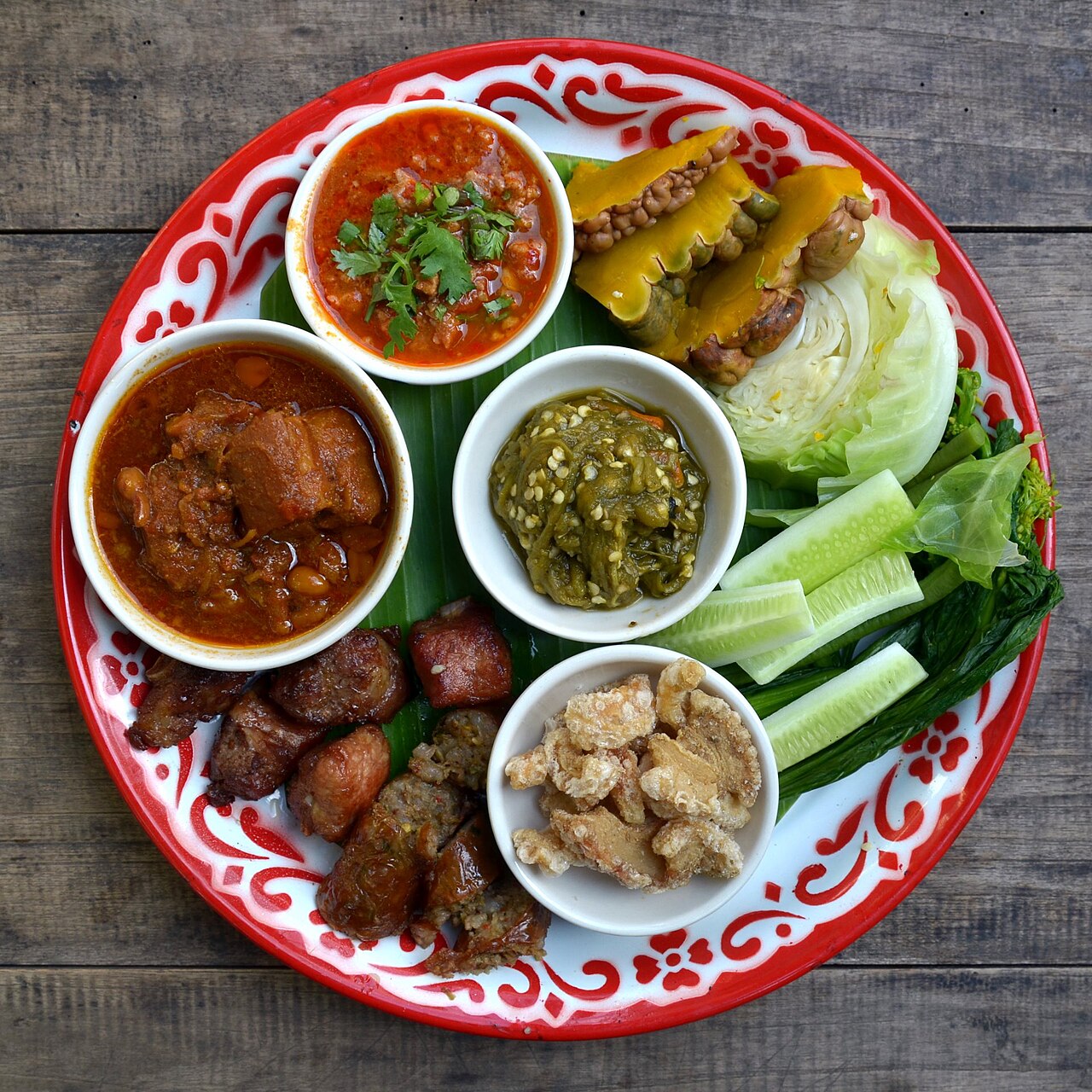
The heart of a khantoke is a set of northern dishes laid out to share. The core is the chilli-dip duo, nam prik num and nam prik ong, with steamed vegetables and crackling, plus sai ua, a herb-marinated pork sausage, and gaeng hang le, a Burmese-style pork curry with ginger. Everything goes with hand-rolled sticky rice — it's a way to taste a whole range of northern food in one meal.
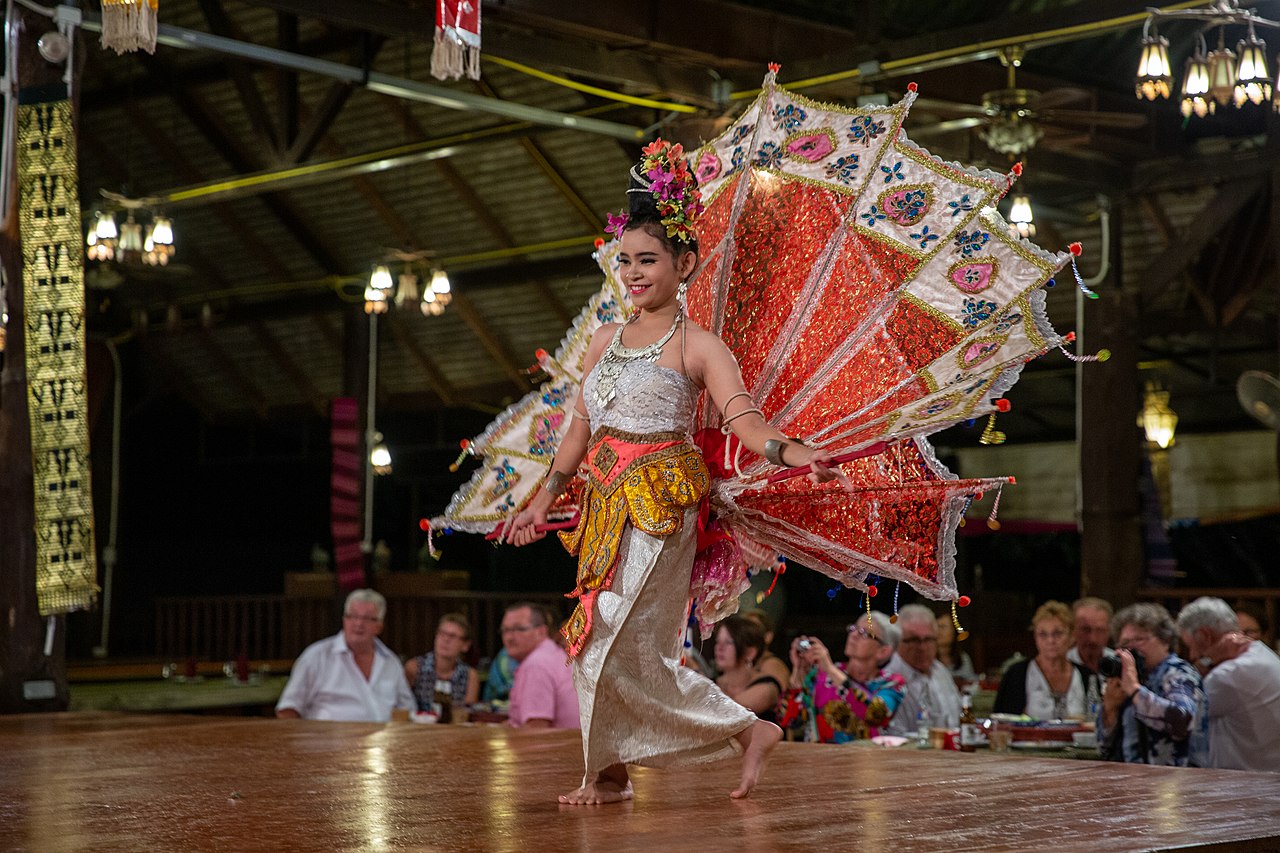
As you eat, dancers perform on a central stage. It opens with the fingernail dance, where dancers wear long brass nail extensions and move slowly in unison, then the candle dance with lit candles in a dimmed room, and the umbrella dance with bright parasols. Many venues add a hill-tribe dance from the northern ethnic groups, and some finish with a sword dance or fireworks.
The exact line-up shifts from place to place, but these five are the backbone almost every tray carries — worth knowing before you go.
If there's one thing the whole circle reaches for first, it's often the sai ua — minced pork mixed with chilli paste, lemongrass, kaffir lime leaf and turmeric, packed into a casing and grilled low until the skin tightens and the herbs come through. Sliced into coins, it's dense and savoury, and you can keep eating it bite for bite with sticky rice. It's far punchier and more aromatic than a Western sausage.
The northern chilli dip people get hooked on — long green chillies are roasted until the skins char and sweeten, then pounded with garlic, shallot and salt into a smooth, dark-green paste that's gently hot, a little tangy and full of roasted aroma. Scoop it with kaeb moo crackling, steamed vegetables and sticky rice, and it's the kind of thing you finish without noticing.
The partner to nam prik num on the same tray, but a different character — nam prik ong is minced pork simmered with small tomatoes and chilli paste into a red-orange dip that's sweet, sour and savoury all at once, and not very spicy, which is why children and the chilli-shy go for it. Scoop it with raw or steamed veg, or stir it through sticky rice. People sometimes liken it to a northern Thai meat ragù.
The curry that tells you about Lanna's history — gaeng hang le came in from Burma, built on a hang le spice mix with a masala-like fragrance, and stews pork belly with slivered ginger, pickled garlic and tamarind until the meat falls apart and the sauce turns thick, sweet and faintly sour. There's no coconut milk in it, so it never feels heavy. With sticky rice it's deeply filling, and it's usually the star hot dish on the tray.
No northern tray is complete without kaeb moo — pork rind fried until it puffs and crisps, some pieces with a little meat left on, some all crunch. Its main job is to be the crisp scoop that carries nam prik num and nam prik ong to your mouth, and it shatters satisfyingly with every bite. It's the thing your hand keeps drifting back to while you wait for the hot dishes, and oddly enough it goes beautifully with sticky rice.
From the cultural centre with a full show to an open-air option — with a straight word on who each one suits. Check the show times and the price before you book.
This is the name that comes up first when anyone mentions a Chiang Mai khantoke. The meal is served in a Lanna-style wooden pavilion, seated on the floor around the tray, with a northern food spread and several stage dances through the evening — from the fingernail and candle dances to a hill-tribe performance. It suits a first-timer who wants the food and the culture in one night, and packages often include hotel pickup from the city.
Another venue running khantoke with a performance on a regular schedule. The space is a large Lanna-decorated hall that seats a lot of people, so it works well for tour groups, big families, or anyone arriving as a party. The tray is the standard khantoke northern spread and there's a Lanna dance show on stage, with the lighting and performance turned up. It's a good fit if you want a ready-made evening you don't have to plan yourself.
A good call if you're travelling with kids — Chiang Mai Night Safari offers a khantoke-with-show package you can pair with the night animal drive in a single evening, so you get the northern food, the Lanna performance and a family activity together. It suits anyone who wants to make the most of the evening with children along. Check exactly what each package includes and the time slots before you book, as there are several versions.
If your real aim is good northern food and you're not fussed about a show, several northern restaurants in town will set out a khantoke tray. Long-running places known for their northern cooking, like Huen Phen and Huen Muan Jai, are the kind of spots people point you to for the real flavours; some will put together a khantoke tray if you order ahead or come as a group. You get punchy home-style cooking at a gentler price than a show package, though the setting is an ordinary restaurant rather than a stage. Call ahead to ask whether they can do a khantoke tray.
A khantoke with a full show runs about ฿500–700/person including the tray and the performance, while a restaurant laying out a khantoke tray without a show is cheaper, around ฿300–450/person. Children usually get a reduced rate.
The full-show venues mostly run a single evening sitting around 7pm, so book ahead — especially in high season (Nov–Feb) when seats go fast.
There's no strict dress code, but since you sit on the floor, loose trousers or a long skirt you can move in are the most comfortable. Many venues have a leg well for anyone who finds the floor hard.
Most places ask you to take your shoes off before the pavilion, so slip-on shoes are easier. Chiang Mai evenings are cool in winter — bring a light layer.
Chiang Mai has no metro — get around by songthaew (red truck), Grab or on foot. Several khantoke venues sit a little outside the centre.
Many packages include hotel pickup from the city in the price. Asking for it when you book is simpler and often better value than arranging your own ride, especially for the late trip back.
The tray is pork-heavy (sai ua, gaeng hang le, kaeb moo), but nam prik num, the steamed vegetables and the sticky rice are all vegetarian.
Flag it when you book and most venues can prepare a vegetarian tray, swapping in vegetable curries, tofu and dips made without pork or shrimp paste — say so clearly at the booking stage.