Picture a morning that starts with a walk through a fresh market with your chef — smelling curry paste, picking out herbs — then back to a kitchen to pound that paste by hand in a stone mortar. You finish the day with khao soi, a curry, pad thai and mango sticky rice you cooked yourself. It's the thing solo travellers in Chiang Mai most often call the best-value day of the trip.
If you're going to learn to cook Thai food once in your life, Chiang Mai is one of the best places to do it. The city has hundreds of cooking classes to choose from, from garden classes outside town that grow their own vegetables to small classes in homes in the old city. Prices are easy on the wallet, the ingredients are fresh, and most chefs speak good English because they've been teaching visitors for years. You don't need any cooking background at all.
The real charm of a Chiang Mai class isn't only the cooking — it's getting to know the ingredients from the start. Many classes take you through a fresh market first, so you can see what galangal, lemongrass, kaffir lime leaves, shrimp paste and dried chillies actually look like. The chef explains why each one goes in. By the time you're back in the kitchen pounding your own curry paste, you understand straight away why a Thai curry tastes so layered — and it's knowledge you can genuinely take home and use.
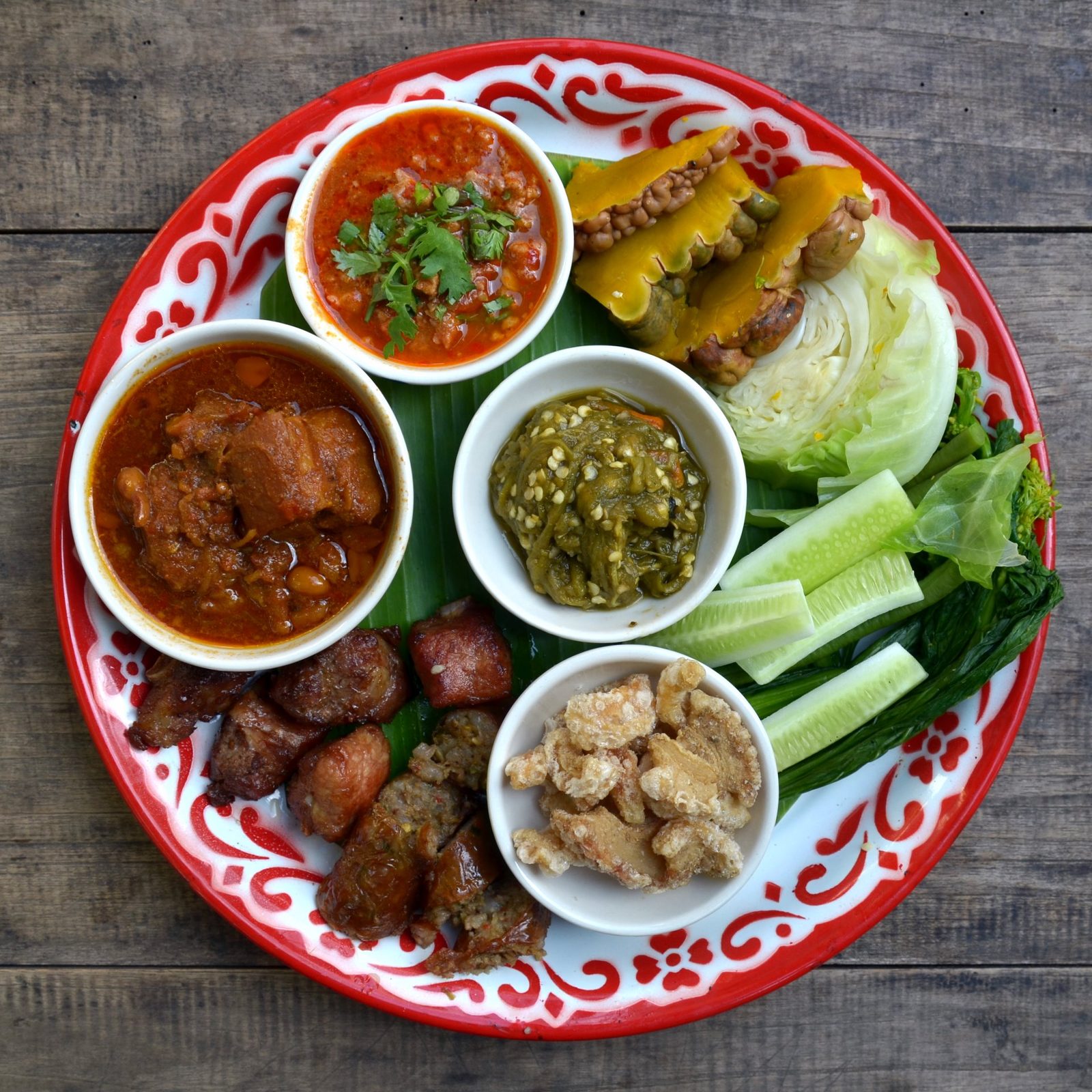
What makes it extra special is that Chiang Mai is a city of northern Thai food, so many classes don't just teach central-Thai staples like pad thai and tom yam — they add northern dishes too, such as khao soi or nam prik num with crispy pork. That means you get to cook food that's hard to learn anywhere else. If you want to get to know northern food more deeply, read our northern Thai food guide alongside this.
Many classes start at a market, because knowing your ingredients is half of cooking good Thai food
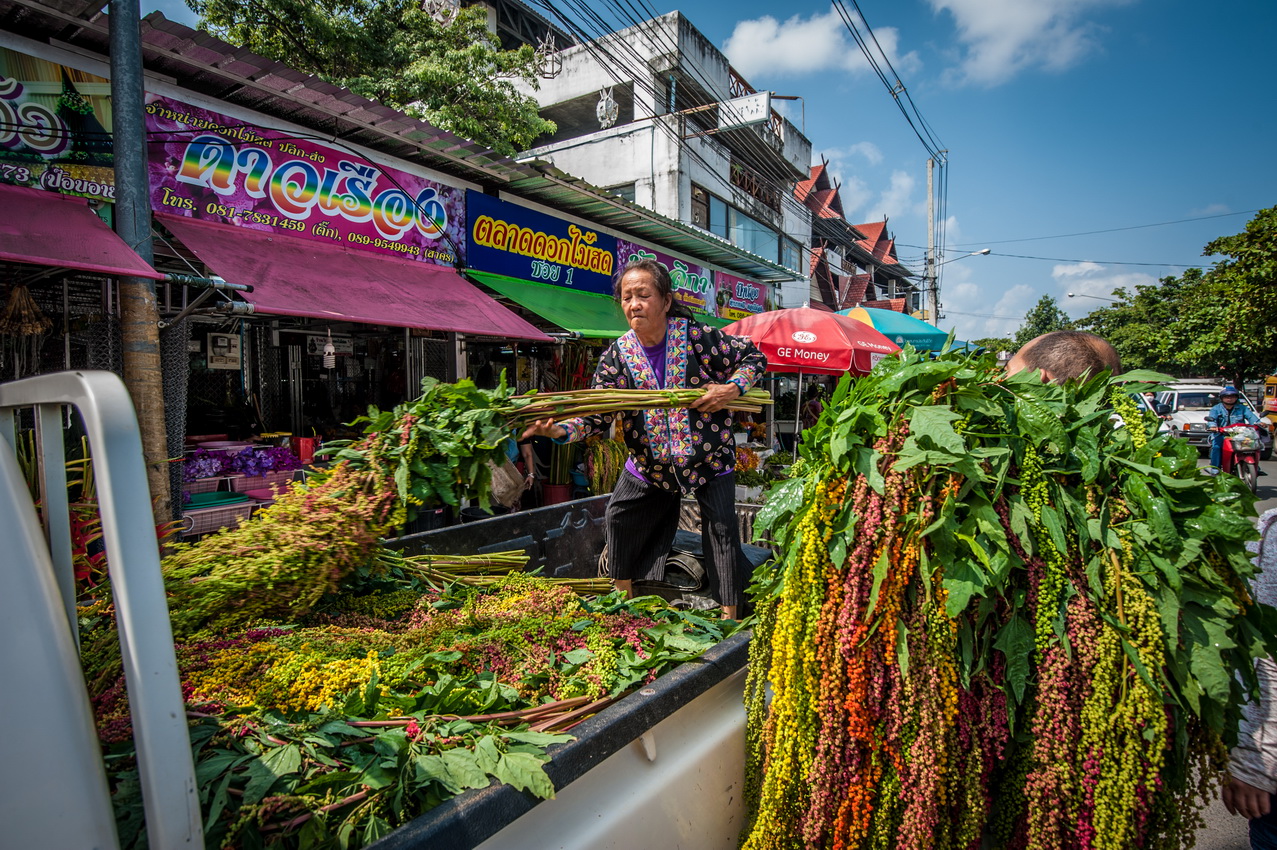
Full-day classes, and some half-day ones, begin with a fresh-market walk with the chef — usually a local market near the kitchen. Here the chef shows you the building blocks of Thai food: galangal, lemongrass, kaffir lime leaves, fingerroot, dried chillies, shrimp paste, palm sugar and local vegetables you may never have seen. You get to handle them, smell them, and ask what each one is for. It's a fun lesson, and it makes the cooking that follows make a lot more sense.
If the class you book doesn't include a market visit, don't worry — Chiang Mai has plenty of markets to wander on your own. Warorot Market (Kad Luang) is a big one with both fresh and dried goods, while for an evening atmosphere the Night Bazaar and the Sunday Walking Street are good places to taste before or after your class, so you can compare the dish you made with the famous shops' versions.
Most classes let you pick from a list — these are the popular dishes almost every Chiang Mai class offers, from central-Thai staples to northern specialities

The step most people say they enjoy most: pounding your own curry paste in a stone mortar. In go dried chillies, galangal, lemongrass, kaffir lime, garlic, coriander root and shrimp paste, and you pound until it's a smooth paste, with the smell of fresh herbs filling the air. Fry it into a green or red curry and you understand at once where the flavour of a Thai curry comes from.

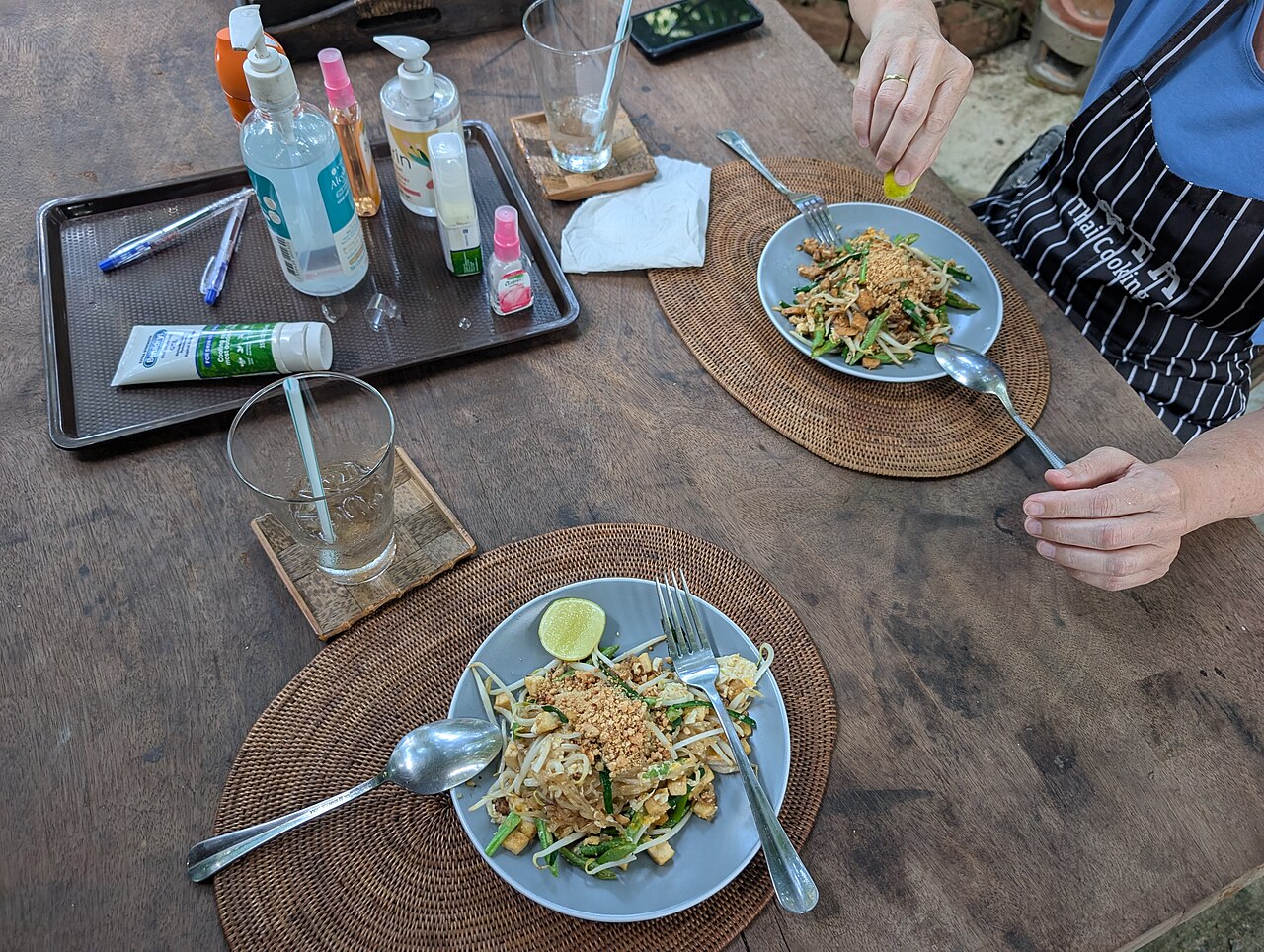
The dish nearly every class includes, and a fun one to make because you get to fry over high heat in a wok — noodles, tofu, prawns or chicken, egg, bean sprouts and garlic chives, seasoned with tamarind, palm sugar and fish sauce, finished with crushed peanuts and lime. Sour, sweet and salty all balanced in one plate. It's the easiest dish to recreate back home.

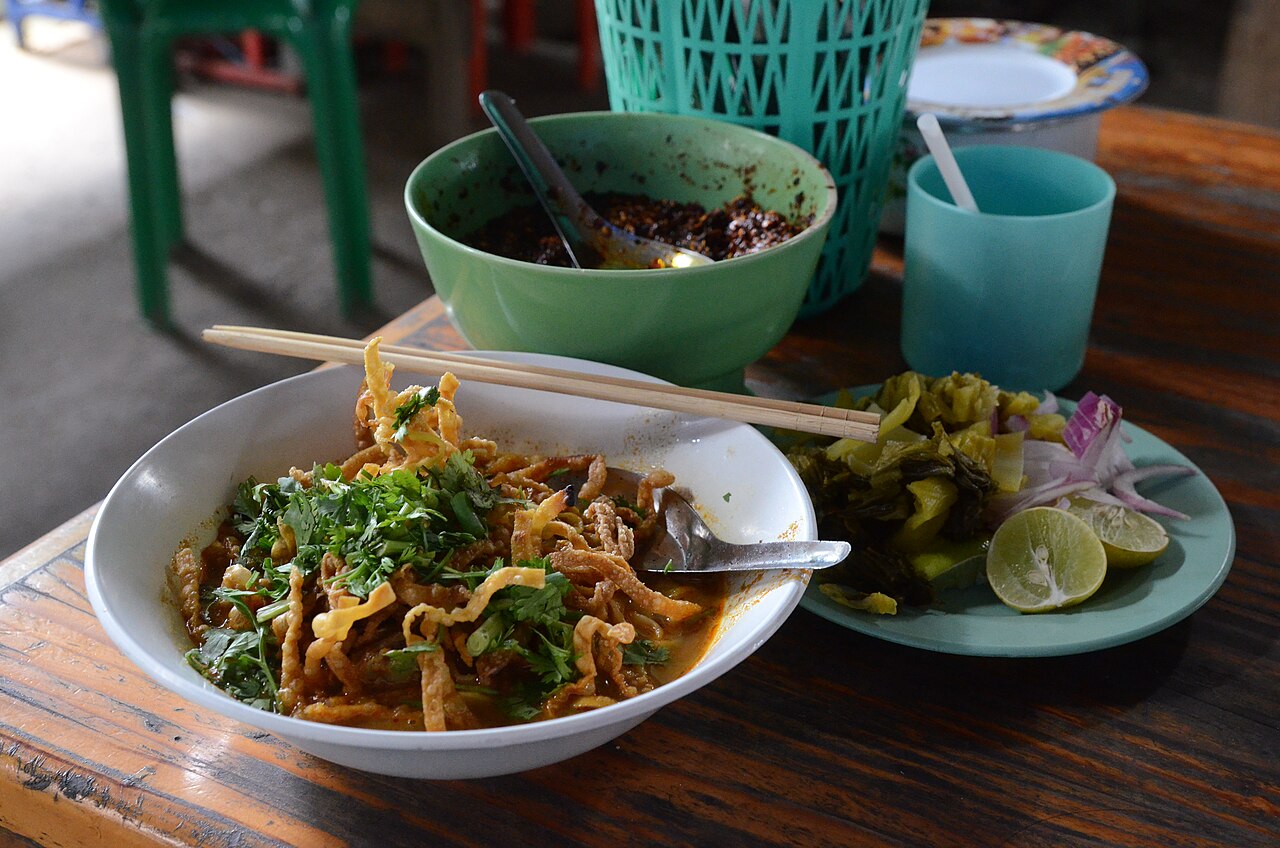
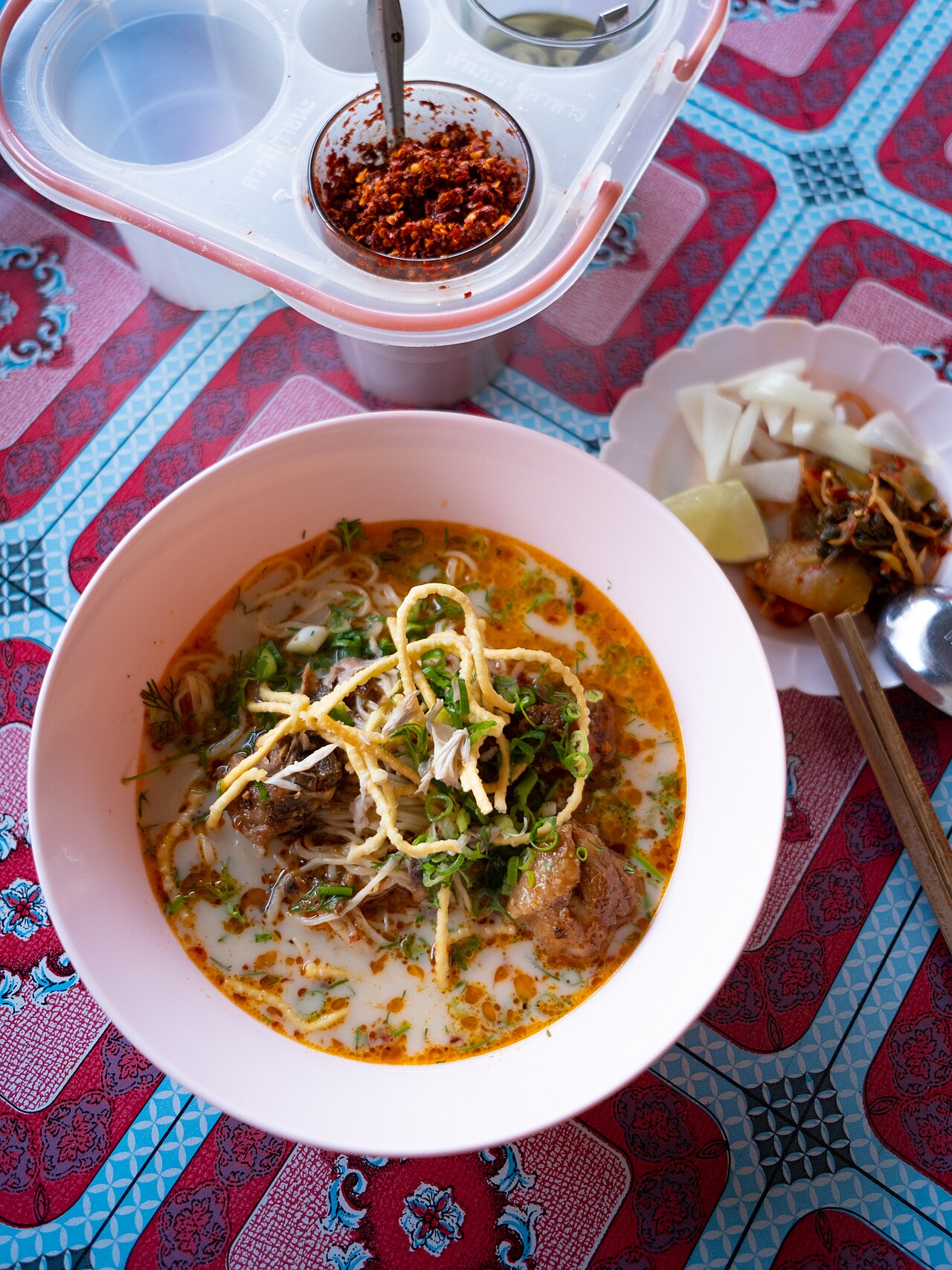
Chiang Mai's signature dish, which many classes add to the list — egg noodles in a rich, Burmese-influenced coconut curry broth, topped with crispy fried noodles and eaten with pickled greens, shallots and lime. Getting to make khao soi yourself is one reason to choose a class here, since it's harder to learn elsewhere. To get to know the dish in depth, read our khao soi guide.

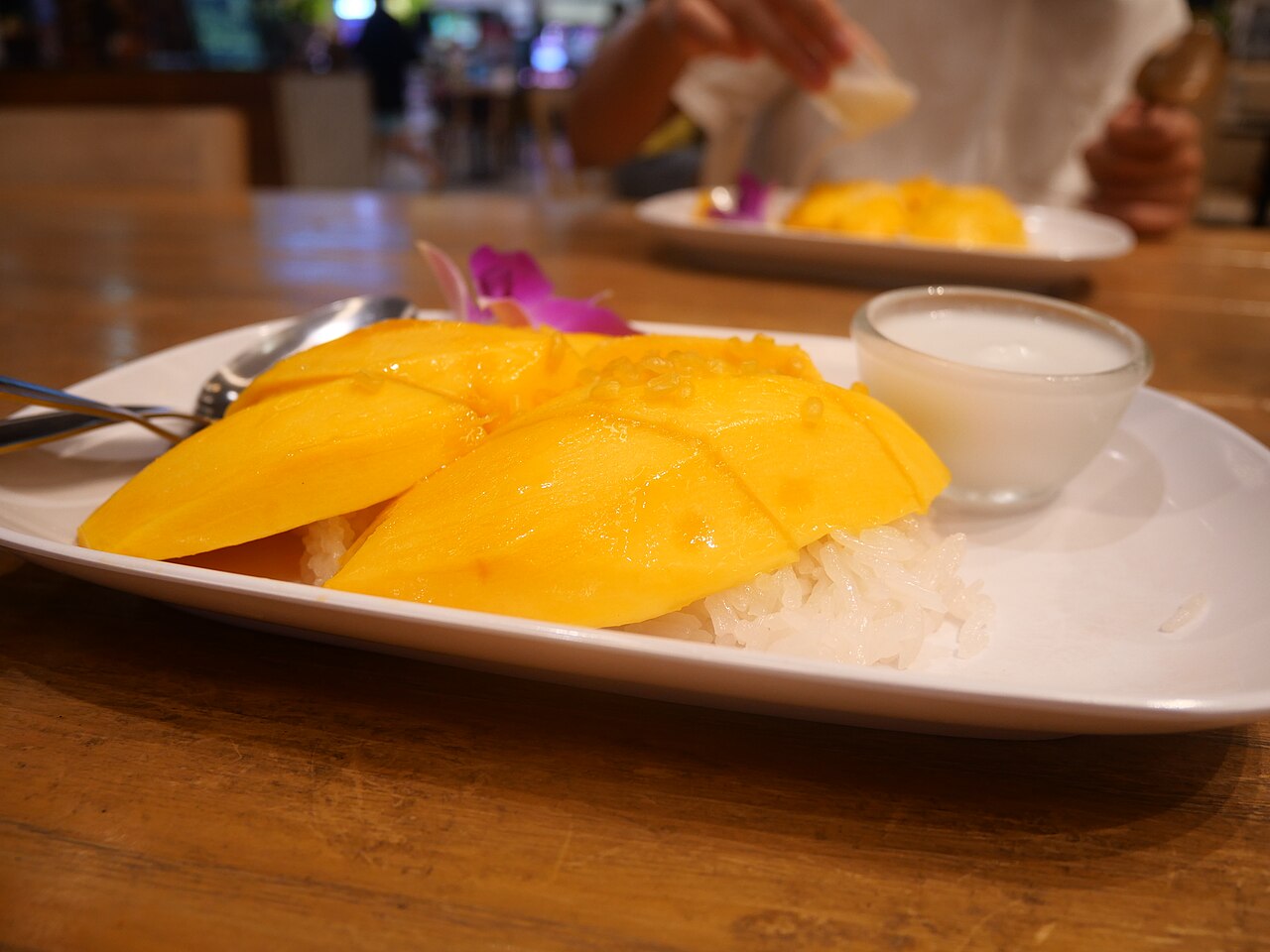
The dessert almost every class finishes with, and one that wins people over instantly. You learn to steam sticky rice properly, fold it with coconut milk and sugar until it's fragrant and rich, then serve it with sweet ripe mango and a little more coconut on top. It's a simple dish with an impressive result — and the one kids in family classes love making most.

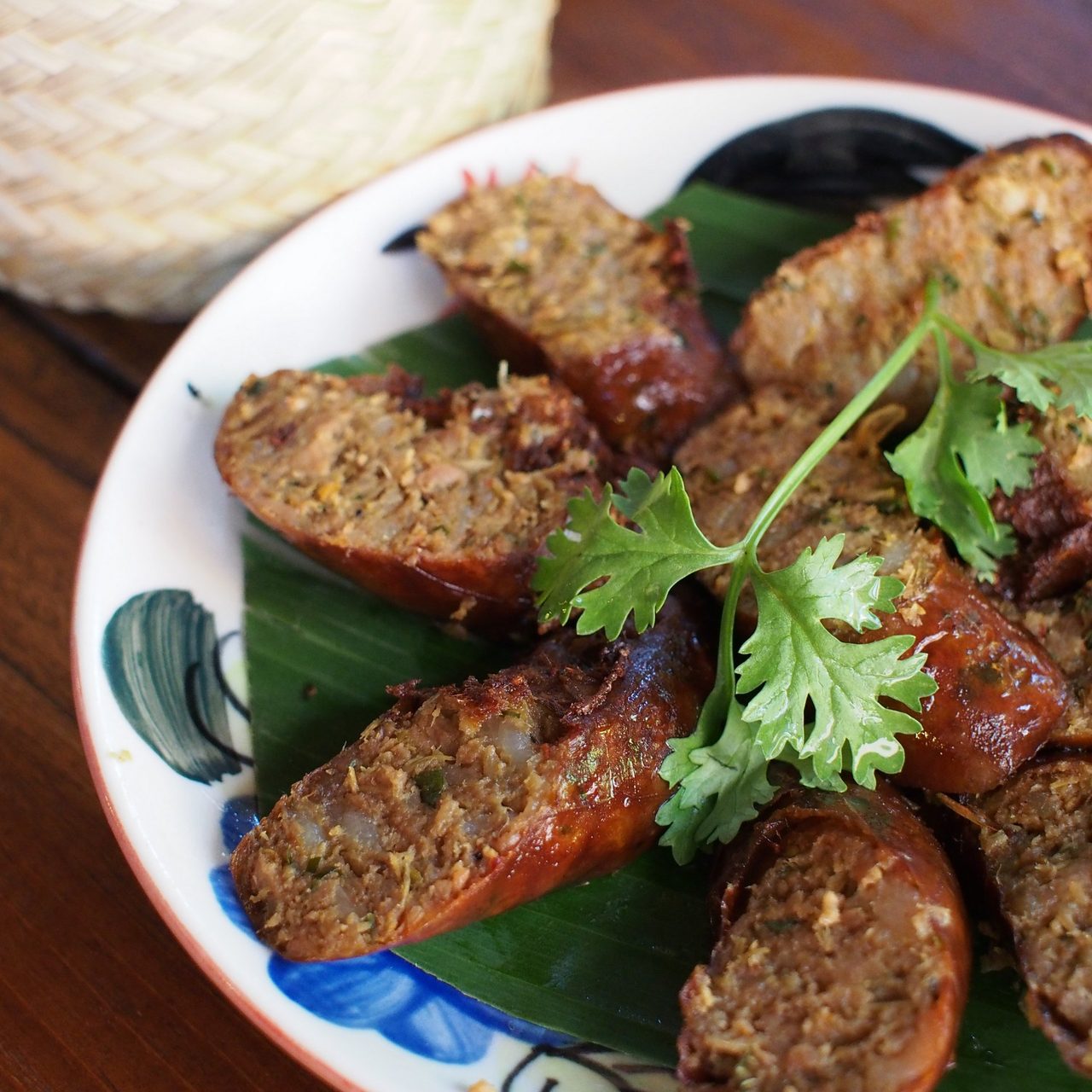
Beyond the four mainstays, most lists also include tom yam goong, where you practise balancing the sour-and-spicy broth, plus pad kaprao, tom kha gai, a Thai salad like yam or som tam, and at some Chiang Mai classes northern dishes such as nam prik num with crispy pork, or sai ua sausage (pictured). Usually you pick 4–5 dishes to suit yourself, savoury and sweet.
The best part of any class is that everything you make is real food you actually eat. After each dish you sit down and eat it together at the table — some classes serve dish by dish as you go, others gather it into one big meal at the end. You can box up what you can't finish, and nearly every class hands you a recipe book to take home, so you can cook it all again for the people back home.
Two main formats with a clear difference — choose based on whether you want cooking to be the main event of the day, or just a fun half-day
A half-day class runs about 3–4 hours, with morning and afternoon sessions, and you cook around 4–5 dishes. It suits anyone short on time, or who wants to keep the other half of the day for temples, the old city or just resting. Prices are usually around ฿800–1,200. Most don't include a full market tour, though some do a short market stop — it's good value and doesn't eat the whole day.
A full-day class runs about 5–6 hours, usually opening with a fresh-market tour with the chef, lets you cook more dishes (around 6–7) and gives you a gentler pace to absorb the techniques. Prices are usually around ฿1,000–1,500. It's for people who want cooking to be the highlight of the day, want to understand the ingredients more deeply, and aren't rushing off anywhere. If you can and you have the time, a full day feels like the more complete experience.
With hundreds of classes in Chiang Mai, use these five points to narrow it down to the one that matches what you actually want
Always check the dish list before booking. See how many dishes you get to choose, and whether there are dishes you genuinely want to make. If you're in Chiang Mai and want northern food, pick a class that clearly offers khao soi, nam prik num or gaeng hung lay — not every class teaches northern dishes, and some are central-Thai only.
If you want the full experience, choose a class that includes a fresh-market walk with the chef — usually a full-day class. You get to know the ingredients before you cook, which makes the food make more sense. A class without a market tour is still fun to do; it just skips the part many people find memorable.
A small class (around 6–10 people) means the chef can give more attention and you can ask more questions. Bigger groups are often cheaper but feel less personal. If you want extra care, some places offer private or small-group classes — more expensive, but the menu and pace can be tailored to you.
If you're vegetarian, vegan or have allergies, most classes can adapt — swapping fish sauce for soy and leaving out shrimp paste — and some focus on vegetarian cooking. Say so in advance when you book and the chef will prepare the right ingredients. To find more meat-free spots around town, read our vegetarian & vegan guide.
Check whether the class offers hotel pick-up, especially garden classes outside town that are awkward to reach on your own. See if the time slot fits your plans that day, and read a couple of recent reviews to gauge whether the chef teaches well and the setting matches the photos. Booking online lets you compare all of this in one place before you decide.
Getting around: Chiang Mai has no metro or train system in town — you get around by red songthaew (red truck), Grab, or on foot. In-town classes are mostly in or near the old city, a few minutes' walk or a short red-truck ride away. Garden classes outside town usually include hotel pick-up. When you book, confirm the meeting point and pick-up time so you don't miss your slot.
What to wear and bring: Wear comfortable clothes you don't mind getting messy and closed-toe shoes (you'll be in a kitchen, sometimes a market). Classes provide an apron. Come a little hungry, because you'll taste plenty as you go and there's a big meal at the end. If you're coming solo, don't worry — classes are small and friendly, and it's easy to make new friends.
Best timing: High season (November to February) brings cool, comfortable weather that's lovely for a kitchen and a market, but the good classes fill up fast, so book 1–3 days ahead. March and April are hot and hazy; indoor classes are still fun, but if there's an outdoor market tour, pick a morning slot when the air is better.
The kind of northern spread many Chiang Mai classes teach — nam prik num, gaeng hung lay, sai ua and pork crackling, eaten with fresh vegetables and sticky rice
Staying in or near the old city is the most convenient base — in-town classes are walkable, garden classes pick you up easily, and you can stroll to the markets and restaurants