Home Chiang Mai Thailand Chiang Mai Hotels About
Home  ›  Asia  ›  Thailand  ›  Chiang Mai  ›  4-Day Itinerary
🗓️ Chiang Mai Itinerary · 4 Days · 2026

4 Days in Chiang Mai —
Lanna temples, Doi Suthep, elephants, and a day out of town

Day one in the Old City with its temples and khao soi, day two up Doi Suthep and over coffee in Nimman, day three with elephants at an ethical sanctuary, and a fourth day out of town — Doi Inthanon, the Bua Tong sticky waterfall, or as far as Pai and Chiang Rai. This is Chiang Mai with both a slow pace and real nature.

Why four days

Between too rushed and more than you need

Here's the honest truth about Chiang Mai: its charm isn't in racing to tick everything off — it's in slowing down. The Old City is small and made for wandering between temples, Doi Suthep sits on the mountain behind town, and the elephant sanctuaries and waterfalls are a little further out. Doi Inthanon and Pai are far enough to eat a whole day. A three-day trip can be done, but something always gets cut — and the thing that gets cut most often is day four, the day you finally leave town and meet the real nature of the north.

Four days solves that directly. Day one is the Old City in full — Wat Phra Singh, Wat Chedi Luang, khao soi, the walking street. Day two heads up to Doi Suthep in the morning, then down to the Nimman cafés and a cooking class. Day three gives a half day to an ethical elephant sanctuary, finishing at the Night Bazaar. And day four is the one a short trip never has room for: a trip out of town — Doi Inthanon, the Bua Tong sticky waterfall, or a mountain road to Pai or Chiang Rai.

The difference from the three-day itinerary: this plan adds one full day out of the city. It suits travellers with exactly four days who want both Lanna culture and the countryside around it. If you have less time, see the two-day plan or the one-day plan for a shorter trip.

4 days · 3 nights Day four out of town Red truck + Grab + car for the day Budget around ฿1,500–2,500/day
Before you go

Three things to know before you arrive

Chiang Mai is easier to travel than most people expect, but a little planning around transport, the seasons and temple dress goes a long way.

🚍
Plan how you'll get around

Chiang Mai has no metro. In town you use the red trucks (songthaew, shared pickups, around ฿30–50/person — tell the driver where you're going and agree the fare first) or a Grab. The Old City is small enough to walk between temples. For the mountain and the day-four trip out of town, a join-in tour or a private car and driver is easiest. See our day-trips guide.

🌤️
Pick your timing well

The best window is the cool, dry season, November to February — clear skies and pleasant temperatures. But roughly mid-February to April is the burning season, when PM2.5 air pollution runs high — check the air quality before planning a mountain day. The June–October rainy season is green and quiet, with afternoon showers. See our best-time-to-visit guide.

👕
Dress for the temples

Chiang Mai's temples ask you to dress modestly — shoulders and knees covered, for men and women alike. Carry a scarf or a wrap just in case, and take your shoes off before entering the prayer halls. On Doi Inthanon the early mornings are genuinely cold, so bring a warm layer for that day too.

Day one

The Old City — Lanna temples, khao soi, the walking street

Wander between temples you can walk to inside the old walls · your first bowl of khao soi · finish at the Sunday Walking Street (or the Night Bazaar if it's another day) — day one packs old Chiang Mai's heart into one stretch.
01
Day 1
Wat Phra Singh · Wat Chedi Luang · khao soi · Sunday Walking Street
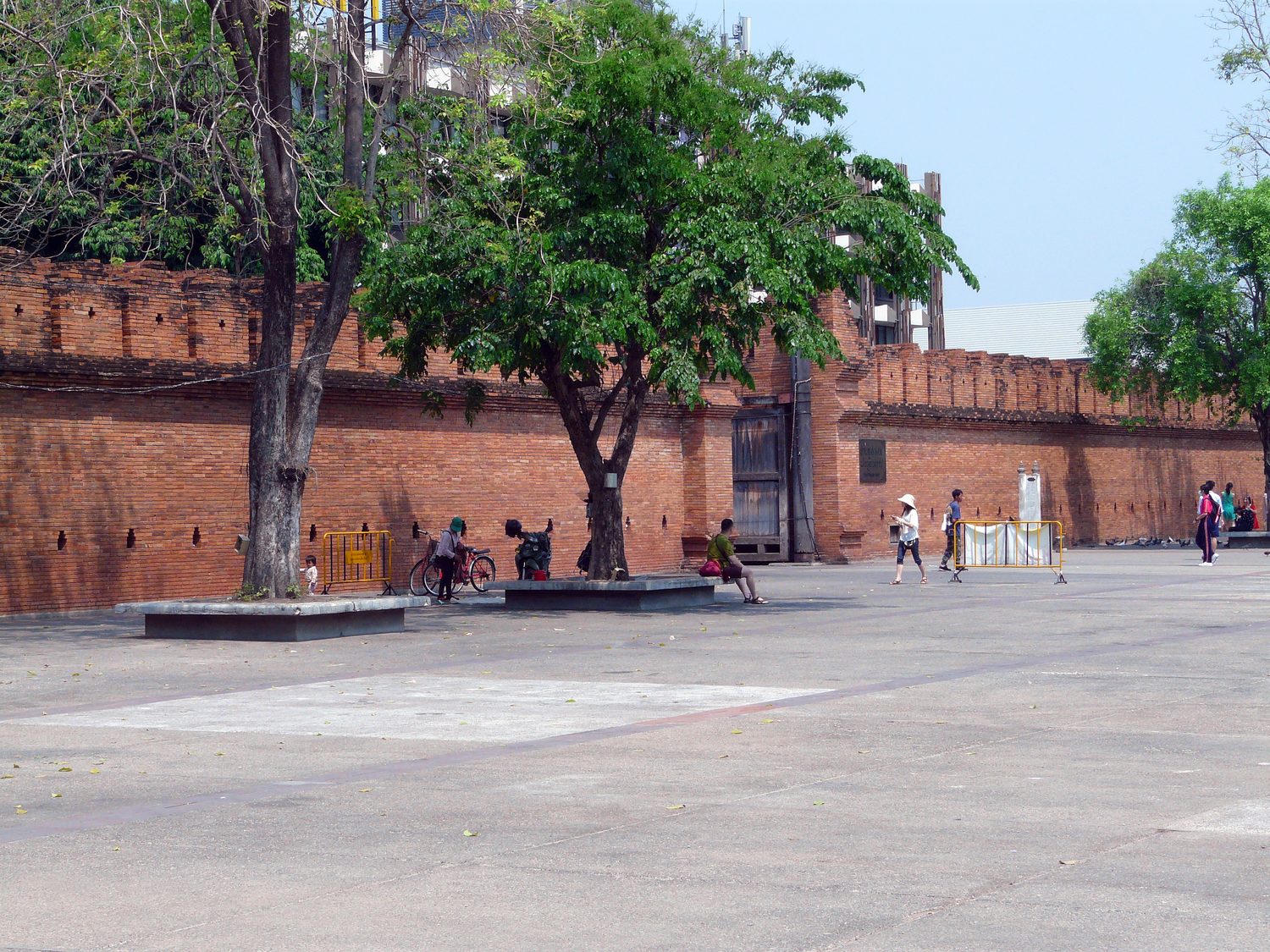
Tha Phae Gate and the old city walls of Chiang Mai — weathered red brick and the open square at the entrance to the Old City
Morning · ~3.5 hours

Start the morning in the Old City at Wat Phra Singh — Chiang Mai's most important temple, at the western end of Ratchadamnoen Road. Its Lai Kham assembly hall is pure Lanna craftsmanship, and the Phra Singh Buddha is the city's most revered image. From there it's a short walk or red-truck ride to Wat Chedi Luang — a huge brick chedi that was once the tallest in the Lanna kingdom. Its top was lost to an earthquake centuries ago, but the base still towers over the courtyard. Both temples sit inside the old walls, an easy walk apart.

Other temples dot the Old City as you go — Wat Phan Tao, right next to Wat Chedi Luang, is worth a look. Take it slowly and collect them as you walk. For more temples and sights, see our roundup of things to do in Chiang Mai.

Getting around: walk between the Old City temples · short red-truck hops cost around ฿30–40/person
Entry: Wat Phra Singh and Wat Chedi Luang charge foreign visitors roughly ฿20–50 each
Dress: modest, shoulders and knees covered · shoes off before the prayer halls
Tip: visit the temples early — it's cooler and quieter than mid-morning, and Chiang Mai's midday sun is strong. Bring a hat and water.
Afternoon · ~2.5 hours

Lunch has to be khao soi — egg noodles in a coconut-curry broth, topped with crisp fried noodles and eaten with pickled greens, shallots and lime. It's the dish that defines Chiang Mai. Several of the best-known shops sit on the east side of the moat around the Chang Moi area; pick one by the reviews in our guide. Afterwards, walk it off in the Old City or settle into a café for a while.

The afternoon heat is a good time to head back to your hotel for a rest before the evening, or if you've still got energy, stroll and take photos around Tha Phae Gate, the eastern gate of the old walls. To go deeper on the region's cooking, read our northern Thai food guide.

Khao soi: around ฿50–80 a bowl · chicken, beef or pork
Getting there: the Chang Moi khao soi shops sit just east of the moat — a short red truck or Grab away
Evening · ~3 hours
Sunday Walking Street (or the Night Bazaar)

If day one lands on a Sunday, don't miss the Sunday Walking Street — Ratchadamnoen Road through the Old City closes to traffic and fills with crafts, handmade goods, food and street music, running from Tha Phae Gate all the way to Wat Phra Singh, with temple courtyards turned into food zones along the way. If it isn't a Sunday, the Saturday Walking Street on Wualai Road (the silver street) or the Night Bazaar — open every evening — make easy alternatives.

If you'd rather sit down to a proper meal than graze, book a table for a khantoke dinner — a full northern Thai set with Lanna dancing, a memorable first night.
Sunday Walking Street: Sunday evenings only, from around 4pm · free to wander
Night Bazaar: open every evening on Chang Khlan Road, east of the Old City · a short red truck/Grab away
Street food: around ฿20–60 a dish · see our street food guide
Day two

Doi Suthep — a mountain temple, Nimman cafés, a cooking class

Up to Wat Phra That Doi Suthep in the clear morning · down for coffee in the Nimman district · finishing by cooking northern Thai dishes yourself — a day of faith, a city view, and your own hand at the wok.

02
Day 2
Wat Phra That Doi Suthep · Nimman cafés · northern Thai cooking class
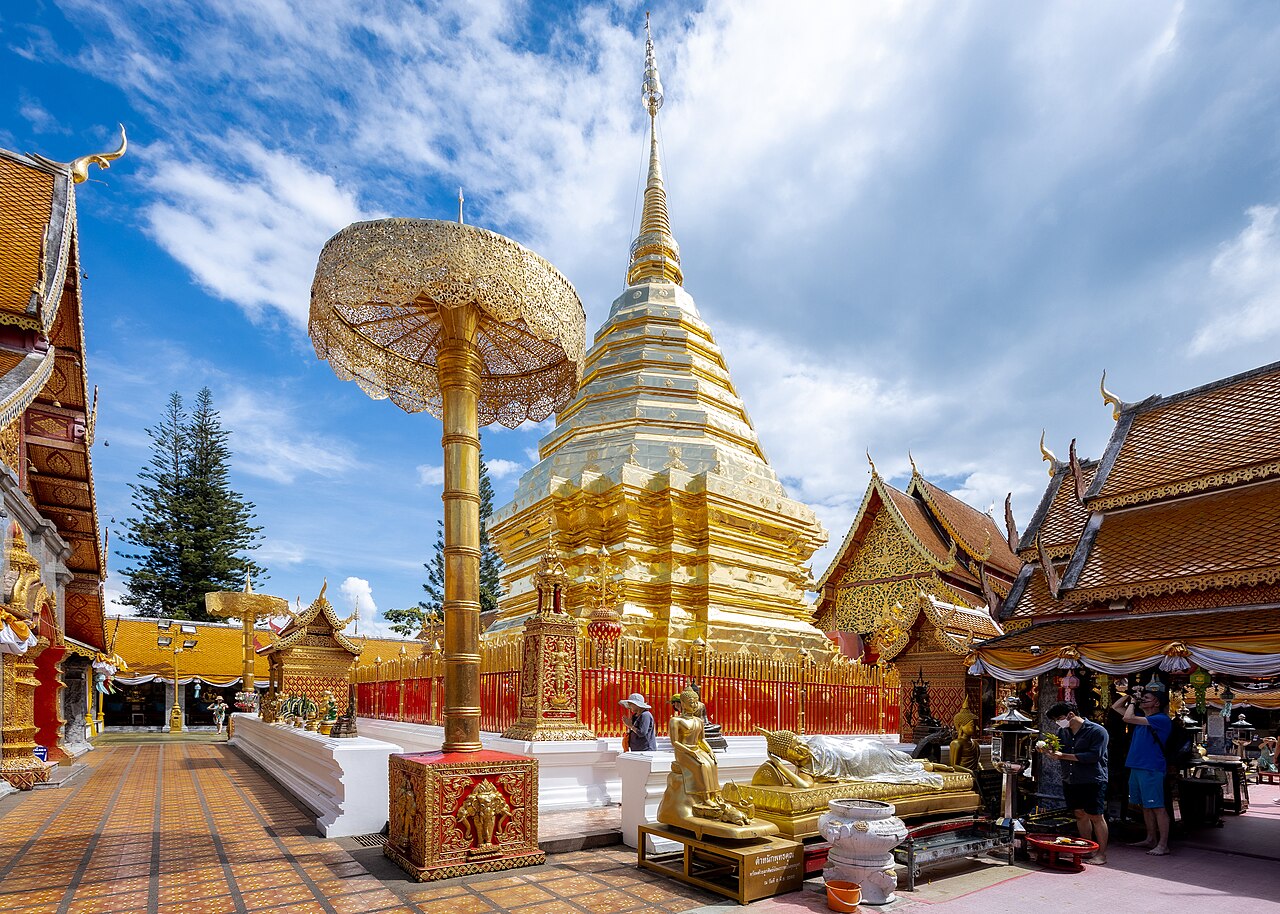
Wat Phra That Doi Suthep — the golden chedi and tiered umbrellas in the temple courtyard on the mountain above Chiang Mai
Morning · ~4 hours round trip

Head up to Wat Phra That Doi Suthep early — the sacred hilltop temple that is the symbol of Chiang Mai. It's about 16km up the mountain from town, a 30 to 40 minute drive. From the car park you climb the 306-step Naga staircase (or take the funicular tram) to a golden chedi enshrining a relic of the Buddha, and a terrace that looks out over the whole city. On a clear morning the view is at its best.

On the way up, if you have time, stop at Bhubing Palace, higher up the mountain (open only in certain periods — check first), with gardens that are lovely in the cool season. For other temples and viewpoints on the mountain, see our things to do in Chiang Mai.

Getting there: red trucks to Doi Suthep leave from near Chiang Mai University / the zoo, around ฿40–60/person (they wait to fill up), or hire a car/Grab straight up
Temple entry: foreign visitors around ฿30 · the tram up the steps is around ฿20–30
Dress: modest, shoulders and knees covered · the mountain is cool in the early morning
Tip: going early means clearer skies, fewer people and a break from the midday heat. If you ride a rented scooter up yourself, the mountain road is steep and winding — ride carefully and check your brakes.
Afternoon · ~3 hours

Come down the mountain to unwind in Nimmanhaemin — the modern district not far from the foot of the mountain, full of design-led cafés, restaurants, homeware shops and small galleries. Chiang Mai is serious coffee country, with arabica grown on the surrounding hills, so an afternoon over a cup of mountain-grown coffee, resting your legs, is time well spent. The Nimman side streets (especially Soi 1 to 17) are good for an easy wander.

If you like a market feel, walk on to One Nimman, the events-and-shops plaza at the end of the district — or, if the mountain has worn you out, head back to rest and save your energy for cooking later.

Getting there: Nimman is west of the moat, near the foot of Doi Suthep · a red truck/Grab from the Old City is around ฿40–60
Coffee: around ฿60–120 a cup · look for locally grown mountain coffee
Evening · ~3–4 hours

End the day with a Thai cooking class — one of the most-loved things to do in Chiang Mai. Most start with a walk through a fresh market to choose ingredients, then you cook everything yourself, from pounding curry paste in a mortar to stir-frying, simmering and a dessert. The menu usually runs to khao soi, gaeng hang lay, pad thai and tom yum, and you eat the results as a full dinner. Many schools run an evening session — book ahead.

Not up for a class? Book a table for a khantoke dinner instead, or find a northern Thai restaurant in town from our Chiang Mai food guide.

Cooking class: half or full day, around ฿800–1,500/person including ingredients and the meal · morning and evening sessions
Pickup: many classes collect you from your in-town hotel — ask when you book
Day three

Elephants and food — time with elephants, then the Night Bazaar

A half day with elephants at an ethically run sanctuary — feeding them and walking with them, no riding · an afternoon to rest · finishing with shopping and food at the Night Bazaar — the day Chiang Mai feels warmest.

03
Day 3
Ethical elephant sanctuary (half day) · Night Bazaar
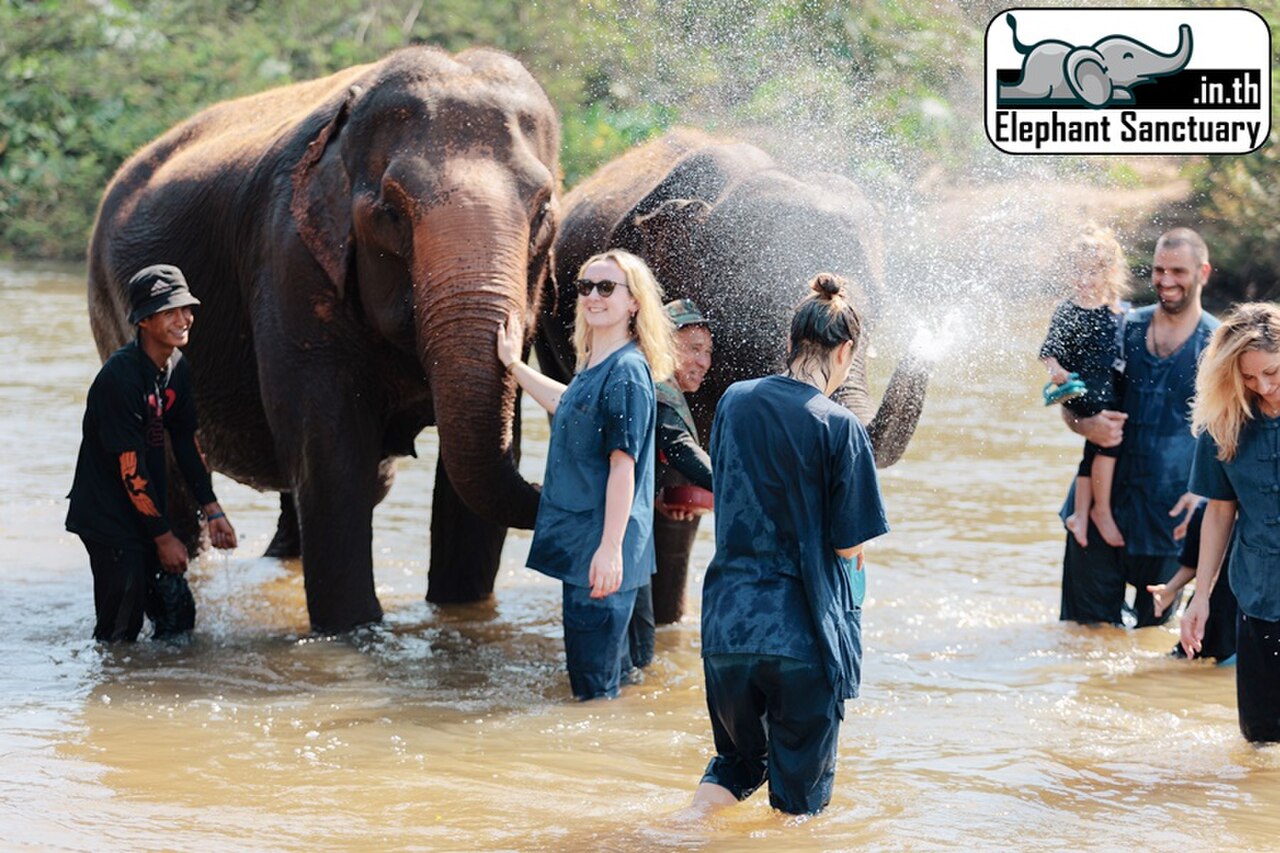
An ethical elephant sanctuary near Chiang Mai — an elephant grazing in green forest with its mahout close by
Morning half day · ~5–6 hours including transfers

This morning, head out to an ethical elephant sanctuary outside the city — Chiang Mai is the centre of welfare-focused sanctuaries that let elephants live freely, with no riding and no shows. The day is about learning about the elephants, feeding them, walking alongside them through the forest, and helping bathe them in a stream. Most run as half- or full-day programmes with hotel transfers included. Choosing a place that genuinely cares for its elephants makes for a better experience all round — for you and for them.

Most sanctuaries are out in Mae Taeng or Mae Wang, around 1 to 1.5 hours from town. Book ahead, as the good ones fill up fast. A morning half-day usually has you back in town by the afternoon, in time to rest before the Night Bazaar.

Getting there: sanctuary programmes include hotel transfers — no need to arrange your own transport
Price: a half day is around ฿1,200–1,800/person · a full day around ฿1,800–2,500/person, with food and transfers
Bring: clothes that can get wet / a towel · shoes that handle mud · a waterproof camera
Choose responsibly: look for a sanctuary that clearly states no riding and no performances, and read the reviews on animal welfare before you book. For more trips out of town, see our day-trips guide.
Afternoon · rest
Time in town — a spa, a massage, or a café

You'll likely come back from the elephants tired and a little damp in the afternoon, which makes it a good moment to clean up and rest at your hotel, or find a Thai massage in the Old City (Chiang Mai has plenty of good, inexpensive places, around ฿250–400 an hour). A quiet coffee before heading out again works too — save your energy for the Night Bazaar.

Thai massage: around ฿250–400 an hour · widely available across the Old City and Nimman
Evening · ~2.5 hours

End the day at the Night Bazaar on Chang Khlan Road — a long-running night market open every day, packed with craft stalls, souvenirs, clothes, woodwork and silver, and food-court areas to sit and eat. Haggling is part of the fun, and you'll come away with something to take home. The nearby Kad Luang and Anusarn markets join on, so it's an easy area to stroll, busy and full of food.

If tonight happens to be a Saturday or Sunday, you could swap in a walking street (Wualai on Saturday, Ratchadamnoen on Sunday) — a different feel, but just as enjoyable. Find dinner from our Chiang Mai food guide, or if you eat plant-based, our vegetarian and vegan guide.

Getting there: the Night Bazaar is on Chang Khlan Road, east of the moat · a short red truck/Grab from the Old City
Food and souvenirs: food court dishes around ฿40–100 · souvenir prices are negotiable
Day four · out of town

The day that makes four different from three

This is the day a short trip never has — get well out of the city for a day. Choose between Doi Inthanon (Thailand's highest point), the Bua Tong waterfall you can climb, or a mountain road to Pai or Chiang Rai, then give the whole day to the one you pick.

04
Day 4 · your choice
Doi Inthanon · Bua Tong sticky waterfall · or Pai/Chiang Rai
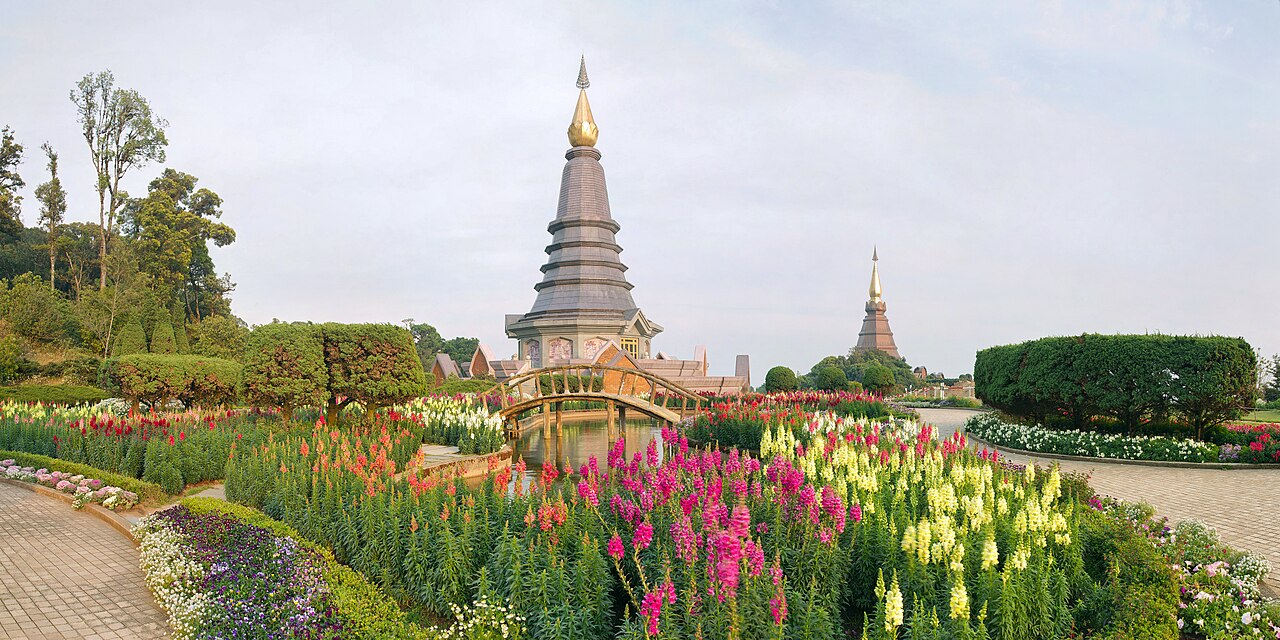
The twin royal pagodas on Doi Inthanon — two chedis among flower gardens on the highest mountain ridge in Thailand
Pick 1 of 3 day trips

🏔️ Doi Inthanon — Thailand's highest point

Best if: you want to stand on the country's highest summit · you love nature, cloud forest and walking trails · you'd like to see the twin royal pagodas with their gardens. A full nature day, and the easiest to arrange.

Distance: around 90km from town · a 2 to 2.5 hour drive up each way Park entry: foreign visitors around ฿300 · the Kew Mae Pan trail needs a local guide Bring: it's genuinely cold at the summit in the morning — pack a warm layer

💧 Bua Tong — the waterfall you can climb

Best if: you want something unusual and fun · you like getting in the water and easy activity · you have a half to full day to spare. A limestone waterfall you can climb barefoot, because the rock isn't slippery.

Distance: around 60km from town · a 1.5 hour drive each way Entry: free (donations welcome) · the Chok Sae blue spring nearby is worth a stop Bring: clothes that can get wet · hold the rope guides and watch the slippery spots

🛺 Pai or Chiang Rai — a neighbouring town

Best if: you don't mind a long drive · you want a change of scene. Pai is a small, laid-back town in a valley; Chiang Rai has the White Temple and tea plantations. Both reward an overnight more than a day trip.

Distance: Pai about 3 hours (762 curves) · Chiang Rai about 3 hours Note: a same-day round trip is tiring · stay a night if you can Getting there: a scheduled minivan, a private car and driver, or a join-in tour
The main pick — full day · ~9–10 hours

Leave at dawn for Doi Inthanon National Park — the highest mountain in Thailand at 2,565 metres, a 2 to 2.5 hour drive up from town. The highlights are the summit, cool all year round; the twin royal pagodas, Naphamethanidon and Naphaphonphumisiri, paired with flower gardens along the ridge; and the Kew Mae Pan nature trail, which crosses cloud forest and open grassland with wide views (a local guide is required). Several waterfalls line the way up, such as Wachirathan and Mae Ya, for a stop.

Doi Inthanon is easiest as a join-in day tour or a private car and driver, since the sights are spread out by altitude and the mountain road is winding. Most tours include the park entry fee and cover all the main stops in a day.

Getting there: a day tour or a private car and driver is easiest · you can self-drive, but the road up is steep with many curves
Park entry: foreign visitors around ฿300 (less for Thais) · a Kew Mae Pan guide is around ฿200/group
Bring: the summit is cold even in hot season — pack a warm layer · set off early to beat the afternoon cloud
Tip: leave town early (6–7am), as cloud tends to roll over the summit by the afternoon. The mornings are clearer, and you'll have time to stop at the waterfalls on the way down.
Alternative 2 — half to full day

For a lighter, more unusual day, go to the Bua Tong sticky waterfall in Mae Taeng district, around 60km from town. The trick is the rock: a mineral limestone coating makes it grippy enough to climb barefoot, even with water running over it — a genuinely fun experience that's hard to find elsewhere. There are rope guides the whole way, and the Chok Sae blue spring nearby is a clear blue source pool worth photographing. Reckon on a half to a full, easy day.

Getting there: around 1.5 hours from town · a private car/Grab round trip, or a half-day join-in tour
Entry: free (donations welcome) · toilets and food stalls are on site
Bring: wear clothes that can get wet · climb along the rope guides and feel for the rougher rock
✈️
Got more than four days?
Spend a night in Pai or Chiang Rai, and fit in both Doi Inthanon and a neighbouring town
See all the day trips →
Practical info

Where to stay · getting around · the 4-day budget

🏨
Book 3 nights — where to stay

The Old City (near Tha Phae Gate) suits this plan best — walking distance from the temples and the walking street — or the Nimman district if you prefer cafés and modern restaurants. Both make it easy to flag a red truck or Grab, head up the mountain and set off out of town. See our 10 best hotels in Chiang Mai.

🚍
Getting around the city

Chiang Mai has no metro — in town you use the red trucks (shared songthaew, around ฿30–50/person in the city, agree the fare first) or a Grab. The Old City is walkable for the temples. Red trucks run up Doi Suthep, and for the day-four trip out of town a private car and driver or a join-in tour is more comfortable and better value.

🌤️
Season and weather

The cool season, November to February, is best — clear skies and cool air — but roughly mid-February to April is the burning season, with high PM2.5; check air quality before a mountain day. June–October is green and quiet with afternoon rain. See our best-time-to-visit guide.

Budget

Approximate cost per person, 4 days

Item Budget Mid-range Comfort
Hotel, 3 nights ฿900–1,800
(guesthouse/hostel)
฿3,000–6,000
(3–4 star hotel)
฿9,000–18,000+
(resort/boutique)
Food, 4 days ฿800–1,200
(street food + markets)
฿1,600–3,000
(sit-down restaurants)
฿3,500–6,000
(top spots + khantoke)
Getting around, 4 days ฿300–500
(mostly red trucks)
฿600–1,200
(red trucks + Grab)
฿1,500–3,000
(Grab / car hire)
Day 3 (elephants) ฿1,200–1,500
(half day)
฿1,500–2,000
(half–full day)
฿2,000–2,500
(full day/premium)
Day 4 (out of town) ฿0–600
(Bua Tong free + transport)
฿800–1,500
(Doi Inthanon join-in tour)
฿2,500–4,000
(private car)
Temple entries + activities ฿200–400
(temples + Doi Suthep)
฿1,000–1,800
(+ cooking class)
฿2,000–3,000
(+ spa/khantoke)
Trip total (approx.) ฿3,400–6,000 ฿8,500–15,500 ฿20,500–36,500+

Approximate, per person, excluding flights · prices vary by season and holidays — always check before you travel.

Frequently asked

FAQ · 4-day Chiang Mai itinerary

Is 4 days enough for Chiang Mai?
Four days is genuinely the sweet spot for Chiang Mai. You cover the Old City temples (Wat Phra Singh and Wat Chedi Luang), the climb up to Doi Suthep, an ethical elephant sanctuary, and plenty of northern Thai food and khao soi, and you still have a fourth day for a trip out of town such as Doi Inthanon, the Bua Tong sticky waterfall, or Pai and Chiang Rai. A three-day trip always has to drop that fourth day. If you want to stay longer and spend a night in Pai or Chiang Rai, see our day-trips guide.
On day four, should I do Doi Inthanon, the Bua Tong sticky waterfall, or Pai/Chiang Rai?
Choose Doi Inthanon if you want to stand on Thailand's highest point, walk the Kew Mae Pan nature trail, and see the two royal pagodas with their gardens — it's a full nature day and the easiest to arrange.

Choose the Bua Tong sticky waterfall if you want something unusual and fun: a limestone waterfall you can climb barefoot because the rock isn't slippery, an easy half to full day.

Choose Pai or Chiang Rai if you don't mind a long drive (a winding mountain road, about three hours each way) — both are better as an overnight than a single-day round trip.
How do you get around Chiang Mai? Is there a metro?
Chiang Mai has no metro or subway. You get around mainly by red truck (songthaew, shared pickups that cost around ฿30–50 per person within the city — tell the driver your destination and agree the fare before you climb in), by Grab (car or motorbike), by a rented scooter at around ฿200–300 a day if you can ride, or by hiring a car and driver for the day for the mountain and out-of-town trips. The Old City is small enough to walk between temples. For day four out of town, a join-in tour or a private car and driver is easiest.
How many hotel nights do I need for a 4-day Chiang Mai trip, and where should I stay?
Three nights (three nights equals four days). In or around the Old City (near Tha Phae Gate) works best, as you can walk to Wat Phra Singh, Wat Chedi Luang and the Sunday Walking Street, or the Nimman area if you prefer cafés and modern restaurants. Both areas make it easy to flag a red truck or a Grab, head up to Doi Suthep, and set off on the day-four trip out of town. See our recommended Chiang Mai hotels.