Every stop in detail with transport and tips
Start the day at Wat Phra Singh around 8:30 am — the city's most revered temple, at the western end of Ratchadamnoen Road inside the Old City. It houses Phra Singh, a deeply venerated Lanna Buddha image. The highlight is the Wihan Lai Kham, a small assembly hall with gilded stencilwork and murals that record everyday northern Thai life of an earlier era, alongside an elegant Lanna-style ordination hall. Come this early and the light is soft, the crowds are thin and the air is still cool — the most comfortable window for temple-walking before the late-morning heat.
One thing to know before you enter: every temple in Chiang Mai asks for modest dress, shoulders and knees covered, and you remove shoes and hats before going into a hall. Speak quietly, and do not turn your back on the main Buddha image when taking photos. Wat Phra Singh is free to enter (there is a donation box). Read the history and what to look for in the full Wat Phra Singh guide.
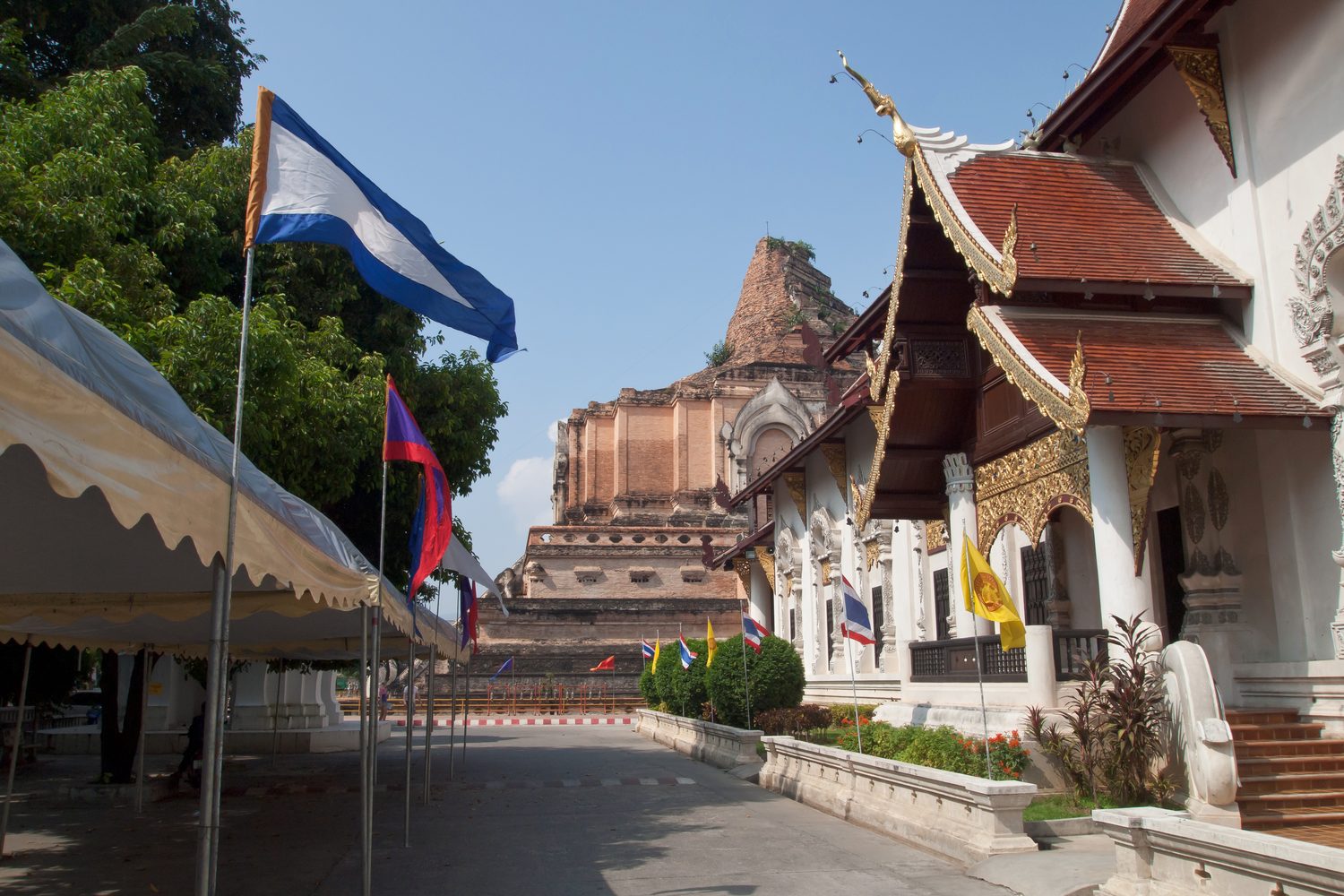
Walk on to Wat Chedi Luang in the middle of the Old City — home to a huge brick chedi more than 600 years old that once stood around 80 metres tall, before its upper section came down in a 16th-century earthquake. Even with only the base and mid-section remaining, the sheer scale is striking. Walk around the base and you will see restored stucco elephants and naga staircases. The grounds also hold the city pillar shrine (Inthakhin), which Chiang Mai people revere, and a beautiful Lanna-style main wihan.
How to do it with limited time: go into the main wihan first to pay respects to the principal Buddha image, then circle around behind it to take in the great chedi from every side. About an hour is plenty. Read the history of the chedi and the Inthakhin pillar in the full Wat Chedi Luang guide.
You cannot come to Chiang Mai and skip khao soi — egg noodles in a rich, aromatic yellow coconut-curry broth, topped with a tangle of crisp fried noodles and eaten with shallots, pickled mustard greens and a squeeze of lime. Choose chicken, beef or pork. The shops people talk about most are out in the Faham area just north of the moat, and there are good ones inside the Old City too, near wherever you happen to be.
If you want to save your energy for the mountain and dinner, a single bowl is enough. Or add other northern dishes such as sai ua (herby grilled sausage), gaeng hang lay (a mild pork curry) or nam prik num (young-chilli dip). See the best shops and the full northern menu in northern Thai food and the Chiang Mai food guide.
Head up in the afternoon to Wat Phra That Doi Suthep, the most sacred temple in Chiang Mai, set on Doi Suthep mountain about 15 km from the city — a 30–40 minute drive up. At the temple car park you climb the 306-step Naga staircase (or ride the funicular tram up instead). At the top is the gleaming golden chedi enshrining a relic of the Buddha; by legend, a white elephant carrying the relic climbed here and knelt on this spot. Walk clockwise around the chedi as the locals do, then step out to the viewing terrace, where the whole of Chiang Mai stretches out below — on a clear day you can pick out the airport and the square moat of the Old City.
The easiest way up is to call a Grab from the city. To save money, catch a shared songthaew from in front of Chiang Mai University or the zoo, or charter one round trip for about 500–600 baht per truck (agree the price and a pick-up time first). If you can ride, a rented scooter works too — but the mountain road is steep and winding, so only attempt it if you are a confident rider. See what else is on the mountain in the full Doi Suthep guide.
Choose this if you like sitting in cafes, design-led restaurants and a relaxed, younger atmosphere. Nimmanhaemin (Nimman for short) lies west of the moat near Chiang Mai University, lined with specialty-coffee cafes, dessert spots, cocktail bars and good restaurants down its side sois. In the evening the lights come on and the area gets lively — wander, sip a coffee, find dinner, then move on to a small bar to close the day. The MAYA mall nearby is handy if you want air-conditioning.
Choose this if you want to shop for souvenirs and crafts and graze on street food in a night-market mood. Head to the Chiang Mai Night Bazaar on Chang Khlan Road east of the moat — an everyday night market with stalls of clothes, bags, woodwork, silver, hill-tribe textiles and keepsakes, with prices you can haggle. Inside, open-air food courts such as Kalare and Anusarn gather Thai, northern and international stalls where you can sit and eat. Some nights there is live music and a traditional dance show.
- An ethical elephant sanctuary — it needs a half or full day, and most sit 1–1.5 hours outside the city; you cannot fit it alongside the temples in town. See elephant sanctuaries.
- Doi Inthanon — Thailand's highest peak with superb views, but far enough out that the drive there and back eats most of a day. It deserves its own day — see Doi Inthanon.
- Bua Tong (the "sticky" waterfall) — a limestone cascade you can actually climb without slipping, and great fun, but it is out of town to the north and needs half a day. See Bua Tong waterfall.
- A cooking class or a khantoke dinner — both are worthwhile, but each takes most of an afternoon or a whole evening. Pick just one if you have spare time; doing them on a single day makes it too tight.